Introduction
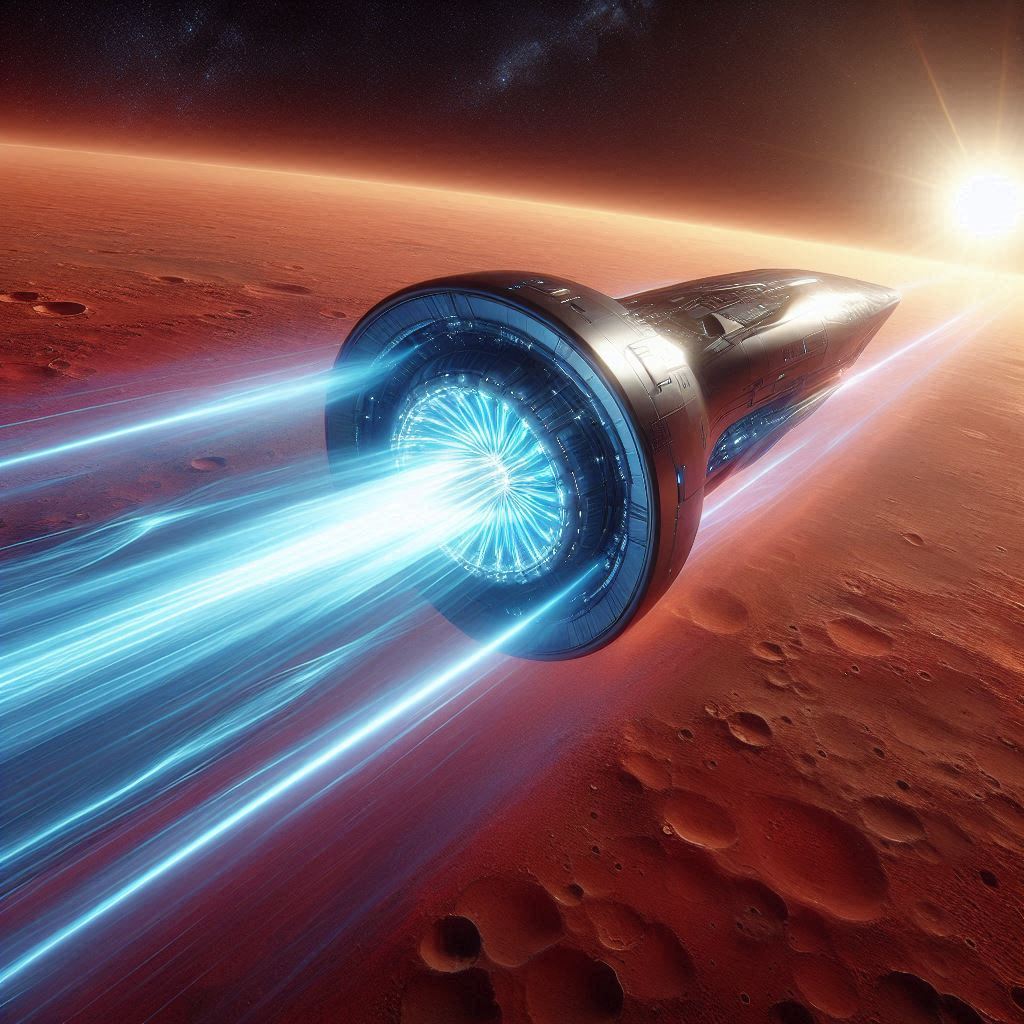
Look up at the night sky. Those pinpricks of light aren’t just stars; they’re destinations. For centuries, they’ve filled us with wonder, but also with a profound sense of distance. With our current rocket technology, that distance feels more like a prison sentence.
Think about it: a trip to Mars takes seven to nine months one-way. A voyage to Jupiter? That’s a five-to-six-year commitment. And the nearest star, Proxima Centauri? Forget it. With today’s tech, the journey would take tens of thousands of years. It’s enough to make you feel stuck in our cosmic backyard.
But what if I told you there’s a technology on the horizon—a power source borrowed from the stars themselves—that could shatter these limitations? What if we could get to Mars in just three months? Or reach the outer planets in a year?
This isn’t science fiction. This is the promise of fusion rocket propulsion.
In this article, we’re going to dive deep into this revolutionary concept. We’ll break down the complex science into digestible pieces, explore its game-changing benefits, be honest about the immense challenges, and introduce you to the brilliant minds who are already building our future among the stars. Buckle up; we’re about to kick chemistry to the curb and light the fuse on a new era of space exploration.
What is Fusion Rocket Propulsion? (It’s All About Star Power)
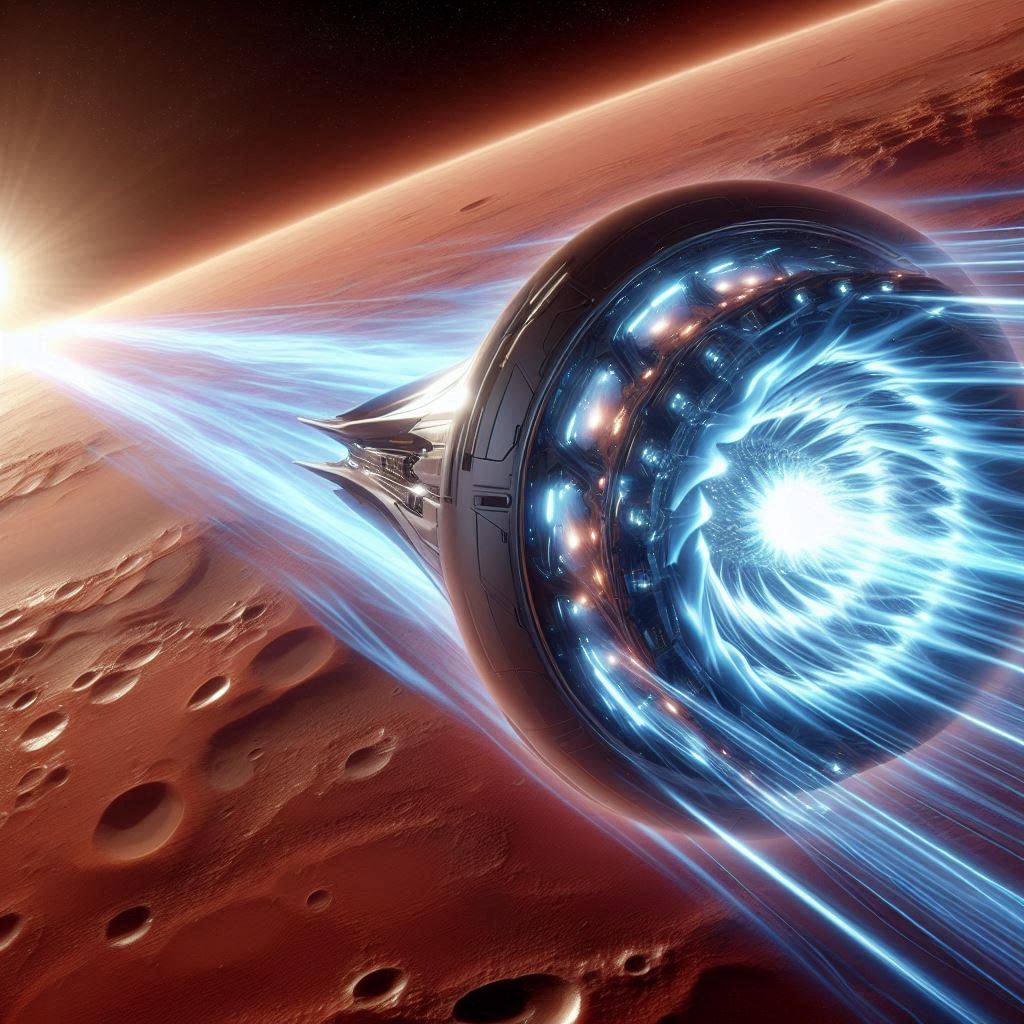
At its heart, a fusion rocket is simple in concept: it’s an engine that uses the energy from a nuclear fusion reaction to propel a spacecraft.
But to truly appreciate it, we need to understand the engine that came before it: the fission rocket.
Fusion vs. Fission: A Crucial Difference
Imagine an atom as a dense, multi-layered Lego brick.
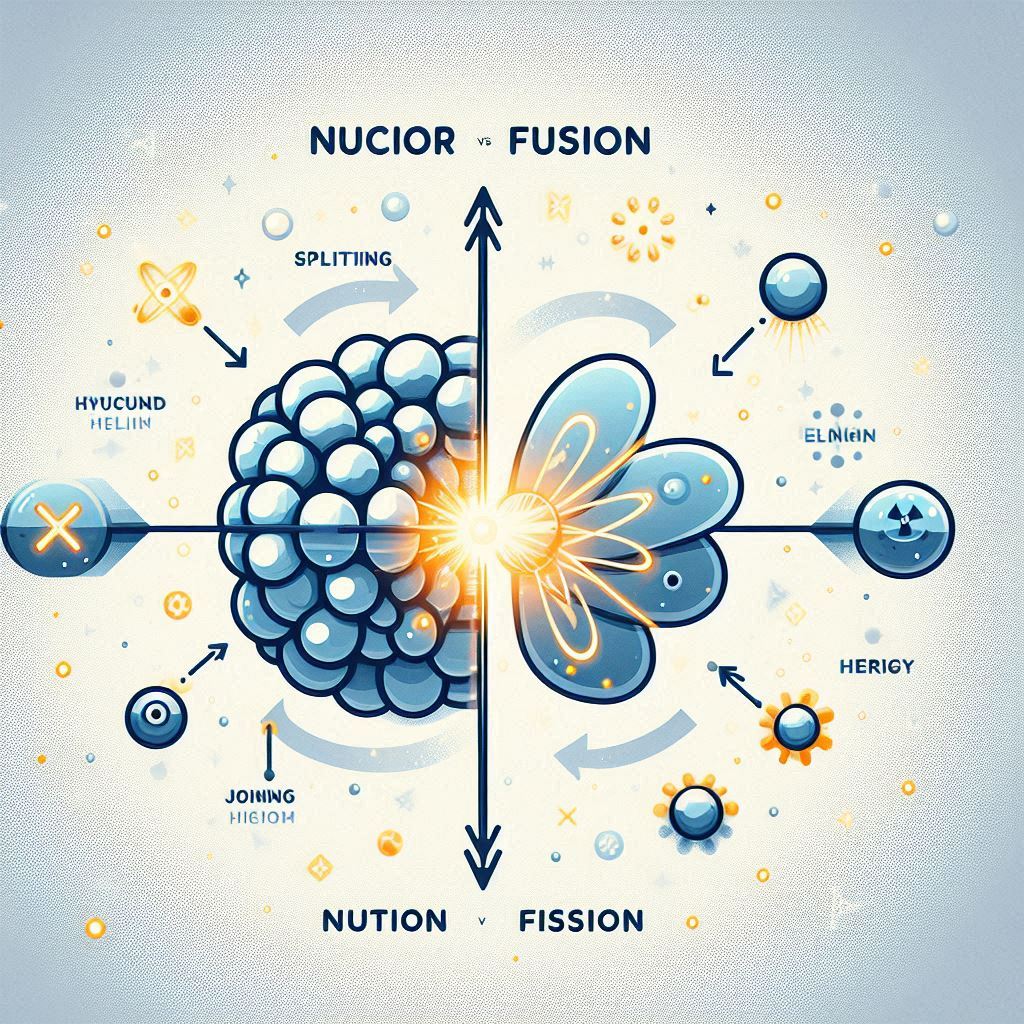
- Nuclear Fission is like taking a giant, complex Lego brick and smashing it apart into smaller, simpler bricks. This splitting releases a lot of energy, which we use in nuclear power plants on Earth. It’s powerful, but it creates messy, radioactive “shards” (waste) in the process.
- Nuclear Fusion, on the other hand, is the ultimate act of creation. It’s about taking two small, simple Lego bricks—typically isotopes of hydrogen called Deuterium and Tritium—and forcing them together with immense pressure and heat to forge a brand new, larger brick (like Helium). This process of building releases a staggering amount of energy—far more than splitting atoms ever could.
The best analogy for fusion is hanging over your head every day: the Sun. Our sun is a massive, natural fusion reactor, constantly fusing hydrogen into helium and bathing our solar system in light and heat. A fusion rocket is, in essence, a miniature, controllable star, contained within a magnetic bottle and used as a propulsion system.
From Power Plant to Rocket Engine: How It Works
So, how do we turn a tiny star into a rocket engine? The process involves three key steps:
- Containment: You can’t put a star in a metal box; it would vaporize instantly. Instead, we use incredibly powerful magnetic fields to create an invisible “bottle.” Devices like tokamaks or field-reversed configurations suspend the superheated fuel (in a state called plasma) away from the physical walls of the reactor.
- Ignition: We then pump energy into this magnetically-contained plasma, heating it to hundreds of millions of degrees—hotter than the core of the sun. At these extreme temperatures, the hydrogen nuclei are moving so fast they overcome their natural repulsion, collide, and fuse.
- Exhaust: This is where the magic happens for propulsion. The fusion reaction creates a torrent of incredibly energetic particles—helium nuclei and free neutrons. Instead of just using this to boil water for a turbine (as we would on Earth), we open a magnetic “nozzle” at the back of the reactor. The magnetic fields direct this superheated plasma out into the void of space, generating thrust according to Newton’s classic third law: for every action, there is an equal and opposite reaction.
The result? A jet of exhaust is traveling at a significant fraction of the speed of light.
Why Fusion Rockets Are a Game-Changer for Space Travel
Okay, the science is cool. But why should you be excited? Because fusion propulsion doesn’t just offer an incremental improvement over chemical rockets, it completely rewrites the rules of space travel.
Unmatched Speed and High Specific Impulse (Isp)
In the rocket world, efficiency is measured by something called Specific Impulse (Isp). Think of it as the “miles-per-gallon” for a rocket engine. A higher Isp means you get more push from every kilogram of fuel you carry.
Let’s look at the numbers:
- Chemical Rockets (Saturn V, SpaceX Falcon): The workhorses of today. They are powerful but incredibly inefficient, with an Isp of around 450 seconds. They are like a gas-guzzling dragster—immense thrust for a short time, but you run out of fuel fast.
- Ion Thrusters (Used on some satellites and probes like Dawn): The hypermilers of space. They have a very high ISP (around 3,000 seconds) but produce a whisper-thin amount of thrust, like a single grain of sand resting on your hand. It takes them years to build up speed.
- Fusion Rockets (The Future): This is the sweet spot. They combine high thrust with incredible efficiency. Projected Isp values range from 5,000 to over 100,000 seconds. They are the equivalent of a supercar engine that also gets the fuel efficiency of a Prius.
Drastically Shorter Travel Times: A New Solar System
This leap in efficiency translates directly into speed. Let’s map out what our solar system would look like with a fusion engine:
| Destination | Current Travel Time (Chemical) | Projected Travel Time (Fusion) |
|---|---|---|
| Earth to Mars | 7-9 Months | ~3 Months |
| Earth to Jupiter | 5-6 Years | ~1 Year |
| Earth to Saturn | 7+ Years | ~2 Years |
| Interstellar Probe | 1000s of Years | ~100 Years (to Proxima Centauri) |
Suddenly, a mission to Mars becomes a manageable journey, not a grueling, multi-year odyssey. The moons of Jupiter and Saturn—like Europa with its subsurface ocean or Titan with its methane lakes—become accessible for detailed, robotic exploration within a single career. And for the first time, sending a probe to another star becomes a goal achievable within a human lifetime.
Abundant Power and Versatility
A fusion reactor isn’t just an engine; it’s a powerhouse. While producing thrust, it would also generate vast amounts of electricity. This solves a critical problem for deep-space missions: power.
Imagine a crewed ship to the outer solar system with enough energy to run advanced life support, powerful computers, high-bandwidth communication lasers, and even on-board manufacturing tools to 3D-print spare parts from recycled materials or asteroid resources. The spacecraft becomes a self-sufficient world, enabled by the heart of a star.
The Hurdles: Why We Don’t Have Fusion Rockets Yet
It’s important to temper our excitement with reality. We are not launching a fusion rocket tomorrow. The challenges are monumental, which is why this remains a technology for the mid-to-late 21st century.
- The Physics Challenge: Achieving Ignition. The core problem is achieving “net energy gain”—getting more energy out of the fusion reaction than we put in to start it. We have to recreate the conditions at the heart of a star, and that is fiendishly difficult. While we’ve made significant progress, sustained ignition for a rocket engine remains elusive.
- The Engineering Challenge: Making it Small and Light. Ground-based fusion experiments, like the massive ITER project in France, are the size of buildings. A rocket engine needs to be compact, lightweight, and robust enough to survive the violent shaking of a launch and the harsh environment of space. Shrinking a star into a manageable package is the ultimate engineering puzzle.
- The Containment Problem: Taming the Plasma. Containing a plasma that’s over 100 million degrees Celsius with magnetic fields is a delicate balancing act. Any instability can cause the plasma to touch the reactor wall, instantly ending the reaction and likely destroying the engine.
- Radiation Management: Fusion reactions release a flood of high-energy neutrons. This requires sophisticated shielding to protect both the crew and the sensitive electronics on board from radiation damage.
The Current Frontier: Companies and Projects to Watch
Despite the challenges, the fuse has been lit. A combination of government agencies and private companies is charging ahead, driven by new technologies and a renewed vision for space.
- Princeton Satellite Systems (Direct Fusion Drive – DFD): This is one of the most exciting concepts specifically designed for space propulsion. Their Direct Fusion Drive is a compact, aneutronic (meaning it produces fewer problematic neutrons) engine that could provide both high-thrust propulsion and electrical power directly from the same reactor. They envision missions that could get a probe to Saturn’s moon Titan in just two years, complete with enough power to run a suite of instruments and communicate back to Earth.
- NASA’s Interest and Research: NASA isn’t sitting on the sidelines. Through its Innovative Advanced Concepts (NIAC) program and other research divisions, it is actively funding early-stage studies into various fusion propulsion concepts. They recognize that for a sustained human presence beyond the Moon, a new propulsion paradigm is non-negotiable.
- Private Startups (Helion Energy, TAE Technologies): While companies like Helion and TAE are primarily focused on the monumental goal of providing clean fusion energy to the power grid, their breakthroughs are directly applicable to spaceflight. They are pioneering new methods of plasma confinement and heating. The advanced superconductors and plasma physics they develop today could become the core components of a fusion rocket tomorrow.
Fusion Propulsion vs. Other Advanced Concepts
How does fusion stack up against other futuristic ideas? Let’s put it in the ring with its competitors.
- Nuclear Thermal (Fission): A logical next step, using a fission reactor to heat a propellant like liquid hydrogen. It offers about double the Isp of chemical rockets, making it great for getting to Mars faster, but it lacks the paradigm-shifting performance of fusion.
- Ion/Electric Propulsion: As mentioned, these are incredibly efficient but painfully slow. They are perfect for unmanned cargo missions or station-keeping, but not for human explorers who don’t have decades to spare.
- Antimatter Propulsion: The ultimate energy density. Matter-antimatter annihilation is, pound-for-pound, the most energetic reaction in the universe. It’s the stuff of Star Trek. The problem? We can only produce a few billionths of a gram per year at astronomical cost, and we have no way to store it safely. It remains, for now, firmly in the realm of theoretical physics.
- The Verdict: Fusion propulsion sits in the “Goldilocks Zone” of advanced propulsion. It’s not as incremental as nuclear thermal, not as slow as ion drives, and far more feasible than antimatter. It represents the most plausible path to becoming a truly interplanetary species.
The Future is Fusion: What Could We Achieve?
Let’s dream for a moment. If we can conquer physics and engineering, what does a fusion-powered future look like?
- Routine Interplanetary Travel: The solar system becomes our backyard. Missions to Mars are as routine as a six-month research stint in Antarctica. Mining operations on the asteroid belt supply Earth with rare minerals, and scientific outposts on the moons of the gas giants search for signs of extraterrestrial life.
- Revolutionizing Robotic Science: Instead of designing a probe to last for a decade on a one-way trip to Pluto, we could send orbiter-lander combinations to dozens of different worlds. We could have a fleet of fusion-powered craft studying the ice giants, Uranus and Neptune, and their exotic moons.
- The First Interstellar Missions: This is the final frontier. While a crewed mission to another star is still a colossal undertaking, fusion makes it conceivable. We could launch generation ships or hibernation-equipped vessels on a century-long journey to Proxima Centauri. For the first time in human history, the stars would become tangible destinations, not just points of light.
Conclusion: The Final Frontier Awaits a Fusion Engine
The journey to a working fusion rocket is long, difficult, and fraught with challenges. It will require global cooperation, brilliant innovation, and unwavering determination. There will be setbacks.
But the destination is worth it.
Fusion rocket propulsion is more than just a new engine. It is the key that unlocks the cage of gravity and distance that has held us captive for all of human history. It is the technology that can transform us from a species that occasionally visits space into a truly spacefaring civilization, powered by the same fire as the stars.
The dream is no longer just to reach for the stars, but to one day, harness their power to journey among them.
Frequently Asked Questions (FAQ)
Q: Is fusion rocket propulsion safe?
A: Surprisingly, yes. Unlike fission, there is no risk of a meltdown. If the magnetic containment fails, the plasma instantly cools and the reaction stops dead. The primary radioactive waste is the reactor structure itself, which becomes activated by neutrons, but it’s short-lived compared to fission waste. A launch failure would not result in a nuclear explosion.
Q: How close are we to building a working fusion rocket?
A: Most realistic estimates place a demonstration engine several decades away. However, progress is not linear. A single major breakthrough in plasma physics or materials science could dramatically accelerate the timeline. The growing private fusion industry is a major catalyst for this.
Q: What fuel would a fusion rocket use?
A: The most near-term candidate is a mix of Deuterium and Tritium (D-T). However, more advanced, “aneutronic” reactions, like Deuterium and Helium-3 (D-He3), are highly desirable as they release their energy as charged particles instead of neutrons, making the engine more efficient and reducing radiation.
Q: Could this technology be used on Earth?
A: Absolutely. This is the beautiful synergy. The compact, efficient fusion reactors being developed for rockets are the exact same technology needed for clean, safe, and abundant base-load power on Earth. Solving the puzzle of fusion propulsion could, as a glorious side-effect, solve humanity’s energy crisis forever.