

Introduction
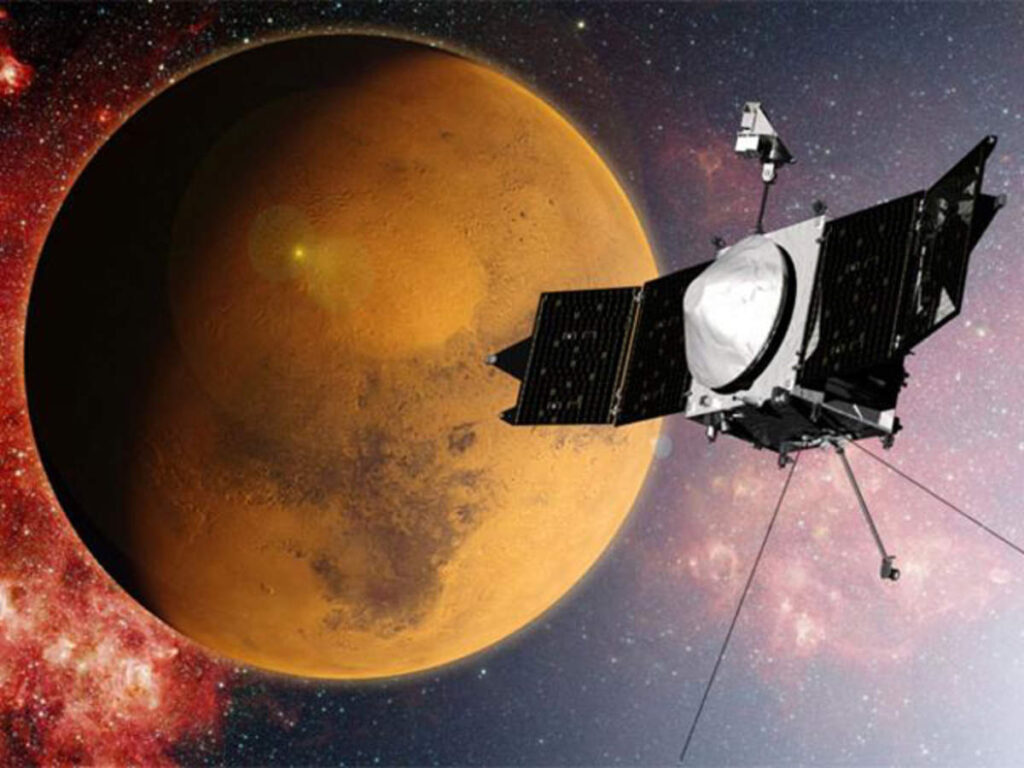
There’s something about Mars. For millennia, we’ve looked up at that rust-colored dot in the night sky and wondered. Ancient Romans named it after their god of war, its reddish hue reminiscent of blood. For centuries, astronomers squinted through telescopes, mapping its surface and imagining canals built by some long-lost civilization.
But in the 21st century, that wonder has transformed into a tangible goal. We are no longer just stargazers; we are star-reachers. We are living in the era of a new space race, but this one is different. It’s no longer a two-nation Cold War showdown. It’s a global, collaborative, and fiercely competitive sprint to unravel the secrets of our planetary neighbor.
And in this new race, a quiet, cost-effective revolution was brewing from an unexpected corner of the world. On September 24, 2014, India’s space agency, ISRO, didn’t just successfully place a spacecraft into Mars’ orbit. It announced to the world that the cosmos was now within everyone’s reach. This is the story of the Mangalyaan mission, and how it fits into the thrilling, global puzzle of our quest for the Red Planet.
Mangalyaan: The “Mom” of Indian Space Exploration
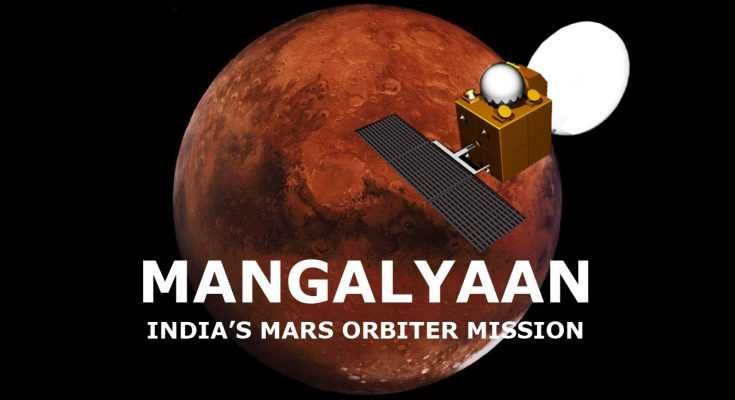
Let’s start with the star of our show. The Mars Orbiter Mission (MOM), affectionately nicknamed Mangalyaan (which literally translates to “Mars-Craft” in Hindi), was the Indian Space Research Organisation’s (ISRO) first interplanetary mission.
Its goals were a masterclass in ambition tempered with pragmatism:
- The Technological Goal: Get there. To design, plan, and execute a fully functional interplanetary mission, mastering the complex challenges of deep-space communication, navigation, and management.
- The Scientific Goal: Once there, study the Martian surface, map its morphology, and, most intriguingly, analyze its atmosphere for traces of methane gas—a potential signature of biological or geological activity.
But what truly catapulted Mangalyaan into global headlines wasn’t just its success—it was its price tag.
The Price of a Blockbuster Movie, The Payoff of a Space Mission
The Mangalyaan mission cost approximately $74 million. To put that mind-boggling number into perspective, consider this: the Hollywood space blockbuster Gravity was made with a budget of about $100 million. For less than the cost of a movie about surviving in space, India actually went to space—and all the way to Mars.
How was this “frugal engineering” miracle achieved?
- Minimalist Design: ISRO built a lean, focused spacecraft. Instead of one large, complex instrument, it carried a compact suite of five.
- Shorter Development Cycle: The team worked at an incredible pace, developing the mission in just 15 months.
- Lower Labor Costs: Highly skilled scientists and engineers in India command lower salaries than their counterparts in NASA or ESA, significantly reducing the project’s overall cost.
- Slingshot Trajectory: ISRO used its powerful PSLV rocket and the Earth’s own gravity to meticulously slingshot the spacecraft towards Mars, saving immense amounts of fuel.
This cost-effectiveness wasn’t just a quirky fact; it was a paradigm shift. It proved that interplanetary exploration didn’t have to be the exclusive, multi-billion-dollar club of superpowers.
An Unforgettable Journey: Mangalyaan’s Timeline to Triumph
Mangalyaan’s story is one of nail-biting suspense and ultimate glory. Let’s trace its path:
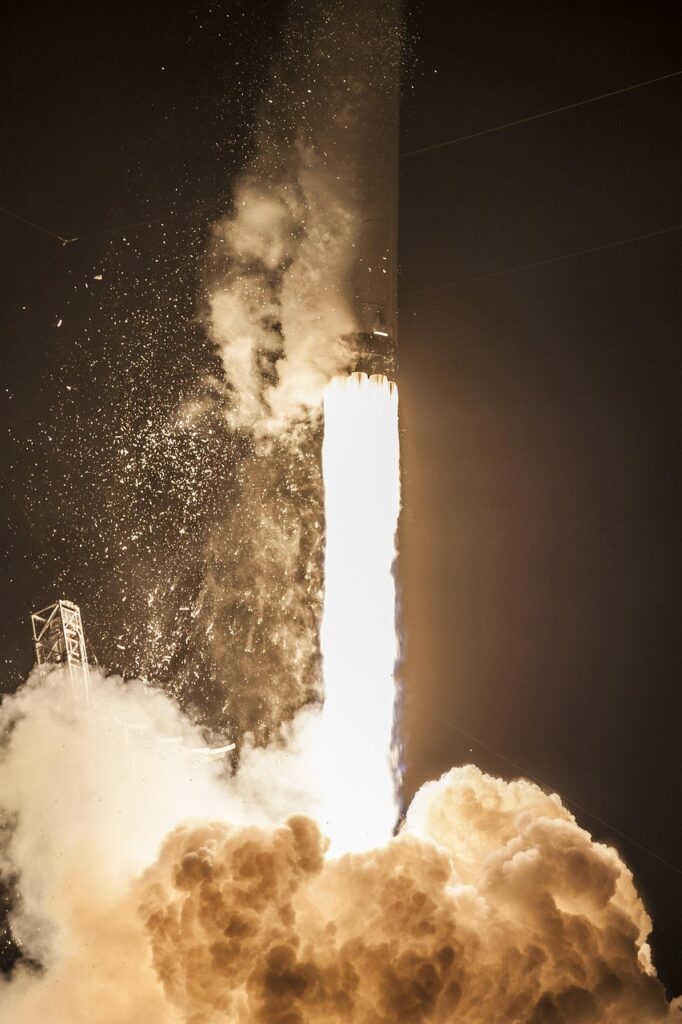
- November 5, 2013: A Polar Satellite Launch Vehicle (PSLV) rocket roared to life from the Satish Dhawan Space Centre in Sriharikota, India, carrying the nation’s hopes and the Mangalyaan probe.
- The 300-Day Cruise: For over nine months, the spacecraft sailed through the void, a speck on an epic journey across 400 million miles. The world watched, but India held its breath.
- September 24, 2014 – The Moment of Truth: This was D-Day. To enter Mars’ orbit, the spacecraft’s engine had to fire flawlessly for 24 minutes, slowing it down just enough to be captured by the planet’s gravity. A failure would mean it would simply sail past Mars, lost forever in the depths of space.
And then, success.
The control room erupted as ISRO received confirmation: Mangalyaan was in orbit. India had become the first Asian nation to reach Mars, and ISRO the fourth space agency in the world to do so. The mission, designed for six months, went on to study Mars for over seven years, a testament to its robust design and ISRO’s engineering prowess.
The Global Marathon: Who Else is Racing to Mars?
To truly appreciate Mangalyaan’s achievement, we need to see the track it was running on. The race to Mars is crowded with some of the world’s most powerful and ambitious space agencies.
NASA (USA): The Veteran Trailblazer
NASA is the undisputed leader in Mars exploration, with a legacy of robotic pioneers.
- Past & Present: From the Viking landers in the 1970s to the Pathfinder mission and the beloved rovers—Spirit, Opportunity, and the car-sized Curiosity—NASA has been methodically exploring the planet. Today, the Perseverance rover is drilling for soil samples, and the Ingenuity helicopter has proved that powered flight is possible in Mars’ thin atmosphere.
- The Future: NASA’s eyes are set on the most ambitious goal yet: the Mars Sample Return mission, to bring Martian rocks back to Earth, and eventually, crewed missions.
CNSA (China): The Ambitious Newcomer
China entered the Martian elite club with stunning style. Its Tianwen-1 mission in 2021 achieved what no one had on their first attempt: it successfully deployed an orbiter, a lander, and the Zhurong rover all at once. This “three-in-one” mission signaled China’s formidable technological and financial muscle, making it a major player in the future of Mars exploration.
ESA & Roscosmos (Europe & Russia): The Collaborative Powerhouse
The European Space Agency (ESA) has often partnered with Russia’s Roscosmos for its Mars ambitions. Their joint ExoMars program sent the Trace Gas Orbiter to study the atmosphere, with plans for a rover named Rosalind Franklin. While this partnership faces challenges due to geopolitical tensions, Europe remains deeply committed to unlocking Martian secrets.
UAE Space Agency: The Surprise Package
The United Arab Emirates announced its arrival on the interplanetary stage with the Hope Probe. Launched in 2020, it isn’t a lander or a rover. Its genius is in its focus: it’s a dedicated weather satellite for Mars, designed to study the planet’s climate dynamics throughout an entire Martian year. It represents a new model of space exploration—highly focused, collaborative, and designed to fill a specific scientific niche.
The Mangalyaan Difference: What Truly Sets It Apart?
So, in a field with such giants, what was Mangalyaan’s unique value? Let’s break it down.
| Mission | Country | Key Achievement | Primary Focus | Approx. Cost (USD) |
|---|---|---|---|---|
| Mangalyaan | India | First Asian nation to Mars on first attempt | Orbital study & tech demonstration | ~$74 Million |
| Perseverance | USA | Advanced rover collecting samples for return | Surface exploration & astrobiology | ~$2.7 Billion |
| Tianwen-1 | China | Orbiter, Lander & Rover in first attempt | Comprehensive orbital & surface study | ~$1-2 Billion (est.) |
| Hope Probe | UAE | First holistic Martian weather satellite | Martian atmosphere & climate | ~$200 Million |
Looking at this table, Mangalyaan’s uniqueness becomes clear:
- The Democratization of Space: Its most profound impact was philosophical. It shattered the glass ceiling, proving that a developing nation with limited resources could achieve a cosmic dream. It inspired not just India, but every aspiring nation watching.
- First-Attempt Flawlessness: Mars is hard. Historically, over half of all missions to Mars have failed. To succeed on the very first try is a staggering achievement that placed ISRO among the world’s top-tier space agencies.
- Strategic Orbital Science: While the world marvels at rovers, orbiters are the unsung heroes. They provide the “big picture.” Mangalyaan’s Mars Color Camera captured stunning, full-disk images of Mars, giving scientists a global weather perspective. At the same time, its Methane Sensor added a crucial data point to one of Mars’ biggest mysteries.
Why This Mad Rush? The Scientific Prize of Mars
Why are we so obsessed with this particular planet? The reasons are as profound as they are practical.
What Did Mangalyaan Teach Us?
The mission’s data was a goldmine. Its imagery helped create global maps of Mars, and its sensors provided valuable atmospheric composition data. While its methane sensor reported some findings, the debate on Martian methane continues, showing just how complex and compelling the scientific puzzle is.
The Bigger Questions We’re Trying to Answer:
- The Question of Life: This is the holy grail. Did life ever exist on Mars? Even evidence of ancient, single-celled organisms would revolutionize our understanding of biology and our place in the universe. The search for water, organic molecules, and biosignatures all point to this ultimate question.
- A Mirror to Earth: By studying Mars’ climate history—how it lost its atmosphere and surface water—we can better understand the mechanics of climate change and the future of our own planet.
- The Human Destiny: The long-term, driving vision is human colonization. Making humanity a multi-planetary species is no longer just science fiction; it’s a stated goal of agencies like NASA and companies like SpaceX. It’s seen as a crucial step in ensuring the long-term survival of humanity.
The Next Chapter: What’s Coming in the Mars Race?
The race is far from over; it’s just entering a new, more intense phase.
- India’s Next Move: ISRO is already planning Mangalyaan-2. This time, the mission is expected to be more complex, likely involving a lander or a rover, building on the immense success of the first orbiter. The experience gained from its Gaganyaan (human spaceflight) program will also feed into its future deep-space ambitions.
- The Moon as a Stepping Stone: The new Artemis Accords, led by NASA, are establishing a framework for exploring the Moon, with the explicit goal of using it as a testing ground for the technologies and operations needed for a human mission to Mars.
- The Rise of the Private Sector: This is the game-changer. Companies like SpaceX are developing fully reusable mega-rockets like Starship, with the explicit goal of drastically reducing the cost of reaching Mars and establishing a human settlement. This influx of private innovation and capital is accelerating the timeline in ways government programs alone could not.
Conclusion: One Small Step for a Nation, One Giant Leap for Humankind
The story of Mangalyaan is more than a national triumph; it’s a human one. It reminds us that the urge to explore, to push boundaries, and to understand our universe is a universal human trait, not bound by GDP or geopolitical status.
The global race to Mars is no longer a sprint between two rivals. It’s a diverse, multi-layered marathon involving established giants, ambitious nations, and revolutionary private companies. It’s a race driven by science, curiosity, and the timeless human dream of reaching for the next horizon.
India’s Mangalyaan, with its modest budget and monumental success, ensured that in this grand, cosmic race, the door is now open for everyone. As we look up at the Red Planet, we’re no longer just dreaming. We’re packing our bags.
What do you think about the new space race? Which Mars discovery excites you the most? Let us know in the comments below, and share this article with someone who believes the stars are the limit!

Ресурсы 18+ существуют как специализированные платформы с возрастными рамками.
Данных порталов основная цель — обеспечить просмотр к материалам, адресованному исключительно совершеннолетней аудитории.
Такие веб-сайты дают возможность авторам размещать произведения, не рассчитанные для несовершеннолетних.
Подобные сервисы выполняют и образовательную функцию в области интимного здоровья.
Владельцы подобных сайтов обязаны выполнять правовые нормы о распространении чувствительного материала.
Помимо прочего, данные порталы часто используют специальные меры проверки пользователей.
Таким образом, наличие таких ресурсов — это ответ на природный интерес конкретной категории граждан.
лесбиянки фото
Looking well creates a positive first impression.
Your attire speaks loudly before a person actually speak a word.
This boosts your own self-esteem and mood noticeably.
A put-together look signals competence in the office.
https://www.provenexpert.com/en-us/ivorkellings/
Fashionable clothing let you to showcase your individual personality.
Others often judge well-dressed individuals as more successful and reliable.
Therefore, investing in your style is an valuable step in yourself.
Спортбеты получили огромную востребованность во всем мире.
Важнейший аспект такого успеха заключается в возможности переживать мощный возбуждение.
Во время просмотра матчей такие пари дарят дополнительные эмоции к событию.
Фанаты не просто болеть за своих фаворитов, но и зарабатывать на результатах.
Мобильные приложения позволяют дело пари доступным и быстрым для каждого.
Широкий выбор дисциплин позволяет каждому болельщику выбрать что-то интересное.
Таким образом такие пари превращают спорт в игры намного интересным и желанным.
https://mindsetpro.urban-moda.ru/znamenitye-trenery-kotorye-rabotali-v-tsska-8383194/