Introduction

There’s a moment in every great rocket launch that sears itself into your memory. It’s not the countdown or the release of the clamps. It’s that first, terrifying, and beautiful second when the engine ignites.
A torrent of fire and sound erupts, a man-made volcano challenging the very sky. But that raw, unbridled power isn’t magic. It’s chemistry. It’s physics. It’s the controlled, violent release of energy from one of humanity’s most incredible inventions: rocket fuel.
From the Saturn V’s majestic climb to the Falcon 9’s precise landings, the story of space exploration is, at its heart, a story about the fuel in the tank. It’s a tale of trade-offs between brute force and delicate control, between fiery power and frozen gases. So, let’s demystify it. Let’s dive into the science, the types, and the future of the incredible substance that turns rockets into spacecraft.
It’s Not Just Burning Gas: The Surprisingly Simple Physics of Rocket Propulsion

Before we talk about the what, we need to understand the how. And it all boils down to a principle laid out by Sir Isaac Newton over 300 years ago.
You’ve probably experienced Newton’s Third Law yourself: “For every action, there is an equal and opposite reaction.”
Remember blowing up a balloon and letting it go without tying it? The air (the action) rushes out one way, and the balloon (the reaction) zips off in the exact opposite direction. A rocket engine is essentially a highly sophisticated, continuously exploding balloon.
Inside the rocket’s combustion chamber, fuel and an oxidizer are mixed and ignited. This creates a super-hot, high-pressure gas that desperately wants to expand. The only way out is through the nozzle at the bottom. As this immense volume of gas violently escapes downward (the action), it pushes the rocket upward with an equal and opposite force (the reaction). This push is what we call thrust.
A few key terms to keep in mind:
- Propellant: This is the catch-all term for the stuff you load into a rocket. It includes both the fuel and the oxidizer.
- Fuel: The substance that burns. Think of it as the “log on the fire.” Common examples are Kerosene, Hydrogen, and Aluminum.
- Oxidizer: This is the crucial ingredient for space. Since there’s no air in the vacuum of space to support combustion, rockets must carry their own oxygen supply. The oxidizer provides this. Common examples are Liquid Oxygen and Ammonium Perchlorate.
So, the “science” is elegantly simple. But the engineering of how we create and control that “action” is where things get fascinating, leading to two distinct families of propellant.
Liquid vs. Solid: The Titans of Thrust
In the world of rocketry, there are two main ways to package your propellant, and they represent a classic engineering trade-off: the raw, uncontrollable power of the solid rocket booster versus the precise, manageable force of the liquid rocket engine.
Imagine you’re a rocket engineer. You need immense power to lift thousands of tons off the launchpad, but you also need the finesse to steer a spacecraft into a precise orbit or dock with a space station. You can’t have it all in one package, so you use both.
Here’s a quick breakdown of these two titans:
| Feature | Liquid Rocket Fuel | Solid Rocket Fuel |
|---|---|---|
| State | Liquid (fuel & oxidizer stored separately) | Solid, rubber-like mixture |
| Control | Throttleable, can be stopped & restarted | Cannot be shut down once ignited |
| Complexity | High (pumps, pipes, valves) | Low (simple, robust design) |
| Storage | Cryogenic (super-cold) or storable | Easy, long-term storage |
| Use Case | Primary launch engines, in-space maneuvering | Boosters for extra initial thrust |
Let’s meet the families.
The Racehorse: A Closer Look at Liquid Propellants
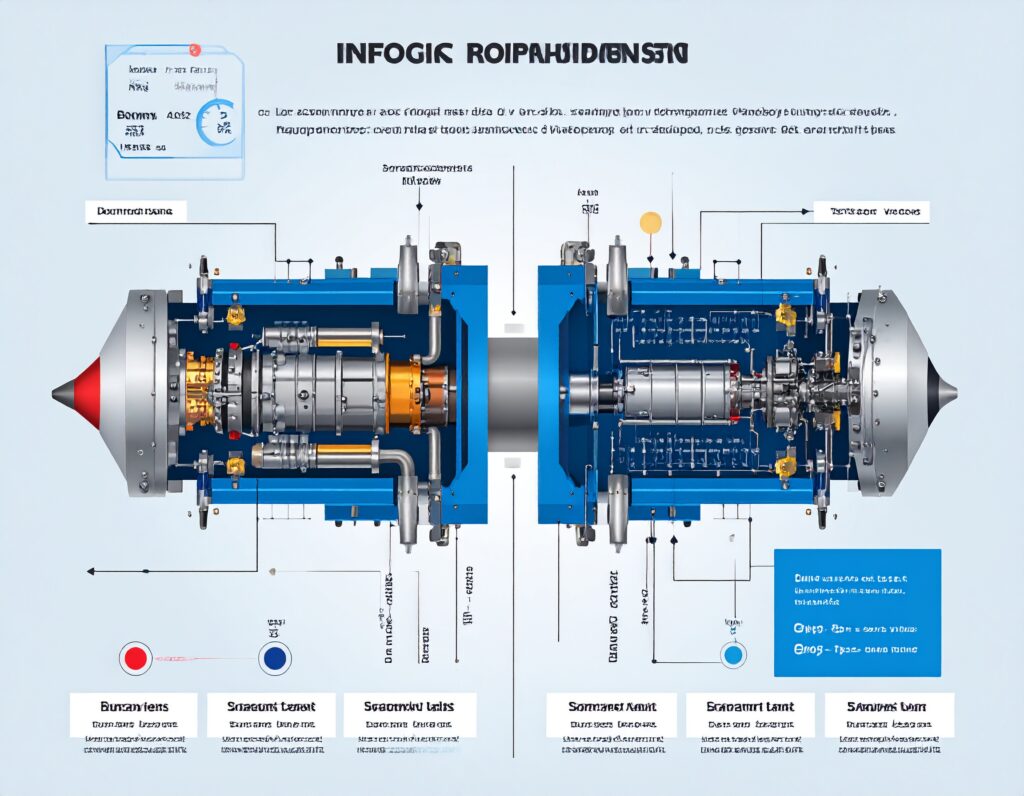
Liquid-fueled engines are the precision instruments of rocketry. They are complex, with a labyrinth of pipes, turbopumps, and valves, but they offer something priceless: control.
The fuel and oxidizer are stored in separate tanks and are meticulously pumped into the combustion chamber, where they mix and burn. This means you can throttle the engine up or down, or even shut it off completely and restart it later. This is absolutely essential for steering in space and for the complex landing maneuvers of reusable rockets like SpaceX’s Falcon 9.
But not all liquid propellants are the same. There are a few key types:
1. The Clean Machine: Liquid Hydrogen (LH2) / Liquid Oxygen (LOX)
This is the high-performance, efficiency champion of the liquid propellant world.
- How it Works: Liquid Hydrogen is the fuel, Liquid Oxygen is the oxidizer. Both are cryogenic, meaning they must be stored at impossibly cold temperatures (around -423°F for hydrogen, -297°F for oxygen).
- The Pros: It’s incredibly efficient, providing the highest “specific impulse” (a measure of engine efficiency, like miles-per-gallon for rockets). Its exhaust is almost entirely superheated steam—clean and powerful. This was the combination used in the Space Shuttle’s main engines.
- The Cons: Hydrogen is incredibly low-density, meaning you need enormous, heavily insulated tanks to hold it. It’s also notoriously hard to handle, as it can leak through tiny gaps and embrittle metal. It’s the racehorse: high-strung, delicate, but unbeatable on its best day.
2. The Muscle Car: Kerosene (RP-1) / Liquid Oxygen (LOX)
If Hydrogen is a refined racehorse, Kerosene is a classic American muscle car: powerful, reliable, and less fussy.
- How it Works: Highly refined kerosene (RP-1) is burned with Liquid Oxygen.
- The Pros: It’s dense, providing a huge amount of thrust in a relatively compact tank. It’s easier to store and handle than liquid hydrogen, making the rocket’s overall structure potentially smaller and lighter. This is the fuel that launched the Saturn V’s first stage and powers SpaceX’s Falcon 9 rockets today. That iconic, sooty orange plume on a Falcon 9 launch? That’s RP-1 at work.
- The Cons: It’s less efficient than hydrogen, and it produces a dirty, sooty exhaust from unburned carbon.
3. The Hyper-Reliable: Hypergolic Propellants
This one sounds like science fiction. Hypergolic propellants are fuels and oxidizers that ignite spontaneously upon contact with each other. No spark needed.
- How it Works: Common pairs are Hydrazine (fuel) and Nitrogen Tetroxide (oxidizer). When their streams touch in the combustion chamber, they immediately explode into flame.
- The Pros: This instant, reliable ignition makes them perfect for spacecraft maneuvering thrusters, where you need precise, small bursts of power. They are also “storable,” meaning they can be kept in tanks at room temperature for long periods, ideal for deep-space missions.
- The Cons: They are extremely toxic and corrosive. A tiny leak can be catastrophic for both the spacecraft and any ground crew. Handling them requires “self-contained atmospheric protective ensemble” (SCAPE) suits—the iconic yellow space suits you see in launch preparations.
The Sledgehammer: A Closer Look at Solid Propellants
Now, let’s talk about the sledgehammer. Solid rocket fuel is power, simplified.
- What is it? Imagine a hard, rubbery substance—like the inside of a giant firework. It’s a pre-mixed blend of a fuel (often powdered aluminum), an oxidizer (like ammonium perchlorate), and a binder that holds it all together. This mixture is cast into a massive metal casing, which becomes the rocket body itself.
- How it Works: To ignite it, you simply apply a high-temperature flame to one end. Once lit, it burns from the inside out in a predictable pattern, producing a continuous, massive thrust until the fuel is gone. There are no moving parts, no pumps, no valves.
The Key Characteristic: Unstoppable Power
The most important thing to understand about solid rockets is their lack of control. You cannot turn them off. There is no “stop” button. Once that ignition command is given, the rocket will burn until all the propellant is consumed. This is why they are almost exclusively used as boosters—strapped to the side of a main rocket to provide an incredible, short-duration kick of thrust to help the vehicle get off the pad and through the thickest part of the atmosphere. The fiery, white pillars of flame from the Space Shuttle’s Solid Rocket Boosters (SRBs) are the perfect example of this raw, untamable power.
The Future of Rocket Fuel: What’s Powering the Next Giant Leap?
The story of rocket fuel isn’t stuck in the past. As we set our sights on the Moon, Mars, and beyond, new fuels are coming to the forefront.
The New Frontrunner: Methalox (Liquid Methane/LOX)
Enter Methane, the fuel of choice for the next generation of starships.
Why is everyone, from SpaceX with its Starship to Blue Origin with its New Glenn, betting on methane?
- Performance & Reusability: Methane offers a great balance between the high efficiency of hydrogen and the dense thrust of kerosene. It also burns cleaner than kerosene, reducing soot buildup that can damage engines upon reuse—a critical factor for rockets designed to fly dozens of times.
- The Mars Dream: This is the big one. Methane (CH₄) can potentially be manufactured on Mars. The Martian atmosphere is rich in Carbon Dioxide (CO₂), and water ice is available at the poles. Through a chemical process called the Sabatier reaction, we could combine CO₂ with Hydrogen (from water) to create Methane and Oxygen. A rocket that can refuel on Mars using local resources is no longer a one-way ticket; it’s the key to a self-sustaining interplanetary civilization.
The Green Propellants
The space industry is also looking to clean up its act. The hypergolics we rely on are terrifyingly toxic. Research is well underway into “green propellants” that are much less hazardous to handle. One, known as LMP-103S, is already being used in some satellites, offering high performance without the deadly baggage of traditional hypergolics.
The Final Frontier Concepts
For truly long-distance travel through our solar system, chemical propellants may one day be left in the dust.
- Ion Thrusters: These are the “solar sails” of the engine world. They don’t use violent combustion. Instead, they use electricity (often from solar panels) to accelerate inert gas atoms (like Xenon) to incredibly high speeds. The thrust is whisper-weak—equivalent to the pressure of a piece of paper on your hand—but they can run continuously for years, building up immense speed over time. They’re already used to keep satellites in position and propel deep-space probes like NASA’s Dawn mission.
- Nuclear Thermal Propulsion: Imagine a rocket engine that uses a small nuclear reactor to heat a propellant like liquid hydrogen to extreme temperatures, instead of burning it. This creates a much more efficient thrust than chemical engines. While politically and technically complex, it could cut the travel time to Mars in half, and it’s the subject of serious research once again.
Conclusion: More Than Just Fire
The choice of rocket fuel is never simple. It’s a fundamental dance of trade-offs: thrust vs. control, power vs. complexity, efficiency vs. storability. The fiery plume of a launch is the spectacular end result of countless human decisions, all focused on one goal: beating gravity.
The evolution of this fuel—from the simple solids and kerosene that launched the first satellites, to the hydrogen that took us to the Moon, and now to the methane that aims to take us to Mars—is a direct reflection of our evolving ambitions in space.
So the next time you watch a rocket climb through the clouds, remember: you’re not just watching fire. You’re watching a carefully choreographed chemical ballet, a contained inferno born from human ingenuity, and the very substance of our dreams to reach the stars.
What rocket launch has most inspired you? Was it the Apollo missions, the Space Shuttle, or the modern spectacle of a rocket landing itself? Share your favorite moment in the comments below!
Want to learn more about the rockets that use this incredible fuel? Check out our guide on [The Engineering Marvel of Modern Reusable Rockets].
FAQ Section
Q: What is the most powerful type of rocket fuel?
A: It depends on how you define “powerful.” For raw, upfront thrust, solid rocket boosters are the undisputed champions. Their immense, explosive power is why they are used as boosters to help heavy-lift rockets get off the ground. However, for efficiency (getting the most “miles per gallon”), liquid hydrogen is the most powerful, making it ideal for the upper stages that push payloads into orbit or toward other planets.
Q: Why can’t rockets use normal fuel like gasoline or jet fuel?
A: They can, and they have! Kerosene (RP-1) is very similar to jet fuel. The real difference is that rockets must carry their own oxygen. Jet engines breathe air from the atmosphere. In the vacuum of space, there’s no air, so a rocket must have its own oxidizer (like Liquid Oxygen) packed on board. This fuel-oxidizer combination is what we call rocket propellant.
Q: Is rocket fuel highly explosive?
A: It’s designed to burn rapidly, not detonate like a bomb. The key difference is the rate of energy release. A controlled, sustained burn in the combustion chamber produces the steady thrust needed for launch. However, rocket fuel is obviously extremely volatile and dangerous. If there is a structural failure or a major leak, the propellants can mix uncontrollably and cause a catastrophic explosion.
Q: What is the “greenest” or cleanest rocket fuel?
A: The cleanest-burning common fuel is Liquid Hydrogen (LH2), whose exhaust is primarily water vapor. However, producing hydrogen can be energy-intensive. The emerging “green” champion is Liquid Methane, which burns cleaner than kerosene and can potentially be created from Martian resources. The space industry is also actively developing new, less toxic “green propellants” to replace highly toxic hypergolics.
Q: How is rocket fuel different from the fuel in a car?
A: There are two key differences:
- Self-Contained Oxidizer: As mentioned, car fuel uses oxygen from the air. Rocket fuel includes its own oxidizer.
- Energy Density & Purpose: Rocket fuel is engineered for maximum energy release in the shortest possible time to achieve escape velocity. Car fuel is designed for controlled, efficient combustion over a long period to turn wheels. They are solutions to fundamentally different physics problems.
Q: Why is methane being hailed as the fuel for the future?
A: Methane (or “methalox”) represents a “Goldilocks” solution. It offers a great balance between the high efficiency of hydrogen and the dense thrust of kerosene. Crucially, it burns cleanly, which is vital for reusable rockets as it causes less engine wear. Most importantly, it’s believed that methane could be manufactured on Mars using the planet’s carbon dioxide atmosphere and water ice, enabling refueling for return trips to Earth