

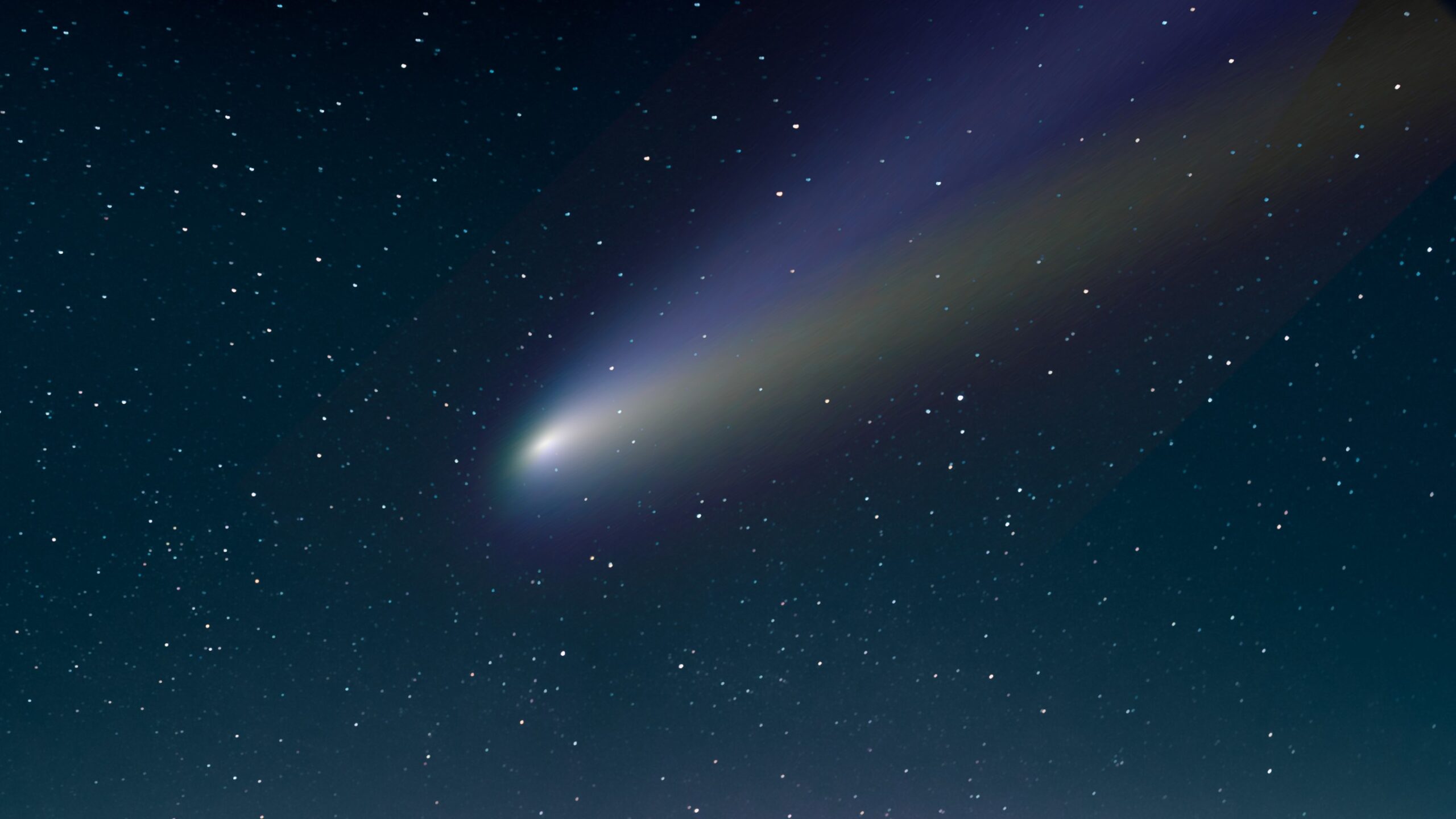

Have you ever looked up at the night sky and seen something truly, genuinely new? Not just another bright star, but a visitor? A cosmic tourist passing through our corner of the solar system for the first time in living memory?
Get ready, because that exact experience is on the horizon.
For the first time in years, a dazzling visitor from the deepest reaches of our solar system is gracing our night sky, and it has the potential to put on a spectacular show. Its name is a mouthful—Comet C/2023 A3 (Tsuchinshan-ATLAS)—but you can just think of it as one of the most exciting astronomical events of 2024.
Maybe you’ve seen the whispers online or heard a friend talk about it. It can be not very clear. When exactly do you look? Where? Will you need a giant telescope?
Don’t worry. This guide is your one-stop shop. We’re going to break down everything you need to know about this new comet, from what it actually is to the simple, step-by-step process for finding it with your own eyes. Let’s get started.
What is a Comet, Anyway? (The “Dirty Snowball” Explained)
Before we chase down our celestial target, let’s get to know what we’re looking for. What is this fuzzy, glowing object?
In the simplest terms, a comet is a cosmic snowball. Imagine a giant, mountain-sized ball of frozen gases, rock, and dust—a “dirty snowball”—left over from the formation of the solar system billions of years ago. These ancient objects spend most of their lives in the deep freeze of the outer solar system, in a distant realm called the Oort Cloud.
But every so often, a gravitational nudge sends one of these snowballs falling inward toward the Sun. And as it gets closer to the heat, the magic begins.
The comet has three main parts you can see:
- The Nucleus: This is the solid, rocky core of the comet—the actual “snowball” itself. It’s usually only a few miles across.
- The Coma: As the nucleus heats up, its ice turns directly into gas, creating a giant, glowing cloud around the nucleus. This is the comet’s “head” and what makes it look fuzzy, not like a sharp star.
- The Tails: This is the really iconic part. The solar wind and radiation pressure push material away from the coma, creating two magnificent tails. The dust tail is wide, curved, and reflects sunlight, often glowing white or yellowish. The ion tail is straight, narrow, and glows with a beautiful blueish hue because of energized gas molecules.
When we talk about a “new comet” like Tsuchinshan-ATLAS, we often mean one with an incredibly long orbit, taking tens of thousands or even millions of years to complete one loop around the Sun. This means its current appearance is a once-in-a-lifetime—or once-in-many-lifetimes—event. The last time it was here, humanity was in a very different place. And the next time it comes back? Well, we won’t be around to see it.
Introducing Comet Tsuchinshan-ATLAS: The Hype and The Facts
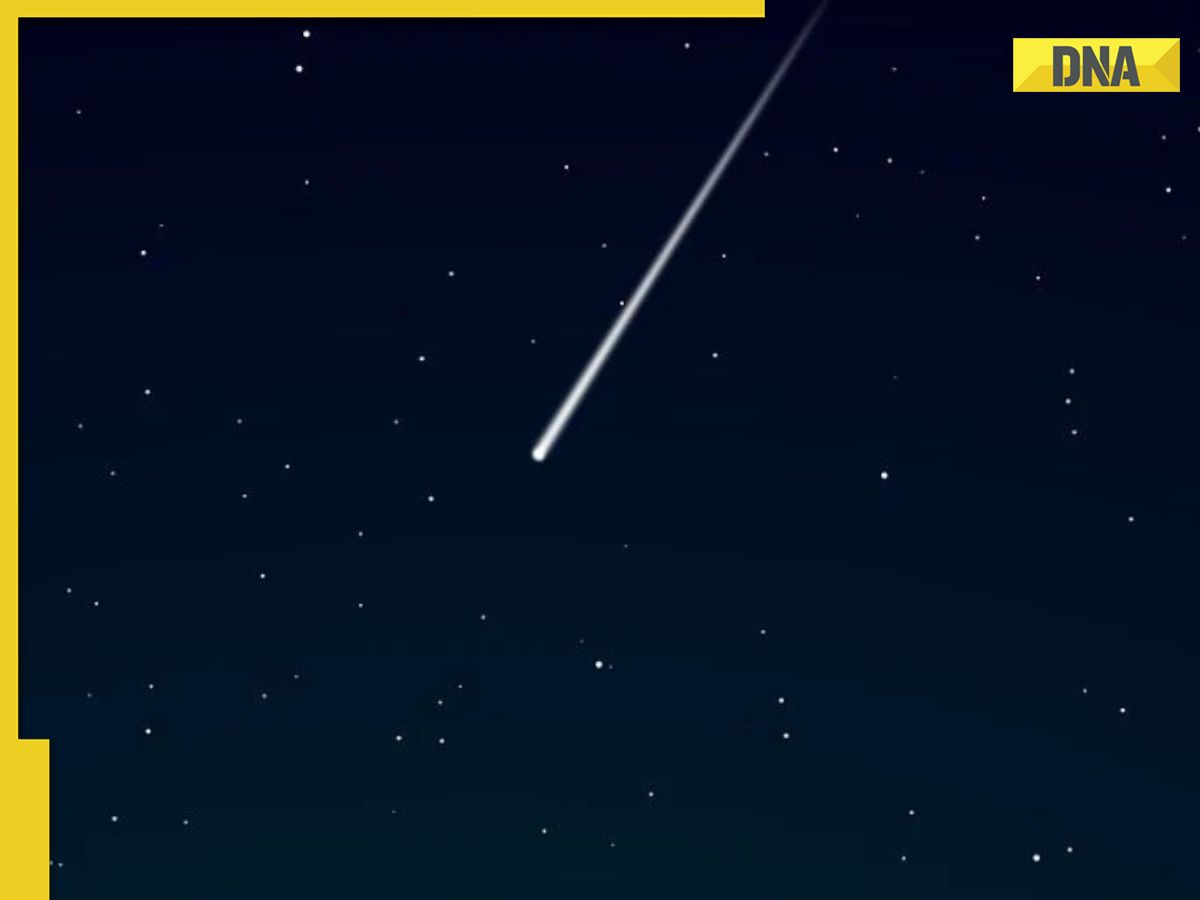 "A New Comet is Headed Our Way! Here's How and When to See It 2024")
So, what’s the story with this particular icy wanderer? Let’s meet our guest.
Where Did It Come From?
Comet Tsuchinshan-ATLAS has a hybrid name because it was independently discovered by two different surveys. The “Tsuchinshan” part comes from the Purple Mountain Observatory in China, and “ATLAS” is from the Asteroid Terrestrial-impact Last Alert System in South Africa. Both spotted it in early 2023, and astronomers quickly calculated its path.
It’s been falling toward the Sun from the Oort Cloud for thousands of years. Its long, elliptical orbit means this is its first trip into the inner solar system, and its pristine ices are about to get a serious wake-up call from our Sun.
Why Astronomers Are Excited
Okay, let’s talk about the hype. Why is everyone so buzzed about this specific comet?
The short answer: It has the potential to get very, very bright.
Current predictions suggest that around its closest approach to the Sun (perihelion) in late September 2024 and its closest approach to Earth in mid-October 2024, it could reach a brightness visible to the naked eye. Some optimistic early models even suggested it could become as bright as the brightest stars in the sky—a truly spectacular sight.
But here is the most important thing to remember about comets: They are notoriously unpredictable.
They have been called the “cats of the solar system” because they have tails and do whatever they want. A comet can fizzle, fracture, or fail to brighten as expected. It’s a delicate dance between the Sun’s heat and the comet’s fragile structure.
So, manage your expectations. It might be a breathtaking, once-in-a-generation spectacle. It might be a beautiful, fuzzy smudge best seen with binoculars. Either way, it will be a wonder. The excitement lies in the potential, and the joy is in going out to see for yourself.
How and When to See the New Comet (Your Viewing Guide)
This is the part you came for—the practical, step-by-step guide to becoming a comet hunter. Let’s break it down.
Key Viewing Dates and Timeline
Mark your calendars! The viewing window for Comet Tsuchinshan-ATLAS is long, but there are key dates for optimal viewing.
- Right Now (Spring/Summer 2024): The comet is currently approaching the inner solar system. It’s still faint and requires a decent-sized telescope to see. For most of us, the waiting game is on.
- Best Binocular Viewing (Early October 2024): After it swings around the Sun, the comet will begin its journey back out, but it will be moving closer to Earth. In early October, it should be bright enough to be an easy target for binoculars in the pre-dawn sky.
- Closest to Earth & Potential Peak Brightness (October 12-13, 2024): This is the big one. The comet will be at its closest point to our planet. If it survives its close encounter with the Sun intact, this could be when it’s at its very brightest and most spectacular.
- Best Naked-Eye Potential (Mid-October 2024): For a week or so around its closest approach, the comet may be visible to the naked eye from dark sky locations. This is the window where you’ll want to make a special effort to get away from city lights.
Where to Look in the Sky
The comet’s position will change night by night as it speeds along its orbit. Here’s the general trajectory:
- September 2024: The comet will be very close to the Sun in the sky and likely unobservable as it reaches perihelion.
- Early October 2024: It will emerge into the morning sky, low in the east before sunrise. Look for it in the constellation Leo.
- Mid-October 2024: This is the prime time. The comet will be visible in both the pre-dawn eastern sky and, excitingly, in the evening western sky just after sunset. It will be racing through the constellations of Virgo and Serpens.
- Late October 2024: It will fade as it moves away, becoming a binocular object again in the evening sky.
Your best bet is to use an astronomy app (see below) to get its exact position for your location on any given night.
Pro Viewing Tips for the Best Experience
You don’t need to be an astronomer to see a comet. You just need a little patience and know-how.
- Escape the Light Pollution: This is the #1 rule. If you live in a city or suburb, the glow of streetlights will wash out faint objects. Drive 20-30 minutes out of town to a rural area. You’ll be amazed at the difference.
- Use a Star Chart App: Don’t try to guess. Apps like SkySafari, Stellarium, or Star Walk 2 are game-changers. You can just point your phone at the sky and they’ll show you a live map, making it easy to pinpoint the comet’s location.
- Start with Binoculars: A good pair of 7×50 or 10×50 binoculars is the perfect tool for comet hunting. They gather much more light than your eyes, revealing the fuzzy coma and tail. Scan the area of the sky where the app tells you the comet is. It will look like a faint, fuzzy patch of light that isn’t on the star maps.
- Let Your Eyes Adjust: Once you’re at your dark site, avoid looking at your phone’s bright screen. Sit in the dark for at least 15-20 minutes. Your pupils will dilate, allowing you to see much fainter objects. Use a red-light mode on your phone or a red flashlight to preserve your night vision.
- Be Patient and Persistent: The comet won’t jump out at you like a plane with a flashing light. It will be a subtle, soft glow. Take your time. If you don’t see it on the first try, try again on the next clear night. The hunt is part of the fun!
Capturing the Moment: How to Photograph the Comet

Want to take your experience to the next level? Try photographing it! You don’t need a Hubble-level setup.
For Smartphone Users:
- Use a Tripod: This is non-negotiable. You cannot hold your phone steady enough for a night sky shot.
- Use Night Mode/Pro Mode: Most modern smartphones have a “Night Mode” that takes long exposures automatically. If you have a “Pro” or “Manual” mode, set the ISO to 800-1600 and the shutter speed to 10-30 seconds. Use a timer or a Bluetooth shutter remote to avoid shaking the phone.
- Apps: Consider a dedicated astrophotography app like NightCap Camera (iOS) or Deep Sky Camera (Android) for more control.
For DSLR/Mirrorless Camera Users:
- Gear: You’ll need a tripod, a wide-angle or standard lens (e.g., 24-50mm), and a shutter release cable or intervalometer.
- Settings (A Starting Point):
- Mode: Manual (M)
- Aperture: As wide as possible (lowest f-number, e.g., f/2.8)
- Shutter Speed: Start with 15-30 seconds. Any longer and stars will begin to trail.
- ISO: Start at 1600 and adjust up or down depending on the results.
- Focus: Set your lens to manual focus and focus on a bright star until it’s a sharp point.
- Take Multiple Shots: Take lots of photos! You can stack them later with software to reduce noise and bring out detail.
Frequently Asked Questions (FAQ)
Let’s tackle some of the most common questions swirling around this new comet.
Q: Is this comet dangerous? Will it hit Earth?
A: Absolutely not. The orbit of Comet Tsuchinshan-ATLAS is very well-known and calculated. It will pass by Earth at a perfectly safe distance of over 44 million miles (about 70 million kilometers). That’s farther away than Mars! There is zero risk of impact.
Q: Can I really see it without a telescope?
A: If predictions hold, yes! From a dark sky location in mid-October, it should be visible as a faint, fuzzy star to the naked eye. However, binoculars will dramatically improve the view, revealing the shape of the coma and any tail that has developed.
Q: What’s the best way to find it?
A: The single best tool is a reliable astronomy app on your smartphone. It takes all the guesswork out and will show you the comet’s position in real-time, relative to the constellations. It’s like having a personal planetarium in your pocket.
Q: How is a comet different from a meteor?
A: This is a great question! A comet is like a distant, slow-moving iceberg in space. It’s a permanent (if temporary) fixture in the sky that you can see night after night. A meteor (or “shooting star”) is a tiny speck of dust or sand from space that burns up instantly in our atmosphere—a brief, bright streak that lasts less than a second.
Conclusion: Your Invitation to the Cosmos
In our busy, ground-level lives, it’s easy to forget that we’re part of a much larger, dynamic system. Events like the visit of a new comet are a beautiful, humbling reminder.
This isn’t just a light in the sky. It’s an ancient piece of the solar system, a time capsule from the dawn of the planets, making a grand tour and inviting us to look up.
So, this October, make a plan. Grab a friend, a family member, or just a warm jacket and a thermos of something hot. Find a dark spot, look toward the constellation Virgo, and give your eyes a moment to adjust. Whether you see a brilliant celestial banner or a subtle, shy glow through your binoculars, you will be connecting with the cosmos directly and profoundly.
You will be witnessing a story billions of years in the making. Don’t miss it.
Happy stargazing!
Если готовите поездку в Калининград, нужно заранее выяснить, когда открывается сезон купания и какая температура моря в Балтийском море у береговой линии города. В июле-августе вода достигает до комфортных 18-20°C, поэтому заходить в воду в Калининграде летом действительно реально. При этом, в сентябре и октябре вода уже заметно холоднее, и купальный сезон со временем завершается. Изучить подробнее о температуре моря, погоде и точках для прогулок можно на сайте [url=https://school16vlad.ru/]орган в кафедральном соборе[/url] .
Кроме пляжей и янтарного побережья, несомненно посетите объекты Калининграда: старый город, форты (например, форт 11 — Дёнхофф), укрепления региона и органный зал в главной церкви. Для семей с детьми отлично подойдет светлогорск с музеями и парками, а вечером великолепно зайти в рыбную деревню или зайти в атмосферные кафе. Калининград создает приятные воспоминания в всякое время года — даже зимой здесь сравнительно мягкий климат по сравнению с оставшейся частью Россией.