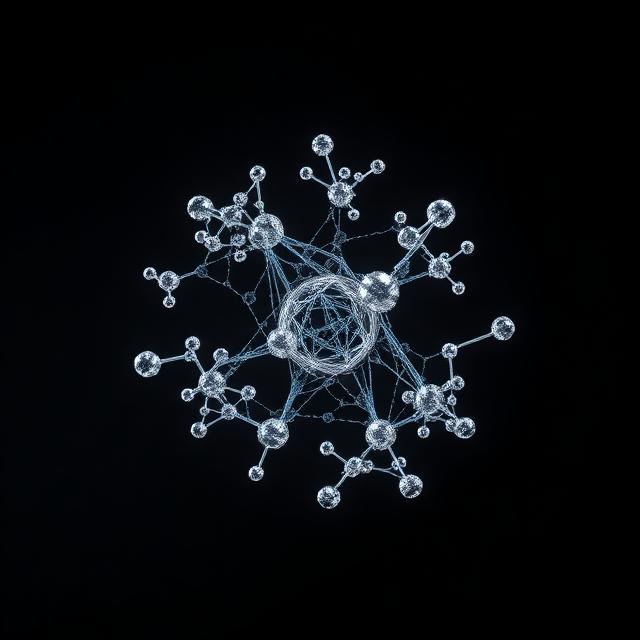
We live in an age of digital mirrors. For years, engineers and scientists have been creating “digital twins”—virtual replicas of physical objects, systems, or processes. Think of a jet engine, a city’s traffic flow, or even a human heart, all modeled in exquisite detail inside a supercomputer. These twins allow us to run simulations, predict failures, and optimize performance without ever touching the real thing. Enter the Quantum Digital Twins.
For all their sophistication, our most powerful classical computers are starting to bump up against the limits of what they can simulate. The most complex systems in our universe—the very fabric of molecules, the chaotic dance of global climate, the intricate wiring of the human brain—operate under the bizarre and counterintuitive rules of quantum mechanics. To create a true digital twin of these systems, you need a computer that speaks their native language.
This isn’t just an incremental upgrade. It’s a paradigm shift. It’s the difference between drawing a map of a city and being in the city, feeling its pulse, understanding its secrets from the inside out.
In this post, we’ll move beyond the jargon and unpack what a quantum digital twin really is, why it’s such a monumental leap forward, and how it’s poised to solve some of humanity’s most pressing challenges. Let’s demystify the future, together.
As we explore this topic, it’s essential to understand how Quantum Digital Twins are revolutionizing the way we interact with and model complex systems.
Part 1: The Foundation – What Exactly is a Digital Twin? (And Why It’s Not Enough)
Before we can understand the quantum leap, we need a solid grasp of the classical version.
A Simple Analogy: The Ship in the Bottle
Imagine you’re the chief engineer for a massive container ship. This ship is a complex beast: thousands of moving parts, engines guzzling fuel, a hull battling corrosive seawater, and a precious cargo.
A classical digital twin of this ship would be an incredibly detailed software model running in your office. It would include:
- Physics Data: The aerodynamics and hydrodynamics of the hull.
- Sensor Data: Real-time feeds from the actual ship on engine temperature, fuel consumption, stress on the metal, and weather conditions.
- Historical Data: Maintenance records, past performance, and failure logs.
You could use this twin to answer “what if” questions:
- What if we take a more southerly route through a storm? (Simulate the stress on the hull and fuel cost).
- What if we delay engine maintenance by two weeks? (Predict the risk of a catastrophic failure).
- What if we add a new type of propeller? (Model the efficiency gains before spending a dime).
This is incredibly valuable. It saves money, prevents disasters, and optimizes operations. It’s used everywhere from manufacturing (twinning production lines) to healthcare (creating personalized models of a patient’s cardiovascular system).
The Cracks in the Mirror: Where Classical Twins Fall Short
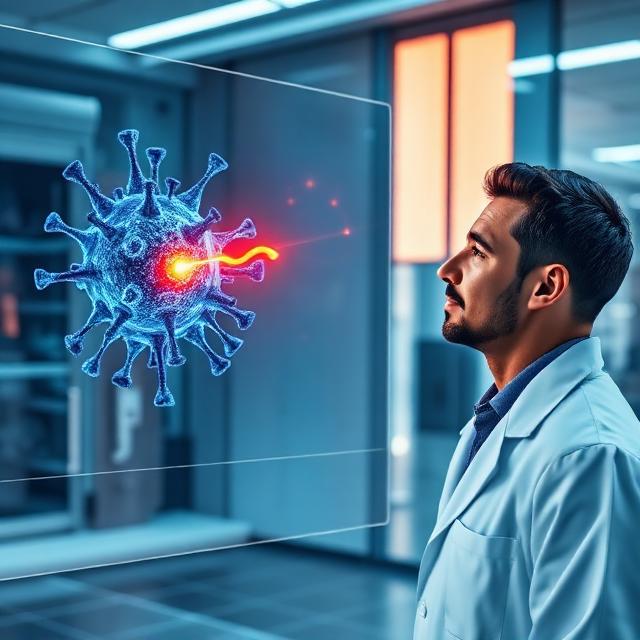
But this approach has fundamental limitations. The classical digital twin is, at its core, an approximation.
Modeling a single molecule for a new drug, for instance, requires simulating the interactions of every single electron and atomic nucleus. For a complex molecule, the number of possible configurations becomes astronomical—so vast that even the world’s most powerful supercomputers would take longer than the age of the universe to calculate them all.
This is known as the exponential wall. Classical computers are binary; they think in 0s and 1s. To model a quantum system with 100 interacting particles, you’d need to track 2^100 possible states. That’s a number bigger than all the atoms in the known universe.
So, when it comes to the truly fundamental systems of nature—the ones that dictate how a protein folds, how a new catalyst works, or how a novel material behaves—our classical digital twins are like using a child’s crayon drawing to guide a brain surgeon. The resolution just isn’t there.
Part 2: The Quantum Leap – Speaking Nature’s Native Language
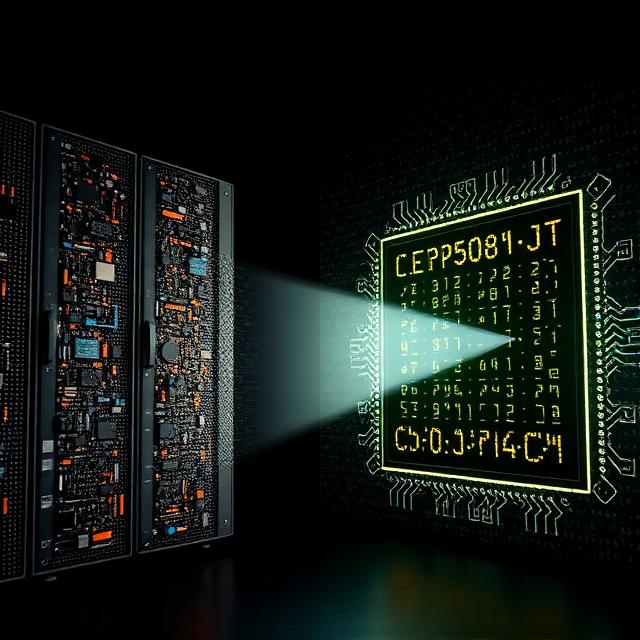
This is where quantum computing enters the stage, not as an incremental improvement, but as a fundamentally different way of processing information.
Quantum 101: It’s Not Just a Faster Computer
Forget everything you know about bits for a moment. Quantum computers use qubits. Unlike a classical bit, which is definitely a 0 or a 1, a qubit can be in a superposition—a state of being 0 and 1 simultaneously, like a spinning coin.
This allows a quantum computer with just 50 qubits to represent over a quadrillion possible states at the same time. It can explore a vast landscape of possibilities in parallel. Furthermore, through a phenomenon called entanglement, qubits can be linked in such a way that the state of one instantly influences the state of another, no matter the distance. This creates an incredibly powerful form of correlation that is perfect for modeling natural systems.
The Birth of the Quantum Digital Twin
A Quantum Digital Twin is a virtual model of a physical system that is simulated on a quantum computer, leveraging its innate ability to handle quantum mechanics.
Instead of approximating quantum behavior with classical math, the quantum computer naturally embodies it. The qubits in the computer directly represent the quantum particles (electrons, atoms) in the system being twinned.
It’s the difference between:
- Classical Simulation: A brilliant actor studying and mimicking the behavior of a wolf.
- Quantum Simulation: Actually being the wolf, understanding its instincts and drives from the inside.
This isn’t just about speed. It’s about fidelity. A quantum digital twin can achieve a level of accuracy and detail that is simply impossible for any classical computer, now or in the foreseeable future.
Part 3: The Game-Changers – Real-World Applications of Quantum Digital Twins
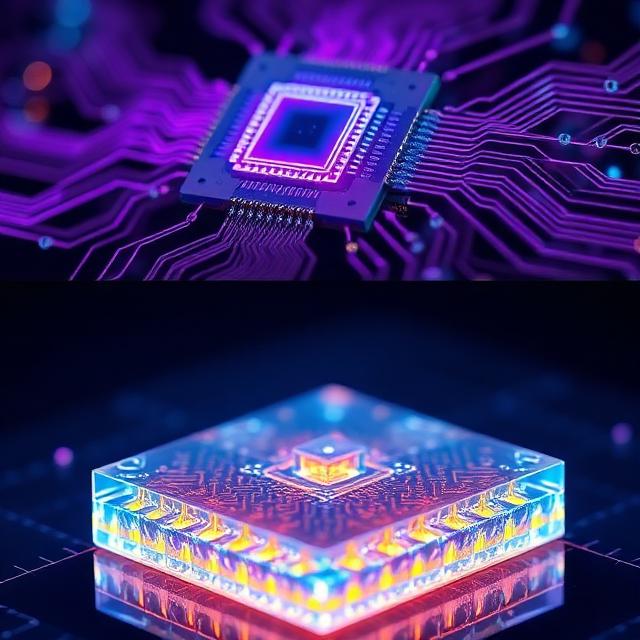
The theoretical is fascinating, but the practical implications are world-changing. Here’s where quantum digital twins will first make their mark.
1. The Drug Discovery Revolution
The Problem: Discovering a new drug is a decades-long, multi-billion-dollar gamble. A key reason is that scientists cannot accurately predict how a candidate molecule will interact with a target protein in the body. The binding is a complex quantum dance.
The Quantum Twin Solution: Imagine creating a quantum digital twin of both the drug molecule and the protein. Researchers could simulate their interaction at the atomic level, observing the exact forces at play—hydrogen bonds, van der Waals forces, electrostatic interactions—with perfect fidelity.
The Impact: They could virtually screen millions of molecules, accurately predict which ones will work, and even design entirely new drugs from scratch. This could slash development time and cost, bringing life-saving treatments to patients years faster and unlocking cures for diseases like Alzheimer’s or ALS that have eluded us.
2. Designing the Materials of Tomorrow
The Problem: We need new materials to solve the energy crisis: better batteries for electric cars and grid storage, more efficient solar cells, and superconductors that work at room temperature. Discovering these materials currently involves endless trial and error in the lab.
The Quantum Twin Solution: A quantum digital twin could model the electronic structure of a potential new material. Scientists could “see” how electrons move through a new battery electrolyte or a novel solar cell compound, allowing them to design materials with specific properties—like high conductivity or perfect efficiency—on a quantum computer before ever firing up a furnace.
The Impact: This could unlock a clean energy revolution. We could design batteries that last for weeks, solar panels that are cheap and incredibly efficient, and catalysts that pull CO2 directly out of the atmosphere, actively reversing climate change.
3. Supercharging Classical Models
The Problem: Even our best classical models of massive systems like the global climate or the world economy are still simplifications. They miss subtle, large-scale quantum effects or become too computationally heavy to run detailed, long-term forecasts.
The Quantum Twin Solution: We won’t have a quantum digital twin of the entire planet anytime soon. But we can have hybrid models. A quantum computer could handle the most quantum-mechanically intense parts of a simulation—like modeling a specific chemical reaction in the atmosphere or the complex behavior of a financial market at a microscopic level—and feed that high-fidelity data back into a larger classical model.
The Impact: Unprecedentedly accurate climate predictions, allowing us to prepare for and mitigate disasters. Or perfectly stable financial systems, as regulators could test the impact of new policies on a quantum-twin of the economy, spotting systemic risks before they cause a crash.
Part 4: The Road Ahead – Challenges and the Human Dimension

The vision is breathtaking, but the path to a fully realized quantum digital twin era is not without its obstacles.
The Hurdles We Must Clear
- Hardware Fidelity: Today’s quantum processors are “noisy” (NISQ era). They are prone to errors and can only maintain their fragile quantum states for short periods. Building stable, error-corrected quantum computers with thousands of high-quality qubits is the primary engineering challenge.
- Algorithm Development: We need new algorithms and software tools to “program” these twins. How do we best map a real-world problem onto a quantum computer’s architecture? This is a vibrant area of research.
- The Hybrid Bridge: Seamlessly integrating quantum and classical computing resources is a complex software and systems engineering problem. The quantum computer won’t work in isolation; it will be a specialized accelerator in a larger computational ecosystem.
It’s Not About Replacing Us
A common fear is that this technology will be so complex that it will alienate us or make human experts obsolete. The opposite is true.
A quantum digital twin is a tool, much like a telescope. A telescope doesn’t replace the astronomer; it extends their vision, allowing them to see deeper into the cosmos and ask new questions. Similarly, a quantum digital twin will be a “computational microscope” that allows scientists, doctors, and engineers to see into realms that were previously invisible.
It will augment human intuition and creativity, freeing us from the drudgery of guesswork and physical experimentation and allowing us to focus on what we do best: asking brilliant questions, designing innovative solutions, and making ethical, human-centered decisions.
Frequently Asked Questions: Quantum Digital Twins
1. What is the simple definition of a Quantum Digital Twin?
A Quantum Digital Twin is a highly accurate virtual model of a physical object or system that is run on a quantum computer. Because quantum computers naturally operate using the laws of quantum mechanics, they can simulate complex systems like molecules and materials with a level of precision that is impossible for even the most powerful classical computers.
2. How is a Quantum Digital Twin different from a normal Digital Twin?
Think of it as a difference in resolution and fundamental understanding. A classical digital twin is like a detailed, intelligent map. A Quantum Digital Twin is like being physically inside the city the map represents, feeling the breeze and understanding why people take certain shortcuts. The former is an excellent approximation; the latter is a deep, intrinsic simulation.
3. When will we see practical Quantum Digital Twins?
We are already seeing early, proof-of-concept versions in research labs for small molecules and simple materials. However, widespread, practical applications in industries like pharmaceuticals are likely 5 to 10 years away. The timeline depends on the progress in building more stable, error-corrected quantum computers.
4. Do we need a full quantum computer to twin an entire system, like a car engine?
Not at all. This is a key point of the “hybrid” model. For a complex object like a car engine, a quantum computer would likely only simulate the most quantum-level parts, such as the chemical reactions in a new catalytic converter or the molecular structure of a new lightweight alloy. The rest of the engine’s physics (stress, heat, aerodynamics) would still be handled brilliantly by a classical computer, with both models working together.
5. Who will be able to use this technology? Will it be accessible?
Initially, access will be through the cloud via major tech providers (like IBM, Google, Microsoft, and Amazon) and specialized quantum software companies. It will likely start as a tool for researchers at large corporations and universities. Over time, as the technology matures and becomes more user-friendly, it will trickle down to smaller companies and a wider range of engineers and scientists, much like how access to massive cloud computing power is available today.
6. What is the biggest obstacle to making this a reality?
The single biggest obstacle is quantum decoherence and noise. Qubits are extremely fragile and can lose their quantum state due to tiny disturbances from their environment. Building quantum computers that can maintain stability long enough to perform complex, error-free calculations (a milestone known as “fault-tolerant quantum computing”) is the grand challenge that the entire field is working to overcome.
7. Could Quantum Digital Twins be used for modeling the human brain?
This is a fascinating and long-term possibility. The brain is arguably the most complex system we know of, and some of its processes may have quantum characteristics. While a full quantum twin of an entire human brain is firmly in the realm of distant science fiction, quantum digital twins could, in the coming decades, be used to simulate key molecular processes in the brain, such as protein misfolding in diseases like Parkinson’s or the interaction of neurotransmitters with unprecedented accuracy.
Conclusion: A New Lens on Reality
The journey towards functional quantum digital twins is still in its early chapters. We are like the pioneers of classical computing in the 1940s, seeing the glimmer of potential but only just beginning to grasp the true scope of the revolution.
But the direction is clear. We are moving from creating digital approximations of our world to building digital equivalents that operate on the same fundamental principles. Quantum digital twins offer a new perspective through which we can perceive and interact with reality, enabling us to solve problems that have plagued humanity for generations.
It’s a future where we don’t just guess which drug might work; we know. We don’t just hope a new battery material exists; we design it. We don’t just model the climate; we understand it with a depth that empowers us to be better stewards of our planet.
The quantum mirror is being polished. When we look into it, we won’t just see a reflection of what is; we will see what is. We’ll see a blueprint for what could be.