Remember staring up at the night sky as a kid, wondering what it would be like to drive on the Moon? That childhood fantasy is now a breathtaking reality, thanks to the incredible advancements in lunar rover robotics. These aren’t your average remote-control cars; they are masterpieces of engineering, designed to survive the harshest environment imaginable while expanding the reach of human and robotic exploration. In this deep dive, we’ll explore the fascinating world of these mechanical pioneers, uncovering the technology that lets them roam an alien landscape and the vital role they play in our cosmic future.
The journey from the clunky, iconic rovers of Apollo to today’s autonomous, AI-powered machines is a story of human ingenuity. It’s a tale where robotics, artificial intelligence, and space systems engineering converge to answer fundamental questions about our universe and pave the way for a sustained human presence beyond Earth.
A Storied Past: The Legacy of Lunar Roving
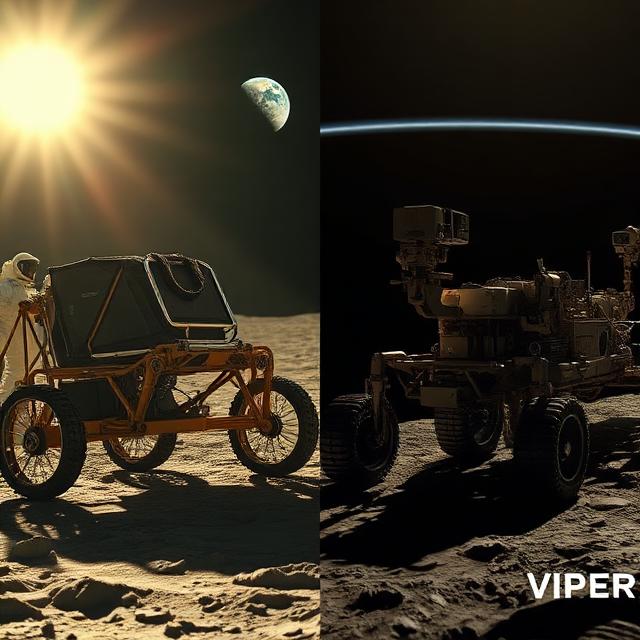
Before we look to the future, we must pay tribute to the pioneers. The Apollo Lunar Roving Vehicle (LRV), first deployed during Apollo 15 in 1971, was a marvel of its time. Folded like a piece of origami into the Lunar Module’s descent stage, it gave astronauts unprecedented range. With its wire-mesh wheels and simple electric drivetrain, it was a testament to practical, lightweight design. However, it was entirely dependent on its human drivers.
Fast forward five decades, and the game has undergone a complete transformation. Today’s rovers are robotic, often designed to operate without direct human control. The communication delay between Earth and the Moon (about 3 seconds round-trip) makes true teleoperation clunky. Instead, engineers send high-level commands, and the rover’s onboard intelligence handles the rest. This shift marks the core of modern lunar rover robotics: creating resilient, independent agents of exploration.
Engineering for an Alien World: The Immense Challenges
Building a machine for the Moon isn’t like building a terrestrial robot. Engineers face a “perfect storm” of antagonistic conditions.
1. The Brutal Thermal Environment:
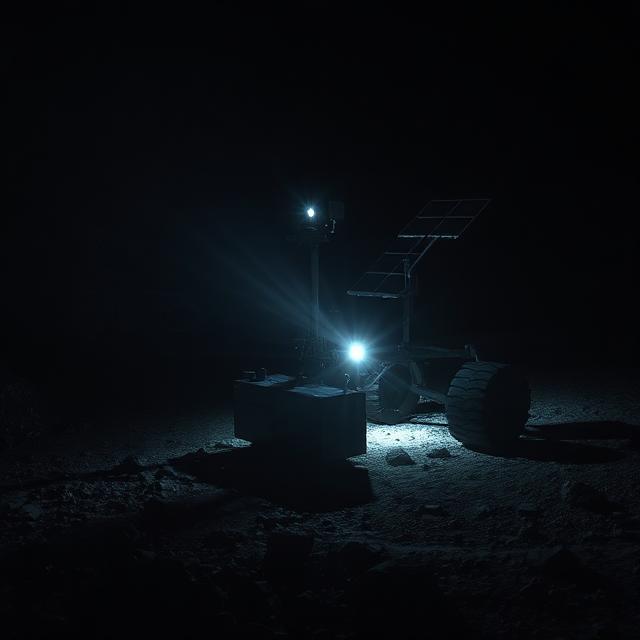
Lunar days last about 14 Earth days, with surface temperatures soaring to 127°C (260°F). Nights are equally long and plunge to a frigid -173°C (-280°F). This cycle poses a nightmare for materials and electronics. Rovers use Multi-Layer Insulation (MLI) blankets, reflective coatings, and sophisticated heating units powered by radioactive decay (Radioisotope Heater Units) or batteries to survive the deep freeze.
2. The Abrasive and Electrostatically-Charged Regolith:
Moon dust, or regolith, is not like Earth dust. It’s made of sharp, glass-like particles created by micrometeorite impacts. It’s incredibly abrasive, wears down moving parts, and—due to solar radiation—becomes electrostatically charged, clinging to every surface. This can clog mechanisms, obscure lenses, and cause thermal management issues. Designing effective mobility systems and dust-resistant seals is a constant battle.
3. The Vacuum of Space:
With no atmosphere, there’s no air cooling for motors or electronics. Lubricants can evaporate, and materials can cold-weld together. All components must be specially tested and certified for the vacuum of space.
4. Cosmic and Solar Radiation:
Without Earth’s protective magnetic field and atmosphere, rovers are bombarded with cosmic rays and solar particle events. This radiation can fry sensitive electronics and degrade materials over time. Shielding and the use of radiation-hardened computer components are essential.
The Heart of the Beast: Key Robotic Systems
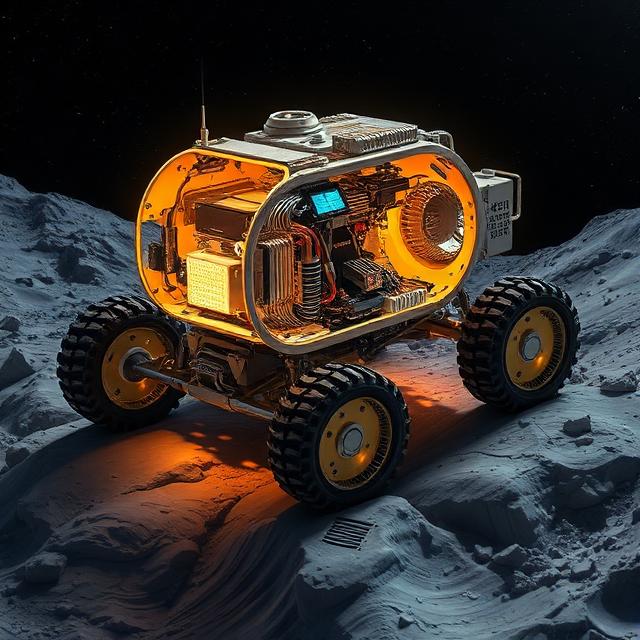
So, how do you build a machine to not just survive, but thrive under these conditions? Let’s break down the core systems of a modern lunar rover.
Mobility: More Than Just Wheels
The choice of locomotion defines a rover’s mission.
- Wheeled Rovers: The most common, optimized for speed and efficiency over relatively flat terrain. Modern designs, like those used on NASA’s VIPER mission, use flexible, grousered wheels for traction in soft regolith.
- Legged/Walking Rovers: Inspired by insects and animals, these offer superior stability on extreme, rocky slopes. While more mechanically complex, they represent the cutting edge of planetary robotics.
- Hybrid Systems: Some concepts combine wheels with legs or even hopping mechanisms for maximum versatility.
The suspension is critical. Most use a rocker-bogie system, famously employed by Mars rovers like Curiosity and Perseverance. This design keeps all wheels on the ground for maximum traction and stability over large rocks without tipping over.
The Robotic “Brain”: Autonomy and Navigation
This is where the magic happens. Modern rovers possess a level of machine learning and autonomy that would seem like science fiction to the Apollo engineers.
- Perception: Rovers use stereo camera pairs to build a 3D map of their immediate surroundings. LiDAR (Light Detection and Ranging) may also be used for precise topographical mapping.
- Hazard Detection: Onboard algorithms analyze the 3D terrain map in real-time, identifying slopes, rocks, and craters that pose a risk.
- Path Planning: The rover doesn’t just avoid hazards; it calculates the safest, most energy-efficient path to a designated goal point, all without human input. This capability, known as autonomous navigation, allows rovers to cover much more ground per day.
The Robotic “Hands”: Manipulators and Sampling Tools
Many rovers are equipped with robotic arms. These are not simple appendages; they are multi-jointed, precision instruments. Their tasks can include:
- Contact Science: Pressing sensors against rocks to determine their composition.
- Drilling & Coring: Extracting subsurface samples, a key goal for missions searching for water ice.
- Sample Handling: Transferring drilled cores to onboard analysis instruments or into a sealed cache for potential return to Earth.
Power: The Lifeblood of Exploration
Solar power is the default, but the long lunar night is a major hurdle. Solutions include:
- High-Efficiency Solar Arrays: To maximize energy capture during the short day.
- Battery Banks: Typically Lithium-Ion, sized to power survival heaters through the night.
- Radioisotope Power Systems: For missions destined for permanently shadowed regions (like the Moon’s poles), where sunlight never reaches, a Radioisotope Thermoelectric Generator (RTG) provides steady, reliable heat and electricity for years.
Stars of the New Lunar Renaissance: Current & Upcoming Missions
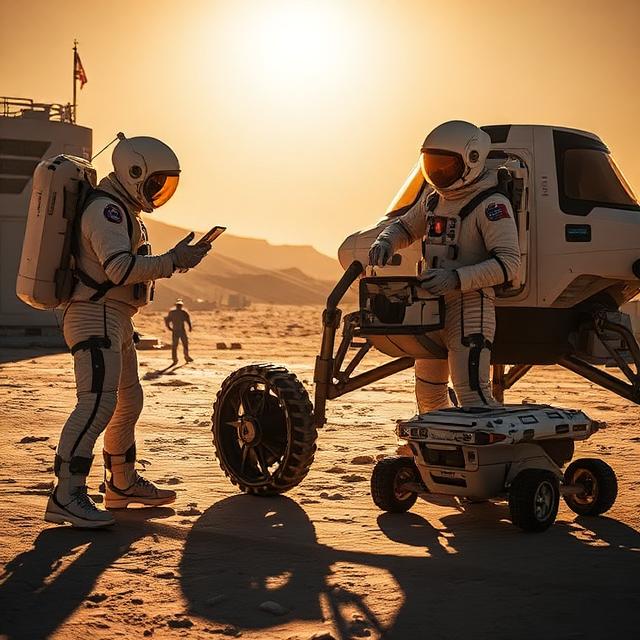
We are in the midst of a new space race, but this time the focus is on sustainability and partnership. A new generation of rovers is leading the charge.
NASA’s VIPER (Volatiles Investigating Polar Exploration Rover):
Scheduled to land near the Moon’s South Pole in late 2024, VIPER is a mobile robot with a clear mission: find water. Equipped with a 1-meter drill, it will map the distribution of water ice in the regolith. Its findings will be crucial for planning future In-Situ Resource Utilization (ISRU)—using local materials to make rocket fuel and support life. [Learn more about how ISRU will change deep space exploration here].
JAXA’s / Toyota’s LUNAR CRUISER:
This is a game-changer in scale. A pressurized, crewed rover designed to support astronauts for weeks-long expeditions. It’s essentially a mobile habitat and laboratory, extending humanity’s range on the lunar surface. Its development highlights the shift from short-term visits to sustainable lunar exploration.
Commercial Lunar Payload Services (CLPS) Rovers:
NASA’s CLPS program is leveraging private companies to deliver payloads. This includes rovers from companies like Astrobotic and Intuitive Machines. These smaller, more agile rovers are proving that commercial innovation will be a major driver in the new lunar economy.
International Collaboration:
The Chinese Chang’e missions have successfully deployed the Yutu (“Jade Rabbit”) rovers, demonstrating advanced capabilities. Meanwhile, the multinational Artemis Program, led by NASA, promises to land the first woman and first person of color on the Moon, supported by a fleet of robotic precursors and assistants.
The Future is Robotic: What’s Next for Lunar Rovers?
The next decade will see lunar rover robotics evolve in astonishing ways.
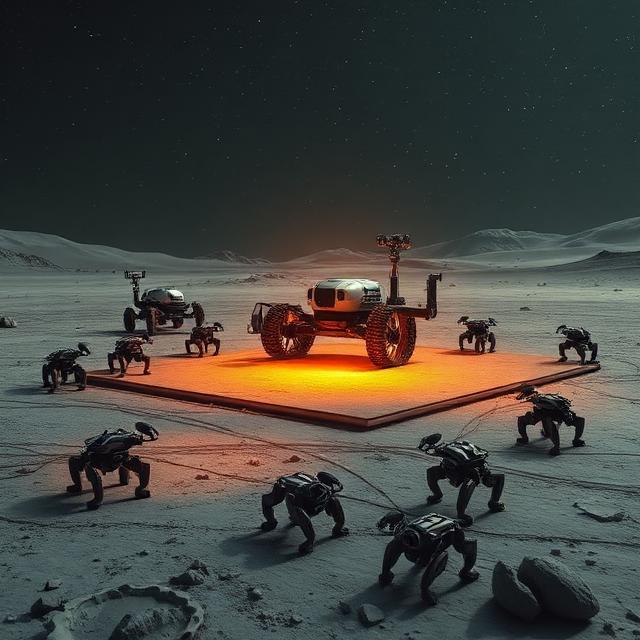
Swarm Robotics: Instead of sending one large, expensive rover, imagine deploying a dozen small, cheap ones. Robot swarms could cooperatively map large areas, act as a distributed sensor network, or even perform collective tasks like building simple structures.
In-Situ Resource Utilization (ISRU) Prospectors: The true key to a sustainable moon base is using what’s already there. Future rovers will be specialized prospectors and processors, tasked with harvesting water ice, mining regolith for oxygen, and even constructing landing pads using sintered (fused) lunar soil.
Autonomous Construction Robots: Before astronauts arrive, robots could prepare the site. This includes autonomous bulldozers to level ground, 3D printers using regolith as feedstock to build habitats, and robotic assemblers to erect structures.
The Gateway Connection: NASA’s planned Lunar Gateway station in orbit will serve as a command and relay center. Rovers on the surface could be controlled in near-real time by astronauts in the Gateway, blending human decision-making with robotic execution in a powerful new paradigm called telerobotics.
Why This Matters: More Than Just Moon Rocks
The development of lunar rover robotics isn’t just about exploring the Moon. It’s a catalyst for transformative innovation.
- Driving Technology on Earth: The challenges of autonomy, compact power systems, and durable materials for space directly lead to advancements in self-driving cars, disaster-response robots, and renewable energy tech.
- Preparing for Mars: The Moon is the perfect proving ground. The robotics, habitats, and life-support systems we develop for a sustained lunar presence are direct stepping stones for the ultimate goal: human missions to Mars.
- Inspiring a New Generation: These mechanical explorers capture the public imagination. They are tangible symbols of humanity’s curiosity and engineering prowess, inspiring future scientists, engineers, and explorers.
FAQ: Your Lunar Rover Robotics Questions Answered
Q1: What exactly is a “lunar rover” in today’s context?
A lunar rover is a vehicle designed to move across the surface of the Moon. Today, they are almost exclusively robotic, carrying scientific instruments, cameras, and tools to explore the lunar environment without a human driver. They serve as our remote eyes, hands, and laboratories on another world. For more on their evolution, check out the section on A Storied Past: The Legacy of Lunar Roving.
Q2: Why can’t we just use remote controls (like a giant RC car) to drive them?
The main culprit is latency—the time delay in communications. It takes about 3 seconds for a signal to travel from Earth to the Moon and back. If a rover is heading toward a boulder at 5 mph, in the 6 seconds it takes to see the hazard and send a “stop” command, it could already be too late. Modern rovers use autonomous navigation systems to process their surroundings and make safe driving decisions in real-time.
Q3: What’s the biggest engineering challenge in building a lunar rover?
It’s a tie between two extremes: temperature and dust. Surviving the two-week-long lunar night with temperatures plunging below -170°C requires ingenious heating and insulation. Conversely, the abrasive, electrostatically-charged lunar regolith (dust) gets into everything, jamming joints, coating solar panels, and wearing down materials. We delve into these brutal challenges in the section Engineering for an Alien World.
Q4: How do lunar rovers power themselves?
Most rely on solar panels to generate electricity during the 14-Earth-day lunar day, storing excess energy in batteries to survive the equally long night. For missions going into permanently shadowed craters (where sunlight never reaches), like NASA’s VIPER, the only option is a Radioisotope Thermoelectric Generator (RTG), which provides steady heat and power from the decay of plutonium for years.
Q5: Are we still sending new rovers to the Moon? Absolutely! When is the next one?
Yes, we’re in a new golden age of lunar exploration! The next major robotic rover is NASA’s VIPER, scheduled to launch toward the Moon’s South Pole in late 2024 to hunt for water ice. This is part of a larger wave of public and private missions under NASA’s Artemis program and Commercial Lunar Payload Services (CLPS). You can read about these exciting missions in Stars of the New Lunar Renaissance.
Q6: How do the wheels work? They look so different from car tires.
You’re right! Lunar rover wheels are engineered for soft, sandy, and rocky terrain with no air. The Apollo rover used a flexible wire-mesh design. Modern rovers, like VIPER, use flexible, grousered metal wheels—think of a paddlewheel shape—designed to dig in for traction and flex over obstacles. Many also use a rocker-bogie suspension to keep all wheels on the ground over incredibly bumpy terrain.
Q7: What is “ISRU” and why is it so important for rovers?
ISRU stands for In-Situ Resource Utilization—a fancy term for “living off the land.” Future rovers will be critical prospectors and processors, tasked with finding and extracting resources like water ice (for drinking, oxygen, and rocket fuel) and minerals. This is the key to making a sustainable moon base economically feasible, as launching everything from Earth is astronomically expensive. Learn more in the Future is Robotic section.
Q8: How does this technology benefit us here on Earth?
The extreme challenges of space drive radical innovation. Technology developed for lunar rovers leads to advancements in:
- Autonomy & AI: Better sensors and algorithms for self-driving cars and disaster-response robots.
- Battery & Power Systems: More efficient, durable energy storage.
- Remote Medicine: Techniques for operating robots from a distance.
- Materials Science: New, lighter, stronger alloys and dust-resistant coatings. We explore this ripple effect in Why This Matters: More Than Just Moon Rocks.
Q9: What’s the difference between the Mars rovers (Perseverance) and lunar rovers?
While they share core robotics tech, the environments dictate major differences:
- Atmosphere: Mars has a thin atmosphere, allowing for parachute-assisted landings and potential use of air-based cooling. The Moon has a vacuum.
- Temperature: Lunar temperature swings are more extreme and rapid.
- Dust: Martian dust is fine and can coat solar panels, but lunar dust is far more abrasive and “sticky.”
- Communication Delay: The delay to Mars is minutes to hours, making autonomy even more critical than on the Moon (3-second delay).
Q10: Can I follow these rovers in real-time?
While you can’t get a live video feed, you can absolutely follow their progress! Mission teams regularly post raw images, updates, and drive logs online. Follow the official social media channels and websites of NASA’s Artemis Program, the VIPER mission, and commercial partners like Astrobotic and Intuitive Machines. Links to key resources are provided at the end of the blog post.
Q11: What does the future hold? Will rovers ever be fully independent?
We’re rapidly moving toward swarm robotics and fully autonomous systems. Imagine dozens of small, cheap rovers working together to map a crater, or a robotic construction crew 3D-printing a habitat before astronauts arrive. The goal is for robots to perform complex tasks—like setting up a base camp—with only high-level instructions from Earth or lunar orbit. Explore these exciting concepts in The Future is Robotic: What’s Next?.
Conclusion: Our Robotic Vanguard
Lunar rover robotics represents one of the most exciting and pragmatic frontiers in modern exploration. They are our scouts, our geologists, and our construction crews in a world 384,400 kilometers away. From the humble, human-driven buggy of Apollo to the autonomous, water-hunting VIPER and the crewed cruisers of tomorrow, these robots are extending our senses and capabilities across the cosmic sea.
As we stand on the cusp of a permanent return to the Moon, it is clear that our partners in this grand endeavor will not just be astronauts from around the world, but also the resilient, intelligent, and ever-evolving robots that roll, walk, and work alongside them. They are the unsung heroes, trundling silently across the gray plains, turning science fiction into fact and building the infrastructure for humanity’s multi-planet future.
The next time you look up at the Moon, imagine a small set of wheel tracks weaving between craters. They are more than just marks in the dust; they are the signature of an ambitious, curious, and robotic-enabled civilization taking its first true steps into a cosmic future.