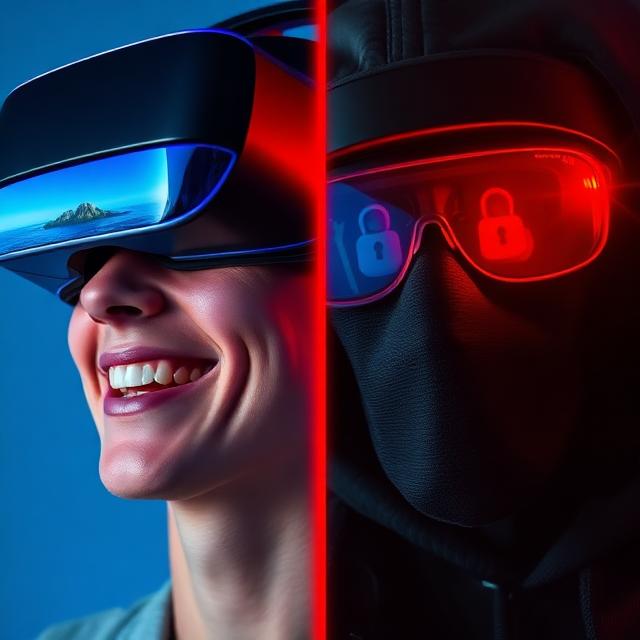
The Allure and The Vulnerability
Picture this: You slip on your VR headset, and suddenly, you’re not in your living room anymore. You’re standing atop a floating island in VRChat, discussing philosophy with a giant robot. Or you’re in Decentraland, finalizing the purchase of a virtual plot next to Snoop Dogg’s estate. Perhaps you’re deep in a raid in Final Fantasy XIV, wielding a legendary sword you spent months earning. This is the magic of virtual worlds—immersive, social, and increasingly, a core part of our digital lives.
But here’s the twist: your headset doesn’t show you, as you’re marveling at the sunset over a pixelated horizon, someone might be picking the digital lock on your virtual front door. The same creativity and connectivity that make these spaces so compelling are also attracting a new breed of cybercriminals. Your avatar isn’t just a character; it’s a new vector for attack, and your virtual assets have very real-world value.
This isn’t science fiction. It’s the emerging frontier of cybersecurity. As we spend more time, money, and social capital in virtual worlds—from massive multiplayer online games (MMOs) to social VR platforms and blockchain-based metaverses—we are exposing ourselves to a unique set of digital threats. Let’s explore the hidden dangers lurking behind the login screen and, most importantly, how you can protect your digital self.
Beyond the Game: Understanding the Stakes

First, let’s dismantle a common myth: “It’s just a game.” For millions, it hasn’t been “just a game” for a long time.
- The Economy is Real: The market for virtual assets—skins, weapons, land, currencies—is booming. A single “CS: GO” skin sold for over $500,000. Decentraland and The Sandbox have seen land parcels trade for millions of dollars worth of cryptocurrency. Your in-game inventory could be worth more than your physical one.
- Identity is Blurred: Your avatar is an extension of yourself. It holds your social connections, your reputation, and your creative expression. A hijacked avatar can be used to scam your friends, damage your relationships, and cause genuine psychological distress.
- The Data Goldmine: Virtual worlds collect staggering amounts of data: your voice, your movements (in VR, this includes precise biometric gait data), your social interactions, preferences, and payment information. This data is incredibly valuable and a prime target for theft.
The stakes are high because the lines between virtual and real have irrevocably blurred. A cyberattack in a virtual world can lead to tangible financial loss, emotional harm, and the compromise of personally identifiable information (PII). The Federal Trade Commission (FTC) has issued warnings about online gaming scams, highlighting that these threats are on the radar of consumer protection agencies.
The Threat Landscape: From Trolls to Organized Crime
The cybersecurity threats in virtual worlds are diverse, evolving from simple griefing to sophisticated financial crimes. Here’s a breakdown of the most prevalent dangers.
1. Account Takeover and Phishing: The Classic Con, Now in VR
This is the most common threat, but the tactics are tailored to the virtual environment.
- How it works: You receive a whisper from a “friend” or a message in a community Discord server: “Hey, check out this amazing mod for the game!” or “Your account has won a rare pet! Click here to claim.” The link leads to a perfect replica of the game’s login page. The moment you enter your credentials, they belong to a criminal.
- The Metaverse Twist: In platforms like VRChat or Horizon Worlds, phishing can be more immersive. A malicious user might create a popular world that requires you to “re-authenticate” using a fake Oculus or Steam login panel within the VR experience itself. The immersion lowers your guard.
- The Aftermath: Once inside, the attacker loots everything of value, sells it off, or uses the account to launch further phishing attacks on your friend list. They may also access any linked payment methods.
Humanized Protection Tip: Treat unsolicited links in virtual worlds with the same extreme skepticism you’d apply to an email from a “Nigerian prince.” Enable two-factor authentication (2FA) on every single account, especially your email and primary gaming platforms (Steam, Epic, Meta). This is your single most powerful defense.
2. Malware and Exploits: Trojan Horses in Your Inventory
Virtual worlds are complex software, and like any software, they have vulnerabilities.
- How it works: Attackers discover flaws in a game’s code or in popular third-party mods/add-ons. They then create malicious mods, fake asset files, or even exploit the game’s own systems (like custom map uploads) to deliver malware to your computer.
- The Damage: This malware could be a keylogger stealing all your passwords, a cryptominer hijacking your GPU to make money for the attacker, or ransomware that locks your entire computer. In 2022, a malicious Minecraft mod called “Fractureiser” infected thousands of users, showcasing how trust in community mods can be exploited. The Cybersecurity & Infrastructure Security Agency (CISA) has resources specifically on securing gaming systems.
- Client-Side Vulnerabilities: Many threats target the game “client” on your PC. An attacker might find a way to execute code on your machine through a flaw in how the game processes data from the server.
Humanized Protection Tip: Only download mods and assets from official, vetted sources or communities with strong reputations. Keep your antivirus/anti-malware software updated and run regular scans. Keep your operating system, game clients, and drivers patched. These updates often include critical security fixes.
3. Virtual Asset Theft and Fraud: The Digital Heist
This is where cybercrime meets the virtual economy.
- How it works:
- Social Engineering: “I’m from player support. We need to verify your ownership of this rare item. Please trade it to this account temporarily.”
- Marketplace Scams: Listing an item for sale at a too-good-to-be-true price and then canceling the trade at the last second, hoping you don’t notice the item was swapped for a look-alike common one.
- Smart Contract Hacks (in Web3 Metaverses): In blockchain-based worlds, malicious code hidden in a smart contract for a “new, exciting NFT” can give the hacker permissions to drain your entire connected crypto wallet. The Open Web Application Security Project (OWASP) lists “Insecure Design” as a top risk, which applies directly to poorly coded smart contracts.
- The Aftermath: The loss is immediate and often irreversible. Game support teams are notoriously reluctant to restore stolen virtual items, as it can destabilize the in-game economy. In blockchain worlds, transactions are immutable by design—once they’re gone, they’re gone for good.
Humanized Protection Tip: Slow down. Never rush a high-value trade. Double-check, then triple-check trade windows and wallet addresses. In crypto-metaverses, use a “cold wallet” (hardware wallet) for storing high-value assets, and only connect it when necessary. Assume anyone offering you a deal is a potential scammer until proven otherwise.
4. Harassment, Doxxing, and Virtual Violence
This is a deeply human threat with cybersecurity roots.
- How it works: A determined harasser can use technical means to escalate “griefing” into a serious violation.
- IP Grabbing: Tricking you into joining a malicious server or clicking a link that reveals your IP address. With your IP, they can launch DDoS attacks, knocking you offline, or attempt to geolocate you.
- Doxxing: Piecing together information you’ve leaked across platforms (your Discord tag, your in-game name, a social media post) to uncover your real identity, home address, or workplace.
- VR-Specific Threats: In immersive VR, harassment can feel viscerally real. “Virtual groping” or being trapped in an instance by a malicious user can be a traumatic experience.
- The Damage: The psychological impact is significant. It turns a space for escape into one of anxiety and fear.
Humanized Protection Tip: Practice digital OpSec (Operational Security). Use different usernames across different platforms. Be cautious about what personal details you share in public lobbies or on related Discord servers. Familiarize yourself with the block, mute, and report tools in every platform you use. In VR, all major platforms now have a “personal bubble” or “safe zone” feature—learn how to activate it instantly.
5. Data Privacy and Surveillance: You Are The Product
Every step you take, every conversation you have, every item you linger on is data.
- How it works: Platform providers collect this data, ostensibly for improving services and targeted advertising. However, data breaches happen. Furthermore, the business models of many “free” virtual worlds are predicated on the monetization of user data.
- The Broader Risk: This aggregated data can reveal incredibly intimate details: your health conditions (from movement patterns), your political leanings, your emotional state, and your social network. In the wrong hands, it’s a powerful tool for manipulation or blackmail.
Humanized Protection Tip: Read the privacy policies (as tedious as they are). Adjust the privacy settings in your account to the maximum level you are comfortable with. Be mindful of what you say and do in “public” areas of virtual worlds. Consider that you are always on a stage.
Fortifying Your Digital Frontier: A Practical Security Checklist

Protecting yourself doesn’t require a degree in cybersecurity. It requires vigilance and consistent habits.
- The Foundation: Passwords & 2FA
- Use a unique, strong password for every virtual world and gaming platform.
- Use a password manager. It’s non-negotiable.
- Enable 2FA everywhere it’s offered, preferably using an authenticator app (like Google Authenticator or Authy) instead of SMS.
- The Gatekeeper: Your Device & Network
- Keep everything updated: OS, game clients, router firmware, and antivirus software.
- Use a reputable VPN if you are concerned about IP grabbing, especially on public or untrusted game servers.
- Consider a firewall that can monitor and control the connections your games make.
- The Mindset: Social Engineering Defense
- Verify, then trust. If a “friend” asks for something unusual, contact them through another channel to confirm.
- There is no such thing as a free legendary weapon. If it seems too good to be true, it is a scam.
- Be skeptical of all links and downloads, no matter the source.
- For the Crypto-Native: Web3 Metaverse Specifics
- Cold Storage: Keep the majority of your crypto and high-value NFTs in a hardware wallet (Ledger, Trezor).
- Hot Wallet Hygiene: Only keep small amounts in your connected “hot wallet” (like MetaMask) for daily use.
- Revoke Permissions: Regularly use tools like Revoke. cash to revoke smart contract allowances you no longer need.
- Test Transactions: When interacting with a new dApp or contract, send a tiny amount first.
The Road Ahead: A Collective Responsibility

Securing virtual worlds isn’t just a user’s job. It’s a three-way street:
- Platform Providers must adopt Security by Design. This means building security into the core of their platforms from day one, conducting regular audits (especially for blockchain projects), having clear and responsive reporting channels for users, and being transparent about data practices.
- Users must educate themselves and practice good digital hygiene. We are the first and last line of defense for our own digital identities.
- Regulators and Law Enforcement need to evolve to understand that virtual asset theft is real theft, and virtual harassment is real harassment. Frameworks like the NIST Cybersecurity Framework can guide for securing of these new digital infrastructures.
Conclusion: Building a Safer Digital Tomorrow
Virtual worlds offer unprecedented opportunities for connection, creativity, and commerce. They are becoming the next iteration of the internet—the spatial web. But we cannot let our wonder at this new frontier blind us to its risks.
The cybersecurity threats are real and evolving, but they are not insurmountable. By understanding the landscape—from phishing whispers in a dark corner of a social hub to complex smart contract exploits—we empower ourselves. We move from being passive users to active citizens of these digital spaces.
Protect your avatar like you protect your physical self. Secure your virtual home like you lock your front door. Value your digital friendships with the same caution and care as those in the real world. The future of these amazing, interconnected worlds depends not just on the brilliance of their creators, but on the vigilance and collective responsibility of everyone who logs in.
Now, go enjoy your adventure. But maybe, before you equip that mysterious new sword from a stranger, give it a second thought. Your digital self will thank you.
FAQ Section
Frequently Asked Questions: Cybersecurity in Virtual Worlds
Q1: Can I really get hacked just by playing a game or visiting a VR chat?
Yes, absolutely. While the platform itself might be secure, the threats often come from social engineering (tricking you), malicious files (mods/assets), or vulnerabilities in third-party add-ons. Your behavior is the first line of defense—being cautious about links and downloads is crucial.
Q2: What is the single most important thing I can do to protect my accounts?
Enable Two-Factor Authentication (2FA) on every account that offers it, especially your email (which is often the key to resetting all other passwords) and your primary gaming platforms (Steam, Epic, Meta, etc.). It’s the simplest step with the biggest impact.
Q3: My virtual item was stolen. Will the game company help me get it back?
Often, no. Most platforms’ Terms of Service state that you have a license to use items, not own them, and they typically do not restore stolen digital goods. This policy helps prevent fraud and economic instability. Your best bet is to contact support immediately, but prevention is your only sure protection. For blockchain-based items, recovery is virtually impossible due to the nature of decentralized transactions.
Q4: Are blockchain and Web3 metaverses (like Decentraland) safer because they use crypto?
They introduce different risks. While ownership is clearer on the blockchain, the threats shift to smart contract exploits, wallet hijacks, and irreversible transactions. The technology is secure, but user error and complex scams are rampant. You become your own bank, with all the responsibility that entails.
Q5: What should I do if I think I’ve fallen for a phishing scam in a game?
- Immediately change your password for the affected account.
- Enable 2FA if it wasn’t on already.
- Scan your computer for malware with updated antivirus software.
- Check linked accounts and payment methods for unauthorized activity.
- Report the scam to the game/platform administrators.
Q6: How can harassment in VR be a cybersecurity issue?
When harassment escalates to doxxing (finding and publishing your real-life details) or IP grabbing to launch DDoS attacks against your home network, it moves beyond in-game griefing into traditional cybercrime. Protecting your personal information is a core cybersecurity practice.
Q7: Is my data really that valuable to companies in these virtual spaces?
Yes. Data on how you interact, socialize, and spend time is the core product of many “free” platforms. This data can be used for hyper-targeted advertising, sold to third parties, or, in the event of a breach, exploited by criminals. It’s wise to review platform privacy settings regularly.
Q8: Are children at higher risk in these environments?
Unfortunately, yes. They may be more trusting of social engineering tactics, less aware of data privacy implications, and more susceptible to in-game pressure tactics for items or credentials. Parental controls, education about online strangers, and supervised play are essential. The FTC offers resources on protecting kids online.
Q9: I use a VPN for work. Should I use it for gaming and VR too?
A reputable VPN can protect you from IP grabbing, which is a common first step for harassment or targeted attacks. However, it may increase latency (lag), which is detrimental in fast-paced games. It’s a trade-off between security and performance. For social VR or casual games, the security benefit may outweigh a slight lag.
Q10: Where can I learn more about general cybersecurity best practices?
Great question! Building a strong general knowledge base is key. We recommend the foundational resources from CISA (Cybersecurity & Infrastructure Security Agency) at CISA.gov and staying updated via reputable tech news sources.