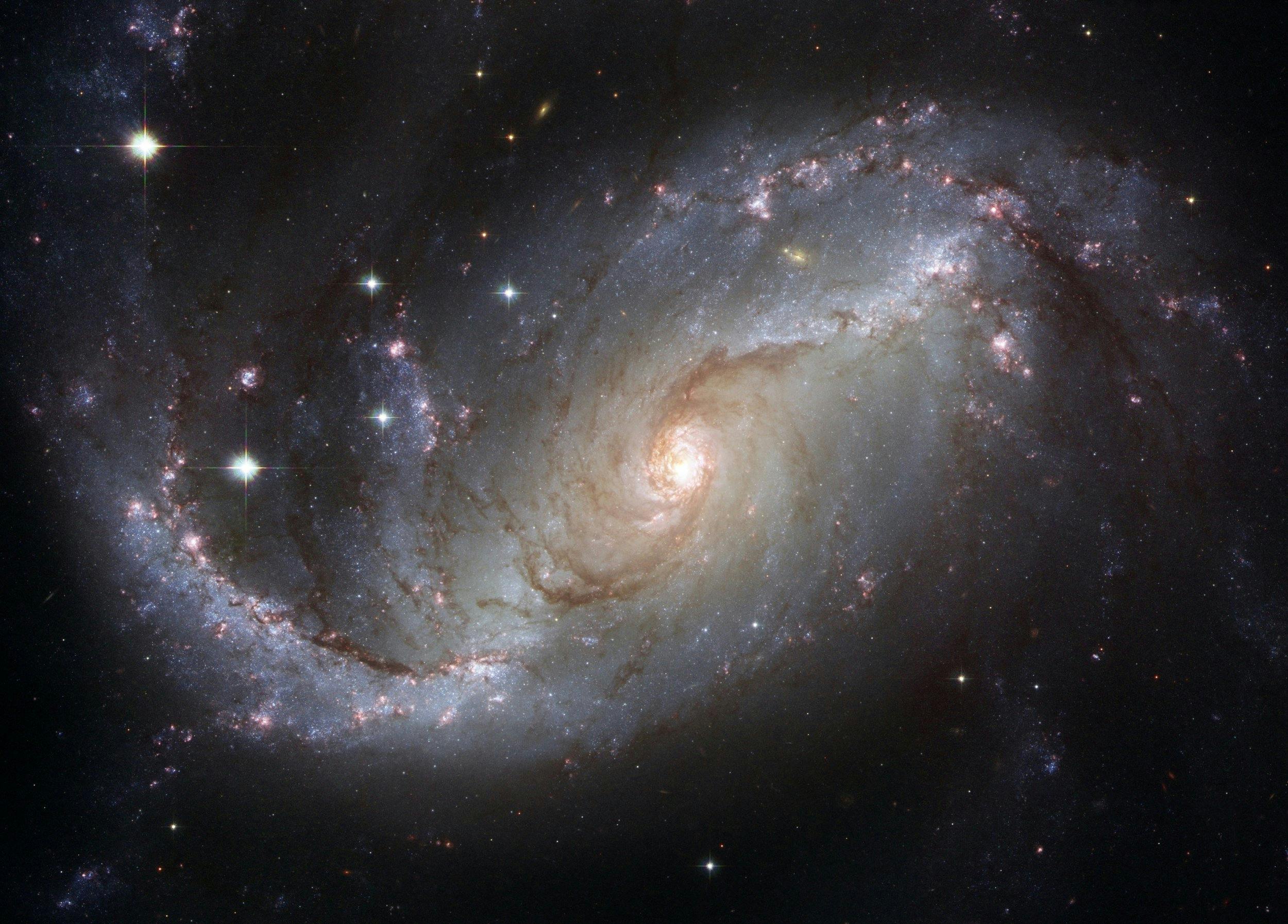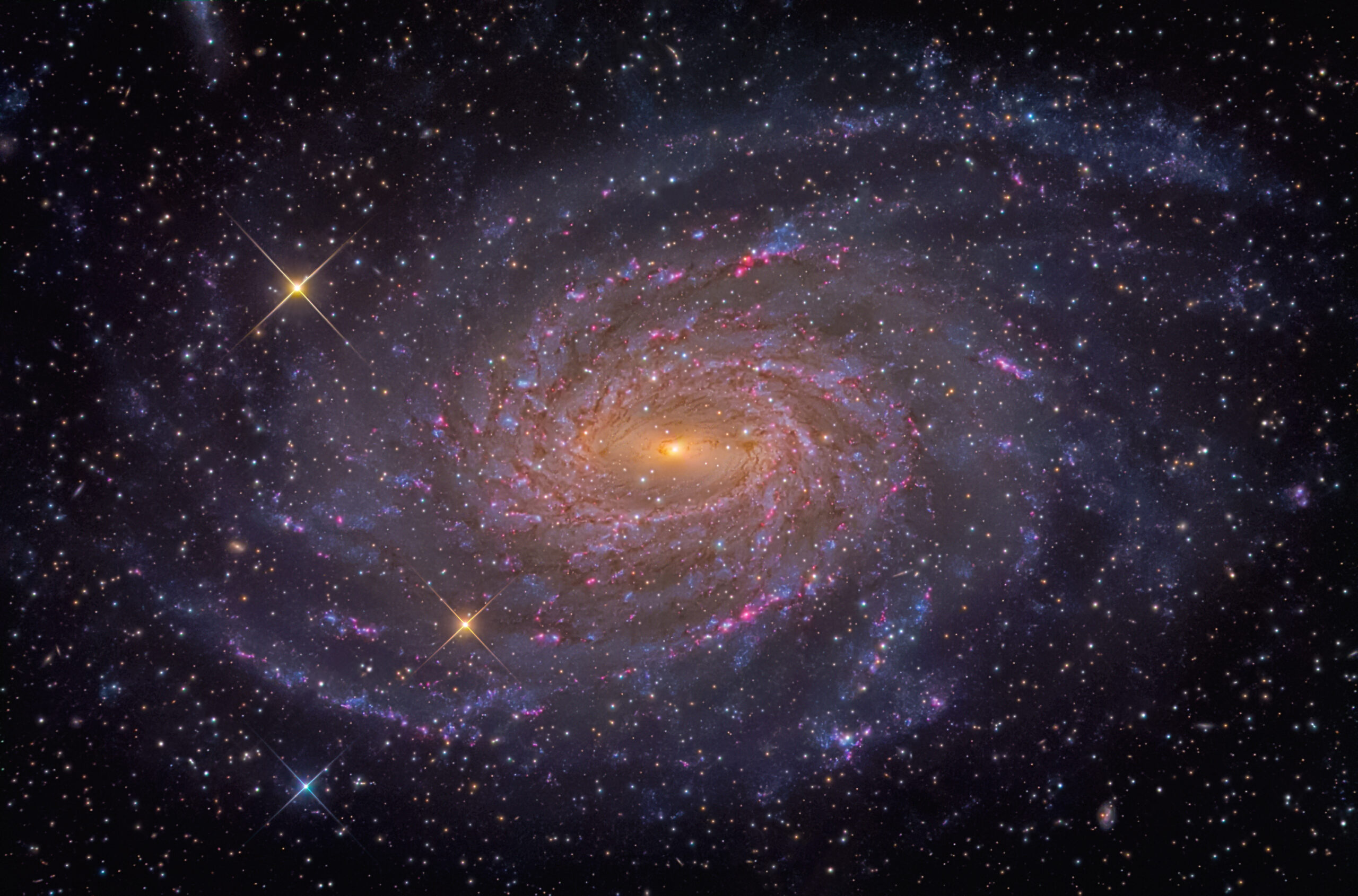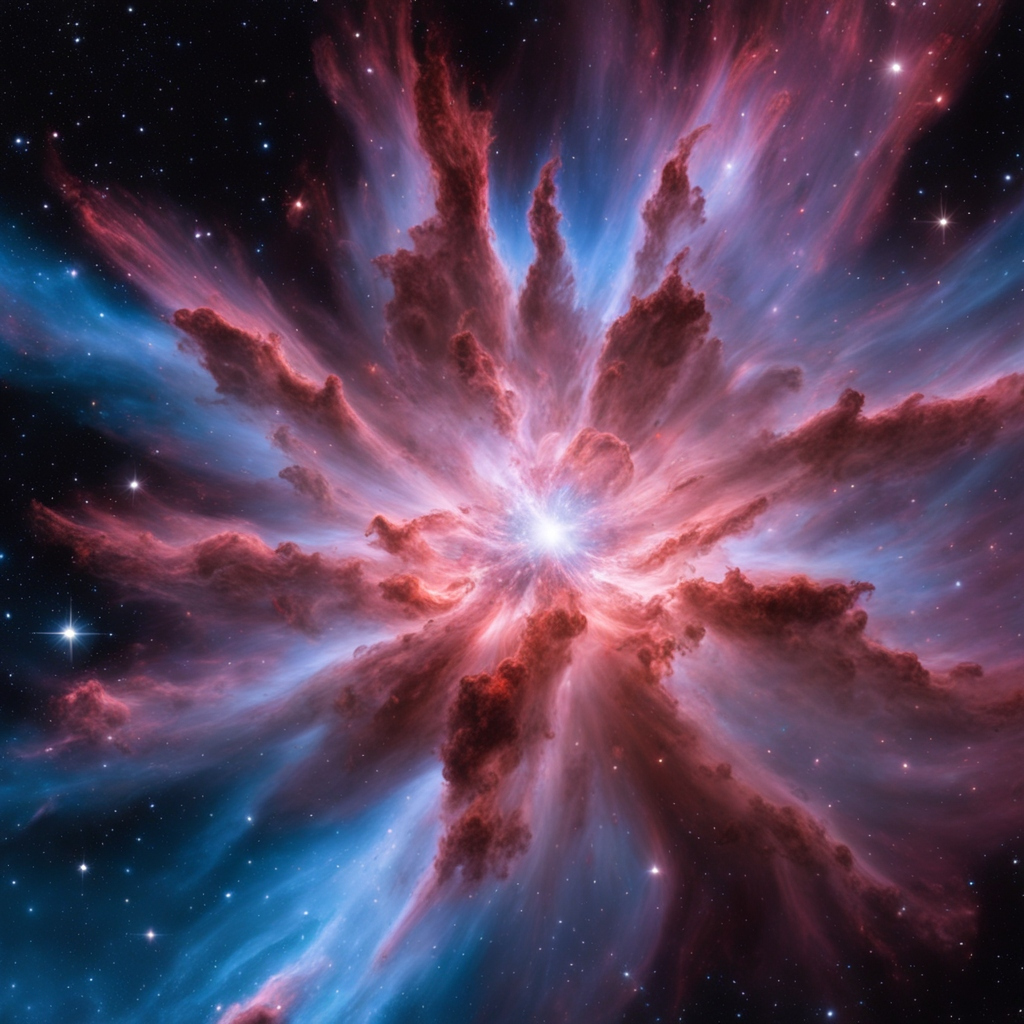
Have you ever looked up at a serene, starry night and tried to imagine the opposite of that profound quiet? Picture, instead, a celestial maelstrom where stars are born not in quiet solitude, but in a deafening, explosive frenzy—where a single galaxy can churn out thousands of new stars per year, compared to our Milky Way’s sedate pace of one or two. Welcome to the extraordinary, violent, and breathtakingly beautiful world of starburst galaxies.
These are the overachievers, the cosmic rebels, the galaxies that live fast and (sometimes) die young. They are not defined by calm, elegant spirals or smooth ellipses, but by unbridled chaos and creation. In this deep dive, we’ll explore what triggers these epic fireworks, what they teach us about the universe’s story, and how they ultimately shape the cosmos we call home.
What Exactly Is a Starburst Galaxy?
Let’s start with the basics. A galaxy, like our own, is a giant collection of stars, gas, dust, and dark matter held together by gravity. Star formation is a natural part of a galaxy’s life cycle, occurring in dense, cold clouds of gas and dust called nebulae.
Now, imagine turning the dial on that process from “simmer” to “inferno.” A starburst galaxy is a galaxy experiencing an exceptionally intense and rapid rate of star formation. Astronomers have a specific benchmark: a true starburst galaxy is forming stars so quickly that it would exhaust all of its available gas reservoir in a time much shorter than the current age of the universe.
To put numbers on this cosmic frenzy: The Milky Way forms about 1 solar mass worth of stars per year. A classic starburst galaxy, like the famous M82 (the “Cigar Galaxy”), can form stars at a rate of 10 to 100 times that, or even more in extreme cases. This isn’t just a few new twinkles; this is a galaxy-wide childbirth explosion.
The Signature of a Starburst: More Than Just Light
You can’t identify a starburst galaxy by a pretty picture alone (though they are often stunning). Astronomers look for specific forensic evidence:
- Intense Infrared Radiation: All that newborn star formation is shrouded in thick, dusty clouds. The dust absorbs the visible light from the hot, young stars and re-emits it as heat, glowing brilliantly in the infrared part of the spectrum. These galaxies are often “ultra-luminous infrared galaxies” (ULIRGs).
- Supernova Overdrive: Massive stars born in starbursts live short, violent lives and die as spectacular supernovae. A starburst galaxy is therefore a continual fireworks show of stellar explosions, which heat the surrounding gas and create turbulent “superwinds.”
- Specific Spectral Lines: The light from these galaxies shows strong emission lines from elements like hydrogen, indicating vast, hot, ionized gas clouds—the nurseries of those massive stars.
The Cosmic Triggers: Why Does a Galaxy “Go Starburst”?
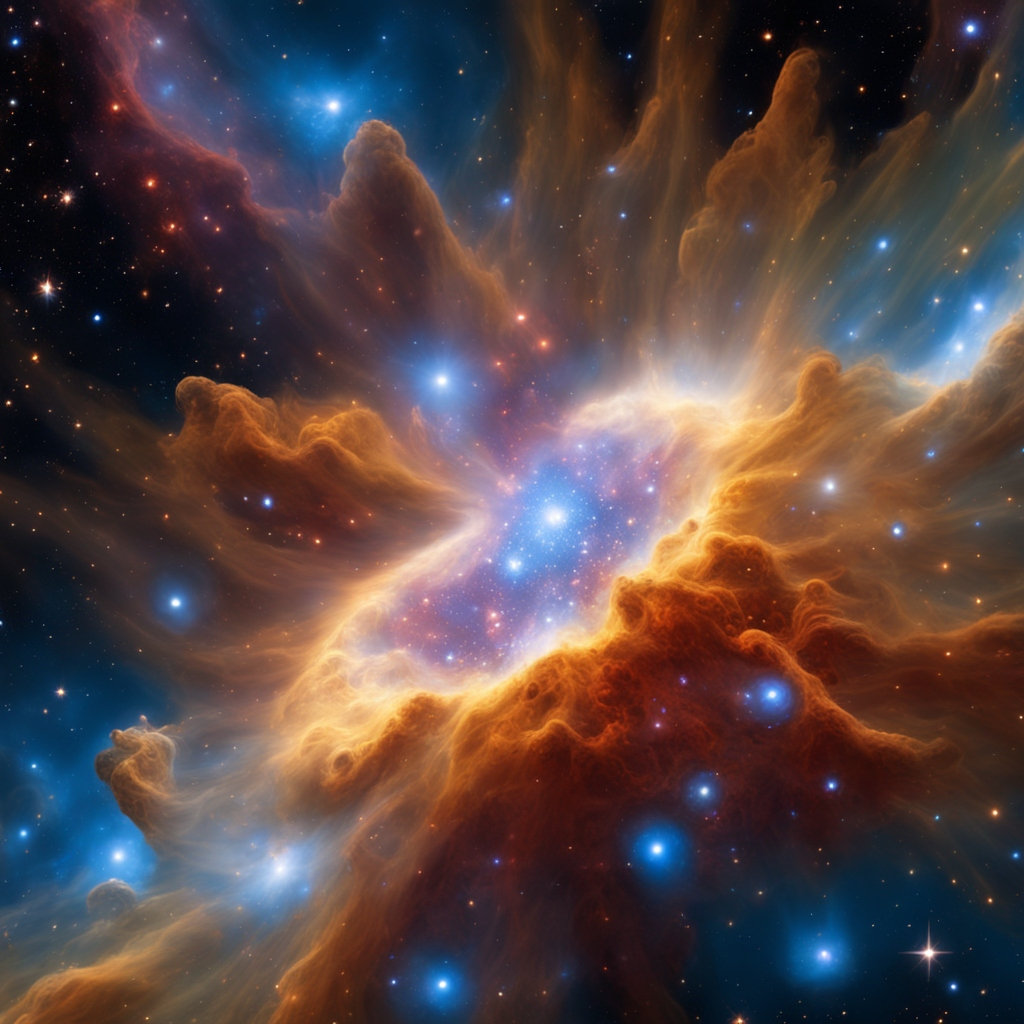
A galaxy doesn’t just decide to have a starburst on a whim. This extreme activity requires a specific, dramatic trigger. It’s almost always a story of cosmic violence and interaction.
1. Galactic Collisions and Mergers: The Primary Culprit
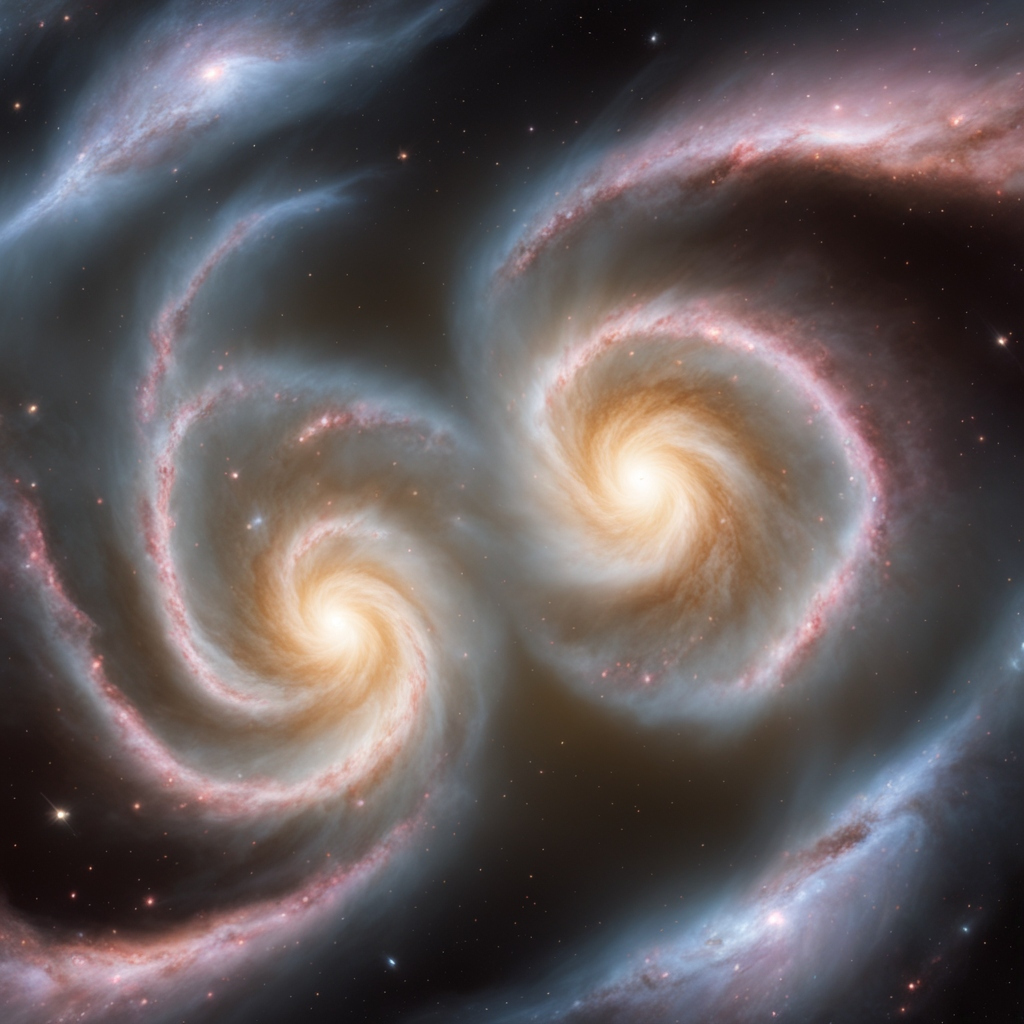
This is the most common and dramatic trigger. When two gas-rich galaxies drift too close together, their mutual gravity pulls them into a dizzying dance that ultimately ends in a merger.
- The Gravitational Shock: As the galaxies intertwine, their gravitational forces violently compress the vast clouds of gas and dust within them. Think of it like squeezing a cosmic sponge soaked in star-forming material.
- Loss of Angular Momentum: The gas clouds lose their orderly motion and funnel toward the galactic center, creating an incredibly dense and rich environment perfect for runaway star formation.
- The Result: Often, the most intense starburst activity occurs in the galaxy’s core, creating a brilliant “nuclear starburst.” The famous Antennae Galaxies (NGC 4038/4039) are a textbook example of two spiral galaxies in the process of merging, with bright knots of starburst activity scattered throughout their tangled forms.
External Source Insight: NASA’s Hubble Space Telescope has provided breathtakingly detailed images of interacting galaxies. You can explore a gallery of these cosmic collisions, including the Antennae, on the NASA Hubble Galaxy Collisions page.
2. Bar Instabilities and Secular Evolution
Not all starbursts require a partner. Some spiral galaxies have a strong central bar—a linear structure of stars and gas. This bar acts like a cosmic traffic jam, funneling gas from the outer regions inward toward the nucleus. If enough gas accumulates in the center, it can ignite a more modest, but still significant, nuclear starburst.
3. Close Encounters (Without a Merger)
Sometimes, a near-miss is enough. A galactic fly-by, where two galaxies pass close but don’t merge, can still exert strong tidal forces. These forces can squeeze gas clouds, disrupt orbits, and spark starburst activity, often in the galaxies’ outer arms or in tidal tails—the long streams of stars and gas pulled out by the interaction.
Life in the Fast Lane: The Anatomy of a Starburst
What’s it actually like inside one of these cosmic cauldrons? It’s a far cry from our quiet galactic neighborhood.
- Super Star Clusters: Starbursts don’t typically produce stars in isolation. They form immense, dense clusters containing hundreds of thousands of stars, known as “super star clusters” (SSCs). These are thought to be the infant versions of the ancient globular clusters we see orbiting older galaxies.
- Galactic Superwinds: All those massive stars and subsequent supernovae pour immense energy back into their surroundings. This can drive a galaxy-wide outflow called a superwind—a bipolar hurricane of hot gas and metals blasting out of the galactic disk at millions of miles per hour. In M82, this wind is visibly ejecting material and enriching intergalactic space.
- A Short-Lived Phase: The starburst phase is, by its nature, unsustainable. It’s a blowout sale on star formation. The galaxy is using up its fuel (cold gas) at a prodigious rate. Furthermore, the intense radiation pressure and superwinds from the massive new stars can actually blow away or heat the remaining gas, quenching further star formation. A major starburst might only last 10-100 million years—a blink in cosmic time.
Famous Faces in the Crowd: Iconic Starburst Galaxies
Let’s put names and faces to this phenomenon.
- M82 (The Cigar Galaxy): The quintessential nearby starburst. Located about 12 million light-years away, its core is a raging factory of star formation, fueled by gravitational interactions with its larger neighbor, M81. Hubble images reveal a cityscape of young star clusters and filaments of glowing hydrogen gas blasted out by superwinds.
- NGC 253 (The Sculptor Galaxy): One of the brightest starburst galaxies in the sky, NGC 253’s core is a roiling, dusty engine of creation, easily visible in amateur telescopes.
- The Antennae Galaxies (NGC 4038/4039): A stunning snapshot of two spiral galaxies in the act of merging. Dozens of brilliant, pink-hued star-forming regions, lit up by the light of young stars, dot the collision scene.
External Source Insight: The European Space Agency’s (ESA) website offers incredible high-resolution imagery and detailed scientific breakdowns of these objects. Dive deeper into the mechanics of M82 with ESA’s feature on the Cigar Galaxy.
- Messier 77 (M77): This galaxy hosts an Active Galactic Nucleus (AGN)—a supermassive black hole feeding on material—and a surrounding ring of intense starburst activity. It’s a perfect laboratory to study the relationship between black holes and star formation.
Starbursts and Cosmic Evolution: Why Should We Care?
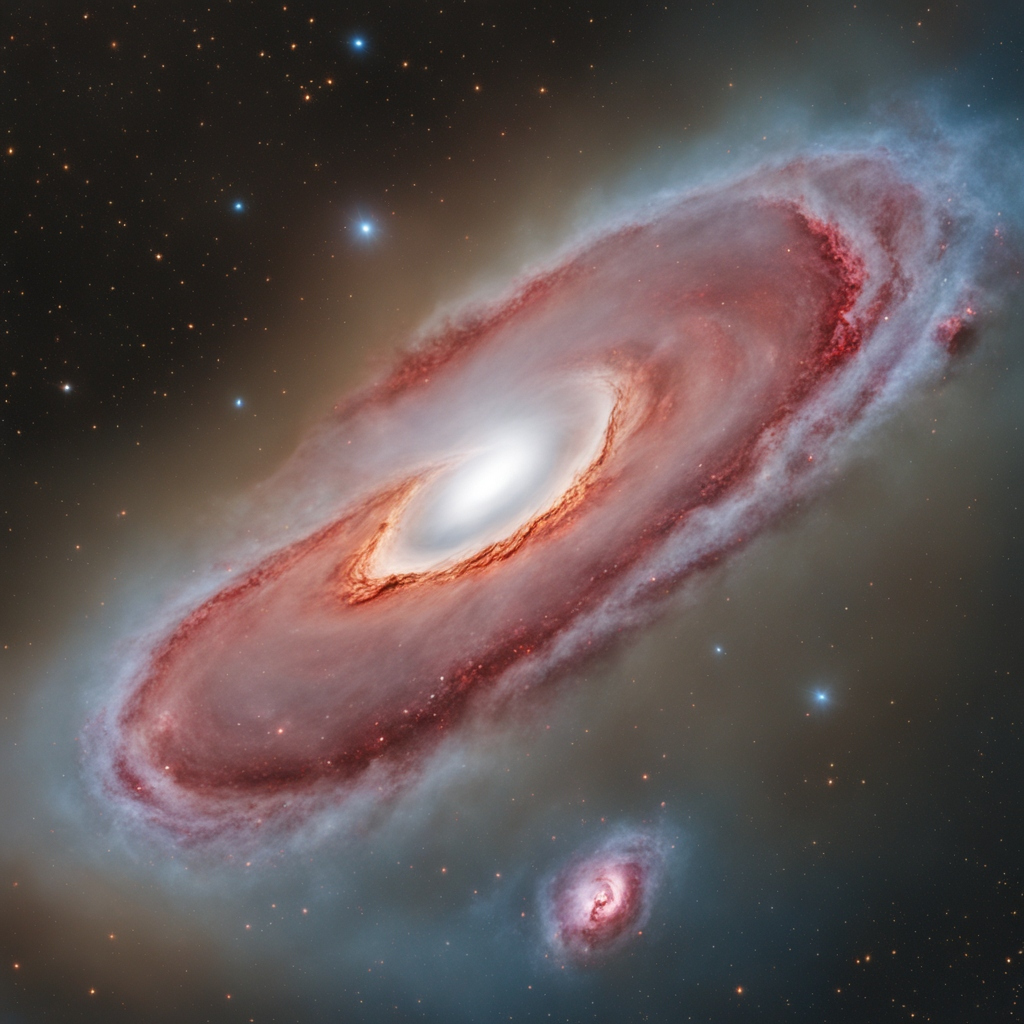
Studying starburst galaxies isn’t just about admiring cosmic spectacle. It’s fundamental to understanding our own existence and the history of the universe.
- The Epoch of Galaxy Assembly: In the early universe, galaxies were smaller, gas-rich, and crowded closer together. Mergers and interactions were commonplace. Astronomers believe that the most intense starburst galaxies in the distant universe—submillimeter galaxies discovered by telescopes like ALMA—are the building blocks of the giant elliptical galaxies we see today. We are witnessing the violent, formative years of galactic adolescence.
- Cosmic Metal Factories: The first stars in the universe were made almost purely of hydrogen and helium. All heavier elements—”metals” to astronomers—like carbon, oxygen, silicon, and iron, are forged in the cores of stars and scattered by supernovae. The frenetic pace of starbursts makes them primary polluters of the universe, seeding intergalactic space with the raw materials for rocky planets and, ultimately, life.
- The Black Hole Connection: There’s a growing understanding of a link between starbursts and supermassive black holes (SMBHs). The same gas inflows that fuel nuclear starbursts can also feed the central black hole, turning it into an active quasar. The resulting feedback from the black hole may then help shut down the starburst, regulating the galaxy’s growth.
The Tools for the Task: How We Peer into the Frenzy
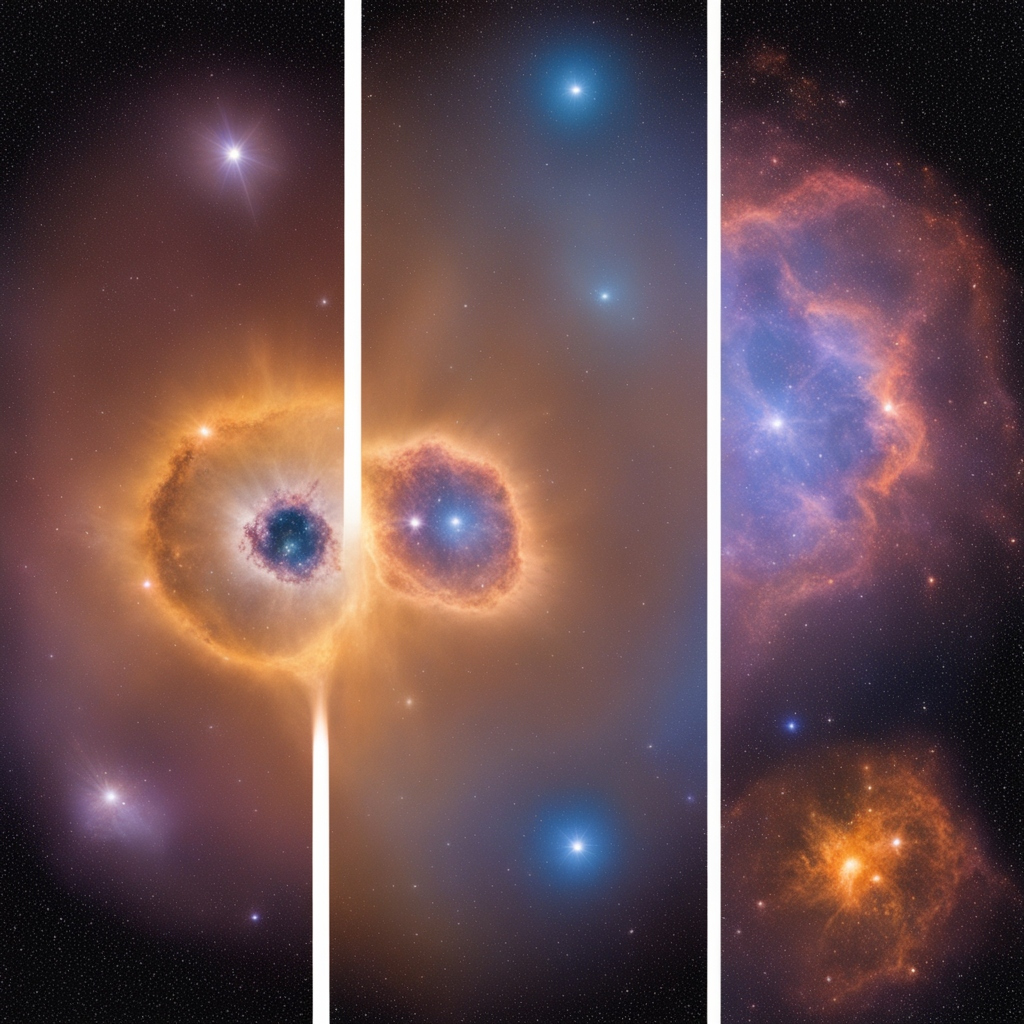
Observing starbursts requires looking across the electromagnetic spectrum:
- Optical/UV Telescopes (like Hubble): Reveal the hot, youngest stars and the structure of the galaxy, though visible light is often blocked by dust.
- Infrared Telescopes (like Spitzer, Webb, and Herschel): Are the heroes of starburst science. They peer directly through the dust to see the hidden star formation and measure the incredible infrared luminosity. The James Webb Space Telescope (JWST) is now revolutionizing this field with its unprecedented infrared sensitivity.
- Radio & Millimeter Telescopes (like ALMA and the VLA): Detect the cold molecular gas (like carbon monoxide) that is the fuel for star formation, allowing us to map the reservoirs and flows that power the starburst.
- X-ray Observatories (like Chandra): Detect the high-energy emission from supernova remnants and hot gas in superwinds.
The Future and Fate of a Starburst Galaxy
What happens after the party? The starburst eventually consumes or dispels its gas. The brightest, most massive stars die quickly in supernovae. What’s left depends on the initial conditions:
- If it were a major merger: The violent relaxation of stars during the merger, combined with the quenching of star formation, often results in a red, dead elliptical galaxy—a smooth, spheroidal collection of older stars with little gas or future star formation.
- In a smaller-scale event: The galaxy may eventually settle back into a spiral, but perhaps with a brighter bulge or a different structure, forever bearing the scars—and the stellar progeny—of its violent past.
Our Own Galactic History
Even our serene Milky Way has likely experienced starburst episodes in its past, possibly triggered by smaller mergers or accretion events. Some astronomers suggest the formation of our galaxy’s central bulge involved a starburst phase. We are, in part, the product of ancient cosmic fireworks.
Conclusion: The Violent Beauty of Creation
Starburst galaxies force us to confront a fundamental truth about the cosmos: creation and destruction are two sides of the same coin. The same violent collisions that tear galaxies apart are the triggers for the most prolific birth of stars. The supernovae that mark catastrophic stellar deaths enrich the universe with the elements necessary for planets and life.
They remind us that the universe is dynamic, chaotic, and fiercely creative. The next time you look at a peaceful spiral galaxy in an astronomy photo, remember its potentially violent past or future—and its dazzling, explosive cousins, the starbursts, blazing across the cosmos, writing the story of galactic evolution in light, wind, and fire.
They are the universe’s most spectacular, self-limiting engines of creation, and by studying them, we trace not only the history of galaxies but the origin of the very stuff that makes up our world and ourselves.
FAQ Section
Q1: What is a starburst galaxy in simple terms?
A: Imagine a galaxy that’s having a “baby boom” of stars. While our Milky Way calmly forms about one star per year, a starburst galaxy goes into overdrive, producing hundreds or even thousands of stars annually in a frenzied, galaxy-wide event. It’s a short-lived, explosive phase of intense creation.
Q2: What’s the most famous example of a starburst galaxy?
A: The most famous nearby example is Messier 82 (M82), the “Cigar Galaxy.” Located about 12 million light-years away, its core is a raging factory of star formation, visibly blasting out superwinds due to gravitational interactions with its neighbor, M81. It’s a textbook case studied by telescopes like Hubble and JWST.
Q3: What causes a galaxy to “go starburst”?
A: The primary trigger is almost always galactic violence. The most common cause is a collision or close encounter with another galaxy. The gravitational forces violently compress vast reservoirs of gas, the raw material for stars, igniting a chain reaction of star birth. Internal structures, such as central bars, can also funnel gas and trigger a more modest starburst.
Q4: How is a starburst galaxy different from a regular galaxy?
A: The difference is one of scale and intensity. A regular galaxy like our own has a steady, sustainable rate of star formation. A starburst galaxy experiences a rate so extreme that it would burn through its entire gas supply in a cosmic blink. This activity shines brightly in infrared light (due to dust) and drives massive galactic “superwinds.”
Q5: Are starburst galaxies rare?
A: In our quiet, modern galactic neighborhood, they are relatively rare events. However, astronomers believe they were far more common in the early universe when galaxies were closer together, and collisions were frequent. They are considered a crucial, if not standard, phase in the building of many large galaxies we see today.
Q6: How long does a starburst phase last?
A: Ironically, the universe’s most prolific star-forming phase is fleeting. A major starburst is self-limiting, typically lasting only 10 to 100 million years. This is because the furious star formation either uses up the gas fuel or the radiation and supernovae from the new stars blow the remaining gas away, quenching the activity.
Q7: Why are starburst galaxies important to astronomers?
A: They are cosmic laboratories and historical records. They help us understand:
- Galaxy Evolution: How mergers build big galaxies.
- Chemical Enrichment: They are primary factories for creating and spreading heavy elements (like carbon, oxygen, and iron) throughout space—the very elements that make up planets and life.
- Feedback Processes: How star formation activity can regulate itself and influence an entire galaxy’s future.
Q8: How do astronomers detect and study starburst galaxies?
A: Because they are shrouded in dust, their visible light is hidden. Astronomers rely on:
- Infrared & Space Telescopes: Like the James Webb Space Telescope (JWST) and the retired Spitzer, to see the heat from the dust.
- Radio Telescopes: Like ALMA, to map the cold molecular gas that fuels the starburst.
- X-ray Observatories: Like Chandra, to study the supernovae and hot gas in superwinds.