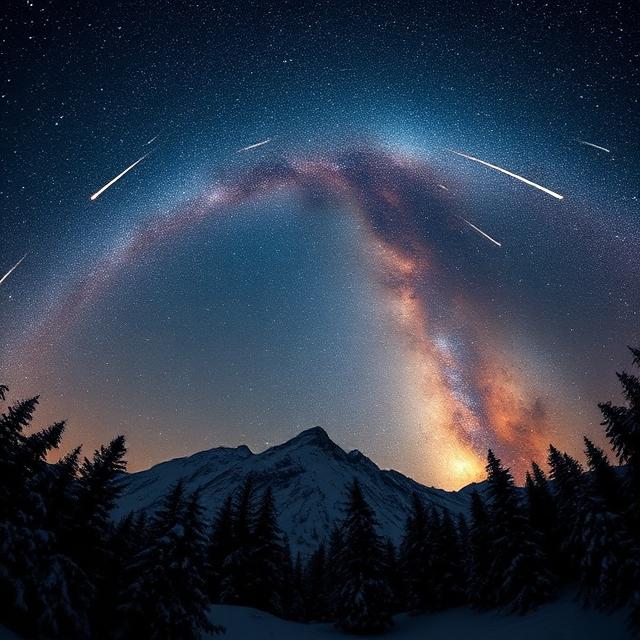
Imagine this: It’s a crisp December night. The world is quiet, wrapped in the deep chill of winter. You’re lying back on a blanket, a warm drink by your side, your breath making little clouds in the air. You’ve given your eyes time to adjust, and the sky has transformed from a black void into a shimmering tapestry of stars. Then, out of nowhere, a swift, brilliant streak of light silently traces a path across the heavens. Then another. And another. You’re not just seeing stars; you’re witnessing ancient dust, burning up in a spectacular final act. You are watching the Geminid meteor shower, and it’s one of the most reliable and breathtaking celestial events of the entire year.
Forget the flashy but often disappointing fireworks of other showers. The Geminids are the steadfast, overachieving sibling of the meteor world. They put on a rich, dazzling display that has earned them the title of the “King of the Meteor Showers.” And the best part? This isn’t a show reserved for hardened astronomers with fancy gear. It’s for you, for me, for anyone who looks up. This is your guide to understanding, preparing for, and utterly surrendering to the magic of the Geminids.
What Exactly Are You Seeing?

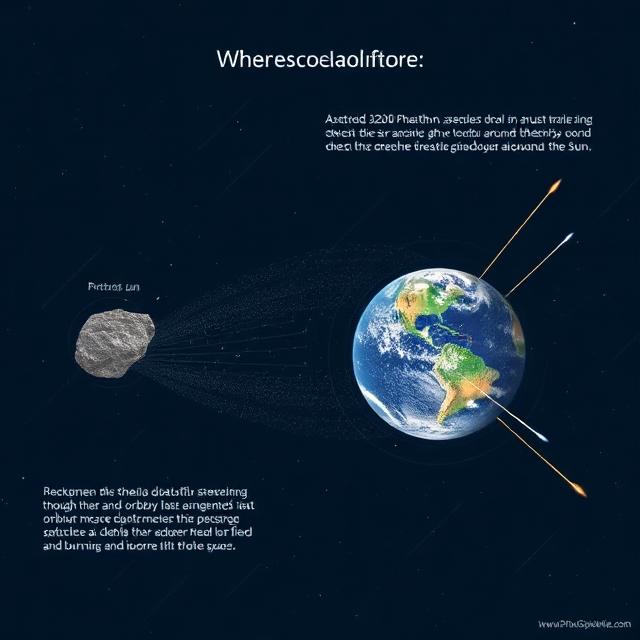
Let’s demystify that streak of light. A meteor (often called a “shooting star”) is simply a piece of space debris—a bit of rock or dust—that enters Earth’s atmosphere at tremendous speed. The friction with our air superheats it, creating that brilliant, short-lived glow. Most meteor showers are caused by comets, icy wanderers that leave behind a trail of dusty crumbs in their orbit. When Earth plows through that trail, we get a shower.
But the Geminids are the quirky exception to the rule. They don’t come from a comet. Their source is a mysterious, rocky object named 3200 Phaethon. Discovered in 1983, Phaethon blurs the lines between asteroid and comet. It has an orbit like a comet’s but appears to be made of rock. Scientists believe it might be a “rock comet” or a “dead comet” whose ice has long since vaporized, leaving behind a dusty rubble trail. Every December, Earth smacks directly into the dense cloud of particles Phaethon has shed, resulting in a meteor shower that is both intense and uniquely textured.
The debris from Phaethon is denser than typical comet dust. This means Geminid meteors can be slightly slower (though still at a blistering 22 miles per second!) and often brighter, with a higher chance of producing stunning, long-lasting fireballs—meteors that blaze brighter than the planet Venus. They can leave glowing trains in their wake that linger for a second or two, a ghostly reminder of their path.
Why the Geminid Meteor Shower is the Crown Jewel
So, what sets the Geminid shower apart from the famous Perseids of August or the Leonids of November?
- Reliability & Abundance: While the Perseids get more press, the Geminids often outperform them. Under perfect, dark sky conditions, the Geminids can produce up to 120-150 meteors per hour at their peak. The shower is known for its rich, consistent activity, not just a brief burst. The Perseids, for comparison, average about 100 per hour. The Geminids are a generous shower.
- Spectacular Meteors: Thanks to that denser debris, Geminids are known for their brightness and color. It’s common to see yellow, white, and even the occasional green or blue streak. They are truly multi-colored gems against the night sky.
- Family-Friendly Timing: The Perseids require late-night summer stamina. The Geminids, while peaking around 2 AM local time, often start showing decent activity by 9 or 10 PM as their radiant (the point in the sky they appear to come from) rises. This means even younger stargazers can catch a glimpse before a reasonable bedtime.
- A Winter Sky: December skies in the Northern Hemisphere are often crystal clear, cold, and stable. The winter constellations—Orion, Taurus, Gemini—provide a stunning backdrop. There’s something profoundly beautiful about watching celestial fireworks while bundled up under the cold, pristine winter sky.
Your Essential Guide to Watching the Show (No Telescope Required!)
The beauty of meteor watching is its sublime simplicity. You are the instrument. Here’s how to optimize your experience.
1. Mark Your Calendar: When to Watch
The Geminids are active from roughly December 4th through December 17th each year. The peak is typically around the night of December 13th into the early morning of December 14th. This is when you’ll see the highest rate of meteors. However, the nights immediately before and after the peak can also be excellent, so don’t despair if the forecast is cloudy on the 13th. Plan to observe from around 10 PM until dawn.
2. Location, Location, Location: Escape the Light
This is the single most important factor. You must get away from city lights. Light pollution doesn’t just dim the stars; it utterly obliterates meteors. Use a Light Pollution Map to find a dark sky near you. Aim for a green or blue zone. A rural backyard, a state park, or a national forest are ideal spot. Many International Dark Sky Parks have special events for meteor showers—check their schedules!
3. How to “Set Up” for Sky-Gazing
- Dress Like an Explorer: You will be stationary and in the cold for a long time. Dress in layers—thermal underwear, fleece, a winter coat, thick socks, a hat, gloves, and a scarf. Blankets and a sleeping bag are fantastic additions. Heat packs for your hands and feet are a pro tip.
- Bring Comfort: A reclining lawn chair, a yoga mat, or an inflatable camping pad will save your neck. Lie back and look up. You want to take in as much of the sky as possible.
- Eyes are the Best Gear: No binoculars or telescope needed. Your wide-field-of-view eyes are perfect. It takes about 20-30 minutes for your eyes to fully adapt to the dark. Avoid looking at your phone! The bright blue light will ruin your night vision. If you need light, use a red-light flashlight or cover your phone screen with red cellophane.
- Patience is the Key: Don’t expect a constant barrage. Meteors come in clusters and lulls. Settle in, relax, and let your mind wander. The act of watching becomes a form of meditation.
4. Where to Look in the Sky
Meteors will appear anywhere in the sky. However, if you trace their paths backward, they will all seem to originate from a point in the constellation Gemini, near the bright stars Castor and Pollux. This point is called the radiant. You don’t need to stare directly at the radiant—in fact, meteors closer to it will appear shorter. Instead, look about 45-60 degrees away from the radiant for the best, longest streaks. A good strategy is to look roughly overhead or toward the darkest part of your sky.
The Cosmic Storyteller: Unraveling 3200 Phaethon’s Mystery
While you’re lying there, watching these ancient particles meet their end, you’re connected to a fascinating scientific detective story. The parent body, 3200 Phaethon, is an enigma.
- It’s an asteroid that acts like a comet. It has a highly elliptical orbit that brings it scorchingly close to the Sun—within half the distance of Mercury—causing its surface to heat up to about 1,500°F. This extreme heating likely causes it to crack and shed the rocky debris that becomes our Geminids, a process more akin to a dry, crumbling rock than a melting ice cube.
- NASA’s Parker Solar Probe, on its mission to touch the Sun, is providing new data that might help explain the mechanics of dust ejection from objects like Phaethon.
- In 2017, astronomers using radar imaging discovered that Phaethon might be similar in shape to Bennu, the asteroid visited by NASA’s OSIRIS-REx mission. This suggests it could be a “rubble-pile” asteroid, a loose collection of rocks held together by gravity, which would easily shed material.
Every Geminid meteor you see is a tiny piece of this strange, solar-system wanderer, a clue to understanding the dynamic and often blurry line between asteroids and comets. You can read more about the latest Phaethon research on NASA’s Solar System Exploration page.
Capturing the Magic: Can You Photograph the Geminids?
Absolutely! With a DSLR or mirrorless camera and some preparation, you can bring home a souvenir.
- Use a sturdy tripod.
- Use a wide-angle lens (24mm or wider).
- Manual Mode: Set your aperture as wide as possible (low f-number like f/2.8), your ISO between 1600-3200, and start with a shutter speed of 15-25 seconds. You’ll need to experiment.
- Use a remote shutter release or your camera’s timer to avoid shake.
- Focus manually on a bright star using your camera’s live view.
- Point your camera toward an interesting part of the sky (maybe including a tree or landscape) and take continuous shots. Review and adjust settings as needed. Patience is key!
A Timeless Tradition Under the Stars
In our modern, screen-filled lives, the simple act of looking up at the night sky is a radical act of reconnection. The Geminid meteor shower is an annual invitation to do just that. It connects us to the rhythms of our solar system, to the silent, beautiful mechanics of orbits and gravity. It’s a humbling reminder of our place in a vast, dynamic cosmos.
So, this December, make a plan. Gather your loved ones, pack the thermoses of cocoa, and venture out into the winter night. Wrap yourself in blankets, lie back, and wait. You’re not just waiting for a flash of light. You’re waiting for a moment of cosmic wonder, for a story 4.6 billion years in the making to write its final, brilliant sentence right before your eyes.
As the poet Mary Oliver might ask, “Tell me, what is it you plan to do with your one wild and precious life?” Perhaps, for one night, the answer is simply to watch the sky, and remember that we, too, are part of this magnificent, stardust story.
Ready to plan your meteor-watching adventure?
- Check the detailed forecast and peak predictions for this year’s Geminids at EarthSky’s Meteor Shower Guide.
- Verify your local weather and cloud cover with the Clear Dark Sky astronomy forecast.
- Find a dark sky location near you using the Dark Site Finder.
The universe is putting on a show. All you have to do is show up.
FAQ Section
Q: What exactly is the Geminid meteor shower?
A: It’s an annual celestial event where Earth passes through a stream of debris left by a mysterious rocky object called 3200 Phaethon. When these tiny particles, often no larger than a grain of sand, hit our atmosphere at high speed, they burn up, creating the brilliant streaks of light we call “shooting stars.” Uniquely, the Geminids come from an asteroid-like body, not a comet, which contributes to their brightness and abundance.
Q: When is the best time to watch the Geminids in 2024?
A: The shower is active from December 4-17, but the peak is predicted for the night of Friday, December 13, into the early morning of Saturday, December 14. The best viewing window is typically from around 10 PM local time until dawn, with the highest meteor rates occurring after midnight when the constellation Gemini (the radiant) is highest in the sky.
Q: Where in the sky should I look?
A: Don’t stare at one spot! While meteors will appear to radiate from the constellation Gemini (near the stars Castor and Pollux in the northeast sky), they can streak anywhere. For the best view, lie back, take in as much of the sky as possible, and let your eyes adjust for 20-30 minutes. Meteors farther from the radiant will have longer, more dramatic trails.
Q: Do I need any special equipment?
A: Absolutely not. Your eyes are the perfect tool. In fact, binoculars and telescopes restrict your field of view. The best “equipment” is a reclining chair, warm blankets, and patience. The goal is to get comfortable and watch the wide expanse of the sky.
Q: How can I take photos of the meteor shower?
A: You’ll need a DSLR or mirrorless camera with manual controls, a wide-angle lens, and a sturdy tripod. Use a high ISO (e.g., 1600-3200), a wide aperture (e.g., f/2.8), and a long exposure (e.g., 15-25 seconds). Set your focus to manual and focus on a bright star. Use an intervalometer or remote to take continuous shots. Be prepared for lots of trial and error!
Q: Can I see the Geminids from a city?
A: Light pollution is the biggest enemy of meteor watching. While you might see a few of the very brightest fireballs from a suburban backyard, to truly experience the spectacle, you need to get away from city lights. Use a Light Pollution Map to find a dark sky site near you for the best experience.
Q: Are meteor showers safe to watch?
A: Completely! It’s a passive, visual event. The particles vaporize high in the atmosphere, posing no risk. The only safety concerns are terrestrial: dress warmly for winter temperatures, watch for tripping hazards in the dark, and be aware of your surroundings in a remote location.
Q: Why are the Geminids considered so special?
A: They are one of the most reliable and richest major showers, often producing up to 120-150 meteors per hour under perfect conditions. They are known for their bright, colorful, and relatively slow meteors, which include a good number of stunning fireballs. Their early-evening activity also makes them more family-friendly than showers that only peak after midnight.