Have you ever looked up at the night sky and felt a gentle, whispering pull of curiosity? That ancient human wondered about the pinpricks of light above us is about to be rewarded. Right now, a visitor from realms beyond our solar system is drifting silently through the void, and it’s starting to dress up for its close-up. Comet 3I/ATLAS is not just approaching Earth; it’s transforming. It’s getting greener, brighter, and is poised to become a celestial conversation piece in the coming weeks.
This isn’t just another comet. Its very name, 3I/ATLAS, tells a story. The ‘3I’ marks it as only the third confirmed Interstellar Object ever discovered, a genuine traveler from another star. And like a tourist acclimating to a new climate, it’s beginning to react to our Sun’s warmth in spectacular fashion. Let’s unpack the journey of this cosmic iceberg, understand why it’s blushing emerald, and find out how you might just spot it for yourself.
A Lucky Find: The Discovery of an Alien Wanderer
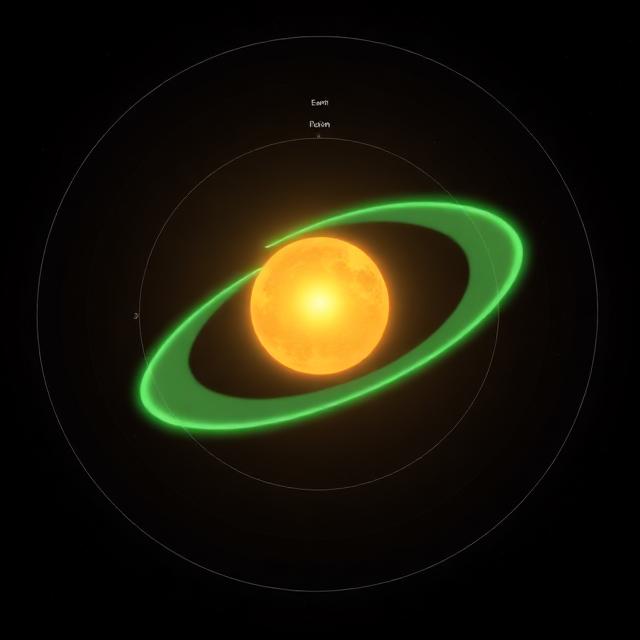
Our story begins not with a grand telescope, but with a dedicated survey. In December 2023, the Asteroid Terrestrial-impact Last Alert System (ATLAS) in South Africa was doing its job: scanning the skies for rocks that might pose a threat to Earth. What it found, however, was a threat to our cosmic complacency.
A faint, blurry smudge of light was moving on a path that calculators immediately flagged as extraordinary. Its trajectory was hyperbolic—not a closed ellipse like the orbits of planets or most comets, but an open curve. This object wasn’t from our neighborhood; it was just passing through. The astronomical community buzzed with excitement. After ‘Oumuamua in 2017 and Comet 2I/Borisov in 2019, we had our third interstellar guest.
Initially designated A0bjec6, it earned its historic name: Comet 3I/ATLAS. The ‘I’ seals its status as an immigrant. You can read about the fascinating discovery process on the ATLAS project’s official page to understand how we spot these fast-moving visitors.
Why the Emerald Hue? The Science of a Greening Comet
As 3I/ATLAS has journeyed inward, crossing the orbit of Mars and drawing closer, something beautiful has happened: it has turned green. This isn’t a sign of alien algae, but rather a classic and stunning piece of cosmic chemistry.
A comet is often called a “dirty snowball”—a nucleus of ice, rock, and frozen gases. As it approaches the Sun, the heat causes these ices to sublimate (turn directly from solid to gas), creating the glowing cloud around the nucleus called the coma.
Here’s where the magic happens: The coma of 3I/ATLAS is rich in a molecule called diatomic carbon (C₂). This molecule, two carbon atoms bonded together, has a party trick. When bathed in the intense ultraviolet light from the Sun, it gets excited and fluoresces—glowing a vibrant, eerie shade of green.
This process is actually common in comets that come close to the Sun (remember the stunning green of Comet NEOWISE in 2020?). It tells scientists that 3I/ATLAS, despite its foreign origins, is made of familiar stuff. The presence of C₂ suggests a chemistry not so different from comets in our own Oort Cloud. The NASA Science Solar System Exploration page on comets offers a deeper dive into these incredible chemical factories.
The green glow typically dominates the inner coma, and as the comet gets closer and more active, this emerald halo can become more pronounced and beautiful in telescopic images.
Gearing Up for the Spotlight: Why It’s Getting Brighter
The greening is a side effect of the main event: the comet is waking up. Brightness in comets is notoriously hard to predict—they are individualistic and often called “the cats of the solar system” for their unpredictable behavior. However, the trend for 3I/ATLAS is promising.
Its brightness is increasing for two key reasons:
- Proximity to the Sun: The comet will reach its perihelion (closest point to the Sun) in late May 2024. As it gets closer, the solar radiation intensifies, vaporizing more ice and ejecting more dust. This expands the coma and tail, reflecting more sunlight.
- Proximity to Earth: While its closest approach to the Sun is in May, its closest approach to Earth comes in early June 2024. When an object is both active and close, it appears brighter in our sky. It’s the difference between seeing a streetlamp from a mile away and from across the street.
You can track its predicted brightness and orbital path on invaluable resources like The Sky Live or In-The-Sky.org, which provide constantly updated charts and visibility conditions for your location.
How and When to See Our Interstellar Guest
Now for the practical part. Will you be able to see it with your naked eye? The honest answer is: maybe, but you’ll have a much better chance with simple tools.
- Timeline: The comet will be best placed for observation in the weeks around its closest approach to Earth in early June 2024. Before dawn in late May and June will likely be the prime viewing window for the Northern Hemisphere.
- What You’ll Need: Don’t expect a brilliant, slashing streak across the sky. This will likely be a faint, fuzzy patch. Binoculars are your best friend for comet hunting. A small telescope will reveal even more detail, potentially showing the greenish tinge of the coma and the structure of its tail.
- Where to Look: The comet will be moving through the constellation Pisces in the pre-dawn eastern sky. Using a star-gazing app (like Stellarium or SkySafari) is essential to pinpoint its exact location on any given morning.
- Manage Expectations: Comets can fragment or fizzle out. They can also surge in brightness unexpectedly. The joy is in the hunt. The act of going outside, letting your eyes adjust to the dark, and knowing you’re looking at a literal piece of another star system is a profound experience, regardless of how “bright” it appears.
A Message in a Bottle from the Galactic Sea
Beyond the technical details, there’s a deeper poetry to 3I/ATLAS. For billions of years, this object existed in the frozen, silent darkness between stars. By a stroke of immense luck, our Sun’s gravity caught it, pulling it into our line of sight.
Studying its composition is like analyzing a message in a bottle from a distant stellar shore. Is its water ice ratio similar to ours? Does it contain complex organic molecules? Every photon we capture from its green coma tells us something about the building blocks of planets in other star systems. The European Space Agency’s comet science missions, like Rosetta, have shown us how much a single comet can teach us about our own origins.
The Human Connection: Why We Look Up
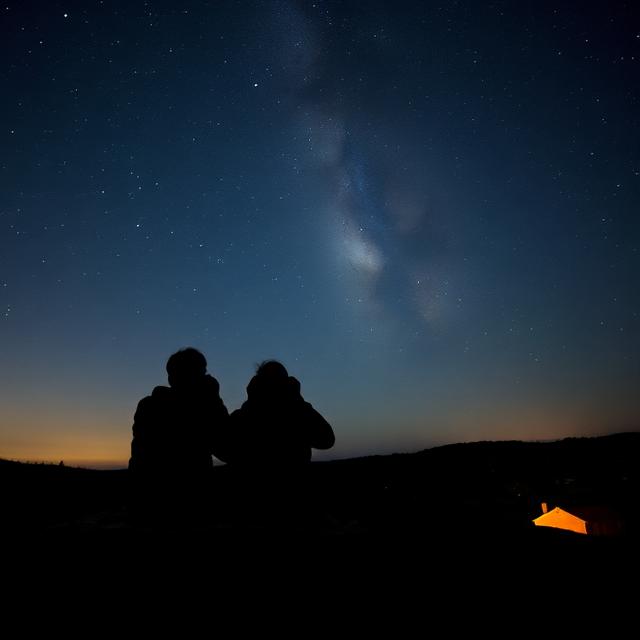
In a world often focused on terrestrial concerns, the gentle greening of an interstellar comet is a cosmic reminder. It connects us to a larger story—a story of gravitational dances, chemical reactions on a galactic scale, and the endless cycling of material between stars.
This comet, a tiny green smudge in our telescopes, is a bridge. It connects the curiosity of the person who first spotted its digital fingerprint at ATLAS with the wonder of a parent pointing out a fuzzy star to their child through binoculars. It connects our Sun to a star we may never know, light-years away.
So, mark your calendar for those early June mornings. Grab a blanket, a hot drink, and your binoculars. Find a spot away from city lights. Use your apps to guide you, and sweep slowly across the pre-dawn sky.
You might just catch a glimpse of the Green Ghost, Comet 3I/ATLAS—a temporary, emerald-hued tenant in our sky, reminding us that we are part of a dynamic, connected, and astonishingly beautiful cosmos. Its visit is brief. Its impression, however, could last a lifetime.
Further Reading & Resources to Explore:
- NASA’s Comet Watch: For the latest updates on all near-Earth comets.
- The Comet Observation Database (COBS): See magnitude estimates and observations submitted by astronomers worldwide.
- SpaceWeather.com: Often features current images and visibility reports for bright comets.
- A History of Interstellar Objects: A great scientific overview from Nature on what we’ve learned so far.
FAQ Section
Q1: What does “3I” in the comet’s name mean?
A: The “I” stands for interstellar. Comet 3I/ATLAS is only the third object ever confirmed to have originated from outside our solar system. The “3” denotes it’s the third such discovery, following ‘Oumuamua (1I) and Comet Borisov (2I). It’s a true visitor from another star.
Q2: Why is the comet turning green?
A: The vibrant green color comes from a molecule called diatomic carbon (C₂) in the comet’s coma—the cloud of gas around its nucleus. As the comet gets closer to the Sun, intense ultraviolet radiation excites these carbon molecules, causing them to fluoresce with that distinctive emerald glow. It’s a beautiful and common chemical process in active comets.
Q3: Will I be able to see it with my naked eye?
A: While predictions are optimistic, comets are famously unpredictable. It will likely be at the edge of naked-eye visibility under perfectly dark, clear skies, but will appear as a faint, fuzzy smudge. Binoculars or a small telescope will be your best bet for a clear view and are highly recommended. Its brightness will peak around its closest approach to Earth in early June 2024.
Q4: When and where should I look for it?
A: The best viewing window is expected in the pre-dawn hours of late May through June 2024. Look toward the eastern sky in the constellation Pisces. Using a free star-gazing app (like Stellarium or SkySafari) is crucial to pinpoint its exact, ever-changing location.
Q5: Is this comet a danger to Earth?
A: Absolutely not. Comet 3I/ATLAS will pass by at a very safe distance of millions of miles. Its trajectory is well-understood and poses no threat. We get to enjoy its beauty without any risk.
Q6: How is this comet different from other comets we see?
A: Its origin story is the key difference. While most comets (like Halley or NEOWISE) originate in our own solar system’s Oort Cloud or Kuiper Belt, 3I/ATLAS is an interstellar object. It was formed around another star and is just passing through our neighborhood, offering us a unique chance to study material from a distant planetary system.
Q7: Who discovered Comet 3I/ATLAS?
A: It was discovered by the Asteroid Terrestrial-impact Last Alert System (ATLAS) survey, based in South Africa, in December 2023. ATLAS is designed to scan for asteroids that might pose a threat to Earth, but it also makes incredible serendipitous discoveries like this one.