Remember the fever dream of early 2022? The internet was suddenly flooded with absurd, breathtaking, and occasionally horrifying images generated by AI. A “teddy bear coding at a laptop in the style of a Renaissance painting” wasn’t just a weird thought—it was a visual reality. That was the dawn of accessible text-to-image AI, and the battlefield was set. In one corner, pioneers like Midjourney with their painterly flair; in another, the open-source champion Stability AI; and in the center, the name that started it all for many: OpenAI with DALL-E.
But as the race heated up, a curious thing happened. While competitors iterated rapidly, OpenAI seemed to go quiet on the image generation front. That is, until now. The launch of DALL-E 3 isn’t just another product update; it’s a strategic salvo fired from what insiders have called a ‘code red’ posture at OpenAI. This is more than a tech release—it’s a declaration of war in the fight for the future of creativity.
What Exactly is DALL-E 3, and Why Should You Care?
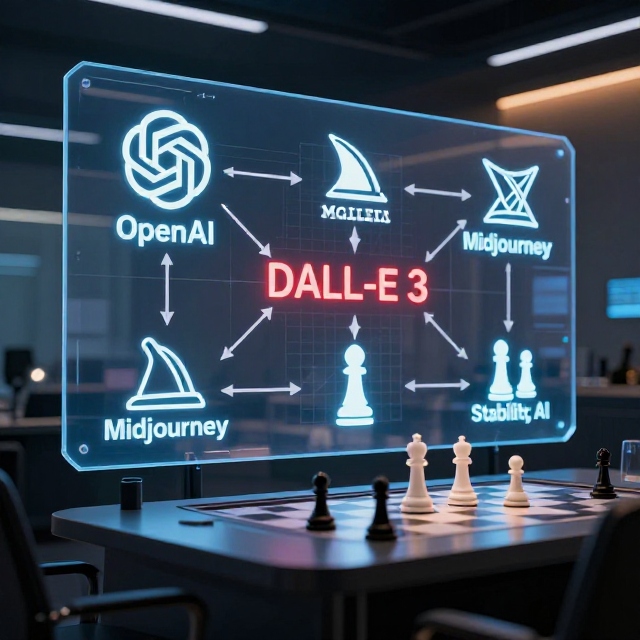
At its core, DALL-E 3 is the latest iteration of OpenAI’s image generation model. But to call it just an upgrade is like calling a smartphone a slightly better telephone. The most headline-grabbing improvement? It’s baked directly into ChatGPT.
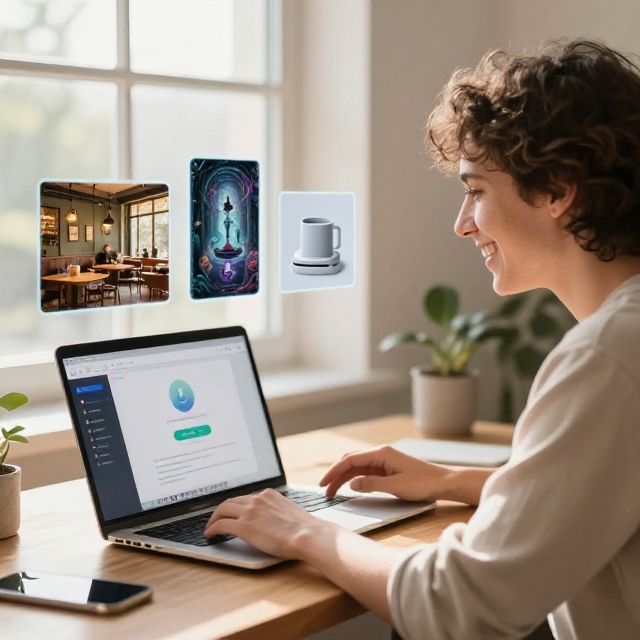
This integration is a game-changer. Instead of painstakingly crafting the perfect “prompt” (those detailed text descriptions that tell the AI what to draw), you can now just have a conversation. You can tell ChatGPT, “I want a minimalist logo for a coffee shop called ‘The Roasted Bean,’ maybe with a mountain and a coffee steam shape,” and then refine it naturally: “Actually, make the mountain look more like a coffee bean shape, and use warmer colors.” This move dramatically lowers the barrier to entry, making sophisticated image creation accessible to anyone who can chat.
According to OpenAI’s own announcement, DALL-E 3 exhibits a “profound leap” in understanding nuance and detail. It’s significantly better at rendering text within images (a notorious weak spot for earlier models) and handling complex requests like “a photo of a human hand with a translucent, geometric clock floating inside it, showing the time as 2:37.” The results are less likely to contain the surreal anatomical errors that once gave AI art a nightmarish quality.
Decoding the ‘Code Red’ Mentality
So, where does the “code red” come from? Last year, as Midjourney’s aesthetic won over artists and Stability AI’s open model spawned a universe of custom tools and innovations, OpenAI’s dominance was no longer assured. Reports from The Verge and others hinted at an internal sense of urgency—a ‘code red’—sparked by the explosive popularity of competitors.
This mindset shifts innovation from a marathon to a sprint. The integration with ChatGPT is a classic ‘code red’ maneuver: leveraging your strongest asset (ChatGPT’s massive user base and conversational interface) to immediately differentiate and dominate a competitive adjacent field. It’s not just about having a better image model; it’s about making it effortlessly available to millions overnight.
The Competitive Landscape Heats Up
OpenAI’s move turns up the heat on everyone else.
- Midjourney: The king of aesthetic quality and a favorite of professional digital artists. Its strength is a certain “wow” factor and artistic control through its unique prompt language. Will it need to become more accessible or integrate elsewhere to keep its edge?
- Stability AI: The champion of open-source and customization. Its Stable Diffusion model is the engine behind countless independent apps and innovations. It’s war is for the soul of the ecosystem—will AI be controlled by a few companies or remain a democratized tool?
- Adobe Firefly: The safe, ethical, and commercially viable player, integrated directly into the creative suite professionals already use. Its battle is for the enterprise and the risk-averse creator.
DALL-E 3, by being both powerful and convenient within ChatGPT, attacks a weakness of all these rivals: ease of use for the average person. It’s a direct play for the mainstream.
The Elephant in the Room: Ethics, Art, and Ownership
No discussion about AI art is complete without addressing the creative elephant in the room. The ‘code red’ isn’t just about competition between companies; it’s happening against a backdrop of intense ethical debate.
DALL-E 3, like its predecessors, was trained on a vast dataset of images from the public internet. OpenAI has stated it is taking steps to address concerns, such as declining requests to generate images in the style of living artists and implementing more robust safety filters. They’ve also announced a system for creators to opt their work out of future training runs. However, the fundamental questions remain unresolved. As artist and critic Karla Ortiz, a prominent voice in the movement for ethical AI, has pointed out, the conversation must move beyond opt-outs to fair compensation and consent from the start.
This tension is the shadow war beneath the technical one. The company that can navigate these ethical minefields while delivering superior technology may ultimately win the long-term trust of both creators and the public.
What This Means for You (Yes, You)
Whether you’re a marketer, a blogger, a small business owner, or just someone who likes to tinker, the implications are real.
- Content Creation: The cost and time of generating illustrations, social media graphics, or blog post headers are plummeting. The concept of “stock photography” is being fundamentally challenged.
- Ideation & Prototyping: Designers, filmmakers, and entrepreneurs can now visualize concepts in seconds, iterating through ideas at a previously impossible speed.
- Education & Storytelling: Teachers and students can generate custom visuals for any topic. Writers can create characters and settings on the fly.
The barrier is no longer skill, but imagination and the ability to guide the AI through conversation.
The Road Ahead: A War of Integration, Not Just Iteration
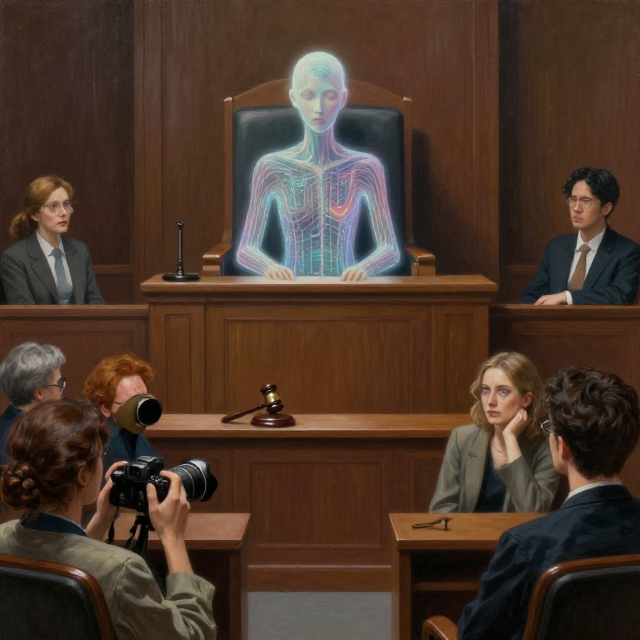
OpenAI’s ‘code red’ move with DALL-E 3 signals that the next phase of the AI art war won’t be won by marginally better pixels. It will be won by integration, accessibility, and ecosystem.
The model that lives where people already are—whether that’s in a chat interface, a creative suite, or a social media app—has a colossal advantage. The future likely holds less of us visiting standalone AI art websites and more of these tools being seamless, context-aware assistants in our daily digital workflows.
One thing is certain: the ‘code red’ is real, and the pace is only accelerating. As users, we are the beneficiaries of this fierce competition, gaining ever-more powerful tools. But as a society, we are also the stewards who must thoughtfully guide how these tools are built and used. The warpath OpenAI is on will create breathtaking possibilities, but it’s up to all of us to ensure the future it helps paint is one we actually want to live in.
Sources & Further Reading:
- OpenAI. “DALL·E 3 is now available in ChatGPT Plus and Enterprise.” OpenAI Blog
- The Verge. “The AI Art War is Heating Up.” The Verge
- Stability AI. “Stable Diffusion.” Stability AI
- Midjourney. “Documentation.” Midjourney
- Adobe. “Adobe Firefly.” Adobe
- The Atlantic. “The Artist Who Is Suing AI Image Generators.” The Atlantic (For ethical context)
FAQ Section
Q: What is DALL-E 3, and how is it different from the previous version?
A: DALL-E 3 is OpenAI’s latest and most advanced text-to-image generation model. Its biggest leap forward is in its deep integration with ChatGPT. This allows you to create images through conversational chat, removing much of the need for complex, technical prompting. It also shows significantly improved ability to render detailed scenes, follow specific instructions, and handle text within images more reliably than DALL-E 2.
Q: What does a ‘code red’ mentality mean for OpenAI?
A: In a competitive context, a “code red” signals an internal state of high urgency and all-hands-on-deck focus. For OpenAI, it was triggered by the rapid success of rivals like Midjourney and Stability AI. This mentality leads to faster innovation cycles and strategic moves—like integrating DALL-E 3 directly into ChatGPT—to leverage existing strengths and capture market share quickly.
Q: How does DALL-E 3 compare to Midjourney or Stable Diffusion?
A: Each has its strengths. DALL-E 3 excels in ease of use (via ChatGPT) and prompt understanding. Midjourney is often praised for its distinctive, artistic, and aesthetically refined outputs, favored by many digital artists. Stable Diffusion is the open-source alternative, offering unparalleled customization and control for developers and users who want to run or modify models locally. DALL-E 3’s play is for the mainstream, conversational user.
Q: What are the main ethical concerns surrounding AI image generators like DALL-E 3?
A: The core concerns revolve around training data and creator rights. Models are trained on vast datasets of images from the web, often without the explicit consent of the artists who created them. This raises questions about copyright, fair compensation, and the devaluation of human artistic skill. OpenAI has implemented some safeguards, like declining to mimic living artists’ styles and offering an opt-out tool, but the fundamental debate about consent and compensation in the data era continues.
Q: Can I use DALL-E 3 images commercially?
A: Yes, with important caveats. According to OpenAI’s Terms of Use, users who generate content with DALL-E 3 generally own the resulting images and can use them for commercial purposes (like selling prints or using them in marketing). However, you must comply with their content policy, cannot imply the images were created by a human, and are responsible for ensuring the content doesn’t infringe on the rights of others, which remains a legal gray area.
Q: How will this technology impact creative professionals?
A: The impact is dual-sided. For many, it’s a powerful new ideation and prototyping tool that can drastically speed up workflows for concept art, mood boards, and design drafts. It may automate certain routine tasks. The concern is the potential disruption to entry-level commercial art jobs (like stock imagery or simple illustration) and the need for artists to adapt. The future professional will likely leverage AI as a collaborative tool while emphasizing uniquely human skills—concept, narrative, emotional depth, and refined artistic direction.
Q: Where can I try DALL-E 3?
A: Currently, DALL-E 3 is available to paying users of ChatGPT Plus and ChatGPT Enterprise. It is built directly into the chat interface, so you can start a conversation and ask it to generate images. It is not available as a standalone website like previous versions were at launch.