
The AI revolution within our apps has, so far, been a largely silent and text-based affair. Developers and companies are rapidly deploying chatbots and AI agents, but their interactions are confined to the chat window—a stream of text that, while powerful, lacks the human dimension of expression and presence. Digital avatar generation startup Lemon Slice is betting that the next leap forward is visual, announcing a $10.5 million funding round co-led by Y Combinator and Matrix Partners to build out its mission: adding a dynamic video layer to AI conversations.
The Boston-based startup, founded in 2024 by Lina Colucci, Sidney Primas, and Andrew Weitz, is emerging from stealth with its core innovation: Lemon Slice-2, a proprietary diffusion model designed to create realistic, interactive digital avatars from just a single image.
From Static Image to Interactive Agent
The concept moves far beyond simple animated profiles. Lemon Slice-2 generates a fully functional digital avatar that can be layered on top of any knowledge base, allowing it to play virtually any role required of an AI agent. Imagine a customer service representative who can visually demonstrate a product fix, a tutor who can offer encouraging smiles during a difficult lesson, or a mental health support agent with a calm, consistent presence.
“In the early days of GenAI, my co-founders started to play around with different video models, and it became obvious to us that video was going to be interactive,” explained co-founder Lina Colucci. “The compelling part about tools like ChatGPT was that they were interactive, and we want video to have that layer.”
Technical Power Meets Practical Deployment
Lemon Slice is tackling the significant computational challenge of live avatar generation head-on. The company claims its 20-billion-parameter model is efficient enough to run on a single GPU, livestreaming avatar video at a smooth 20 frames per second. This focus on practicality is central to their go-to-market strategy.
The technology is being offered via an API and an embeddable widget, promising companies the ability to integrate a dynamic avatar into their websites or apps with just a single line of code. Post-creation, users maintain control, able to change an avatar’s background, clothing, styling, and appearance at any time. To complete the experience, the startup is integrating ElevenLabs’ industry-leading voice synthesis technology to give its avatars natural, expressive speech.
A Broad Vision for Digital Personas
While human-like avatars are a primary focus, Lemon Slice emphasizes its model’s flexibility. The system is also built to generate a wide range of non-human characters—from friendly brand mascots to fantastical creatures—suiting diverse narrative and educational needs.
The $10.5M in new capital will fuel the company’s mission to move AI interaction beyond the text box. By building its own general-purpose diffusion model from the ground up, Lemon Slice believes it can achieve greater quality, control, and efficiency than competitors relying on pieced-together solutions, ultimately making interactive video avatars a standard, accessible feature in the next generation of AI-powered applications.
“To be honest, most avatar tech out there right now doesn’t improve the experience—it actually takes away from it,” Colucci explained. “The current generation can feel a bit creepy and robotic. They might look okay in a preview, but the moment you try to actually talk with one, that unnatural feeling sets in. It’s not comforting or engaging. The real h
Facing the Giants: How Lemon Slice Plans to Carve Its Space in the Crowded Avatar Arena
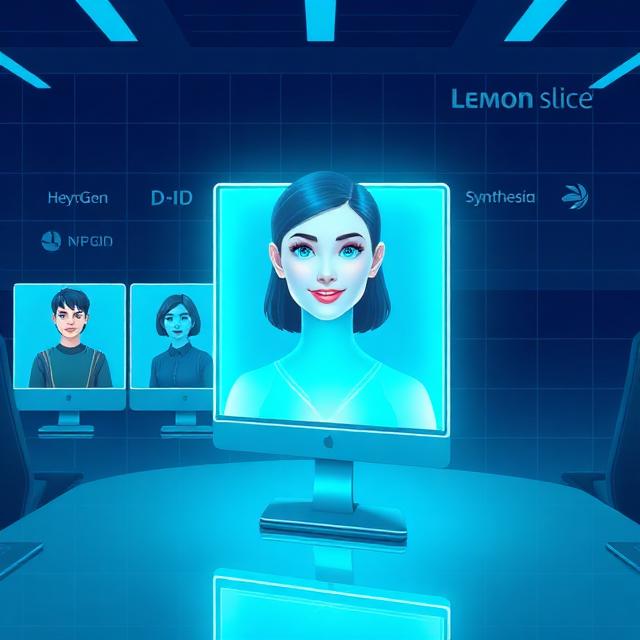
The digital avatar space is no longer a quiet frontier. It’s a bustling, competitive arena where new startups seem to emerge weekly, each promising to bridge the gap between humans and machines with a friendly, digital face. For Lemon Slice, stepping onto this stage means not just showcasing its technology, but convincingly answering a critical question: In a market already populated with recognizable names, what makes you different?
The company is acutely aware of the shadows cast by well-funded competitors like D-ID, HeyGen, and Synthesia in video generation, and avatar specialists like Genies, Soul Machines, Praktika, and AvatarOS. This isn’t a blue ocean; it’s a deep, shark-filled sea. Yet, the team at Lemon Slice isn’t approaching this as a mere feature-for-feature battle. They are staking their claim on a foundational belief: that a superior, more flexible core technology—the engine under the hood—will ultimately win the race when avatars evolve from novelty to necessity.
The Core Differentiator: A General-Purpose Brain, Not a One-Trick Pony
The heart of their argument, echoed passionately by their investors, lies in their choice of architectural philosophy. While many competitors have built solutions tailored for specific scenarios—a perfect corporate spokesperson, a stylized game character—Lemon Slice bet early on a “general-purpose” approach.
Ilya Sukhar, a partner at Matrix, frames this not as a minor technical detail, but as a strategic moonshot. He points to the “bitter lesson” of AI history: that long-term dominance often goes not to those who craft the most elegant, rules-based systems for narrow tasks, but to those who harness massive amounts of data and compute power in simple, scalable models that learn more generalized intelligence.
“Many of the other players are bespoke to particular scenarios or verticals,” Sukhar notes. “Lemon Slice is taking that generalized scaling approach that has worked in other AI modalities.” In practice, this means their model isn’t taught to do just one thing perfectly. It’s taught to understand and generate the concept of a speaking, emoting entity in a fundamental way. This, in theory, removes an artificial ceiling on its potential. It’s not programmed for “human-like”; it’s trained on the building blocks of visual and temporal reality, allowing it to adapt to concepts its creators might not have initially envisioned.
Jared Friedman of Y Combinator elevates this point, linking it directly to the industry’s holy grail: escaping the uncanny valley. “Lemon Slice is, I believe, the only company taking the fundamental ML approach that can eventually overcome the uncanny valley and break the avatar Turing test,” he states.
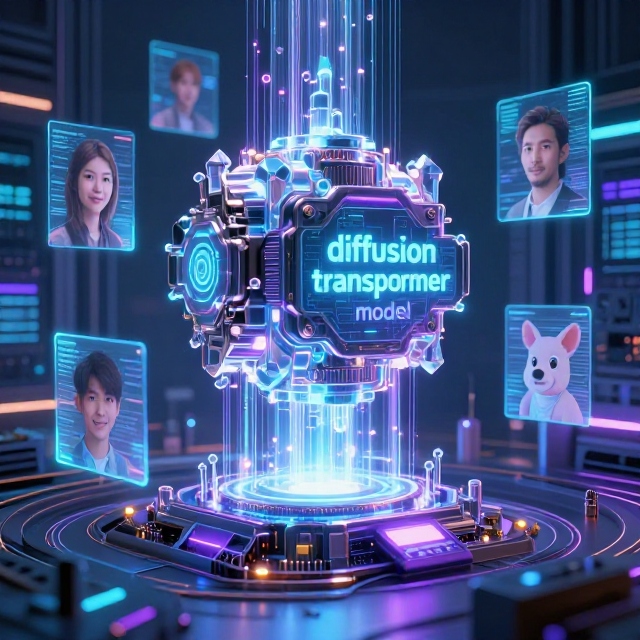
He draws a powerful analogy: the company trains the same species of model—a video diffusion transformer—as the teams behind groundbreaking tools like Veo3 or Sora. This isn’t a patchwork of lip-sync animations slapped onto a 3D model. It’s an end-to-end system that generates coherent, consistent video from noise, pixel by pixel, frame by frame. “Because it is a general-purpose model that does the whole thing end-to-end, it has no ceiling on how good it can get; the others top out below photorealistic.”
This technical deep-dive translates to tangible flexibility. While some platforms specialize in humans or cartoon characters, Lemon Slice’s model can, from a single image, animate a historical figure, a company mascot, a mythical creature, or an abstract artistic representation with the same underlying machinery. In a world where brand identity might be a cartoon avocado or a wise-looking owl, this flexibility isn’t a bonus; it’s a business requirement.
Beyond the Tech: Trust, Safety, and the Silent Early Users
Of course, generating a convincing avatar is only half the battle. The moment you create technology that can replicate a human likeness, you inherit a profound responsibility. The specter of deepfakes and unauthorized voice cloning looms large. Lemon Slice addresses this head-on, asserting that guardrails are baked into their system to prevent such misuse. They pair this with content moderation powered by large language models, aiming to ensure their avatars are used as tools for connection, not deception. In an industry where trust will be the ultimate currency, this isn’t just an add-on; it’s the foundation of their license to operate.
Who is placing that early trust in them? While the startup plays its cards close to the vest, reluctant to name specific flagship clients, it outlines a vision that feels both practical and expansive. Their early use cases are planted firmly in fertile ground: education, language learning, e-commerce, and corporate training.
Imagine a language learning app where your digital tutor not only corrects your pronunciation but also shows you the mouth movements to make. Envision a corporate training module where a consistent, knowledgeable avatar guides new hires through complex procedures, available in every language, at any hour. Picture an e-commerce site where a friendly, informed product expert can demonstrate features in real-time, not with stock video, but with a tailored presentation. These aren’t science fiction; they are the immediate markets Lemon Slice is targeting, areas where the limitations of text-based chatbots are most glaring and the ROI on engaging video is clearest.
Sukhar touches on the inherent logic here, connecting it to our ingrained user behavior: “Avatars will be useful in areas where videos are prominent. For instance, people like learning from YouTube rather than reading long blocks of text.” Lemon Slice isn’t trying to invent a new behavior; it’s trying to upgrade an existing one—the human preference for visual, interpersonal instruction—with AI-powered scalability.
The Road Ahead: A Small Team with a Big Compute Bill

Today, Lemon Slice operates with the lean, focused energy of a classic early-stage startup: a team of just eight. The recently secured $10.5 million in funding has a clear, three-pronged purpose that reveals their priorities.
First, compute bills. Training and iterating on massive diffusion models is astronomically expensive. This funding is, in part, fuel for the core engine—the raw intellectual horsepower that their entire thesis depends on. It’s a non-negotiable investment in their own “bitter lesson” scaling.
Second, engineering talent. To refine this model, push its capabilities, and optimize it for real-time, single-GPU deployment as promised, they need more of the “deeply technical” minds that Sukhar praised—builders with a track record of shipping real products, not just publishing research papers.
Third, go-to-market staff. This is the acknowledgment that a brilliant engine needs a vehicle. They need to build the sales, marketing, and partnership machinery to move their API and widget from a cool piece of tech to an integrated solution inside the education platforms, online stores, and training software where they believe they belong.
The narrative that Lemon Slice is weaving is compelling. They are not dismissing their competitors but are drawing a line in the sand on technological philosophy. While others build beautiful, specialized houses, they are pouring a massive, reinforced foundation, betting that the future city of digital interaction will be built on their land. They are pairing this ambition with a sober understanding of the ethical landscape and a pragmatic focus on markets ripe for disruption.
The challenge ahead is monumental. They must prove that their generalized model can, in fact, outpace the rapid iterations of more focused rivals in terms of quality and ease of use. They must convert their technical potential into seamless, reliable, and affordable products for developers. And they must navigate a market where hype often precedes utility.
But in the voices of their investors and the clarity of their technical gamble, one senses a conviction that goes beyond mere optimism. It’s the belief that they are not just building a better avatar—they are building a more fundamental, more adaptable language for visual AI interaction. In the long game of the avatar revolution, Lemon Slice is playing for the root system, not just the flower. The next year will be a critical test of whether that deep-rooted approach can grow quickly enough to stand tall in an increasingly crowded forest.
Frequently Asked Questions (FAQ)
Q1: What exactly does Lemon Slice do?
A1: Lemon Slice is an AI startup that generates realistic, interactive digital avatars from a single photograph. Their core technology is a video diffusion model that can animate a face (human or otherwise) to speak, express, and interact in real-time, aiming to add a visual layer to AI chatbots and agents.
Q2: Why did they raise $10.5M, and who funded them?
A2: The $10.5 million funding round was co-led by Y Combinator (YC) and Matrix Partners. The capital will be used to scale their technology, hire key engineering and go-to-market staff, and cover the significant computing costs required to train and run their advanced AI models.
Q3: How is Lemon Slice’s technology different from other avatar companies like Synthesia or HeyGen?
A3: According to their investors, the key difference is architectural. While many competitors use more tailored or piecemeal animation techniques, Lemon Slice is building a general-purpose video diffusion transformer model (similar to the tech behind Sora or Veo). This approach, trained end-to-end on massive datasets, theoretically has no preset ceiling on quality and can generate any type of avatar—human, cartoon, or creature—with the same core model.
Q4: What is the “uncanny valley,” and how does Lemon Slice plan to overcome it?
A4: The “uncanny valley” is the unsettling feeling people get when a robot or avatar looks almost, but not perfectly, human. Most current avatars fall into this trap. Lemon Slice’s investors believe their foundational AI model, which learns to generate natural motion and expression from the ground up, is the only approach that can eventually create avatars so lifelike they overcome this barrier and feel genuinely natural to interact with.
Q5: What are the main use cases for this technology?
A5: Lemon Slice is initially targeting areas where visual, interactive communication is key. Primary use cases include:
- Education & Language Learning: A personalized tutor that can demonstrate and react.
- Corporate Training: A consistent, on-demand trainer for onboarding or procedures.
- E-commerce: A virtual shopping assistant that can explain and demonstrate products.
- Customer Support: An empathetic, visual agent to guide users through issues.
Q6: Aren’t there serious risks with technology that can clone faces and voices?
A6: Lemon Slice states it has built-in guardrails to prevent unauthorized face or voice cloning. Additionally, they employ content moderation systems (using large language models) to govern what their avatars can say, aiming to ensure the technology is used ethically and responsibly.
Q7: How can businesses or developers try this technology?
A7: Lemon Slice offers its avatar engine through an API and an embeddable widget, designed to be integrated into existing applications or websites with minimal code. This allows companies to create and deploy custom avatars for their specific needs.