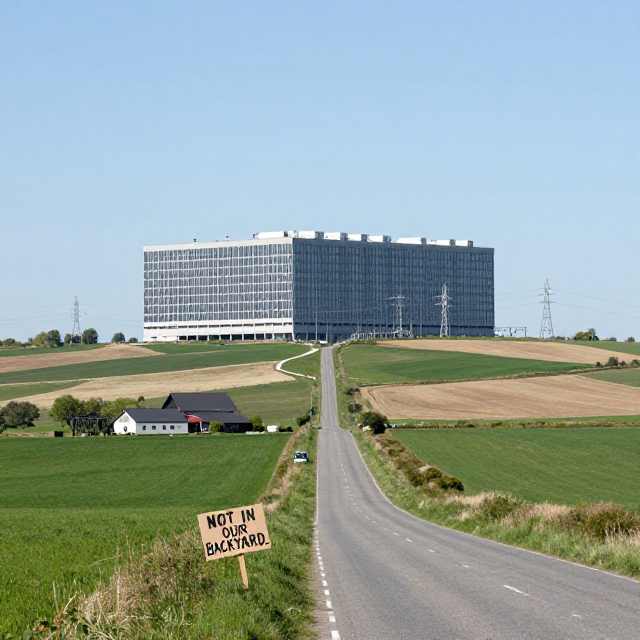
There was a time when most Americans had little to no idea a data center might be operating in their community. For years, data centers have been the silent, steady heartbeat of our digital world—essential, but completely off the average person’s radar. They weren’t a topic at the dinner table, much less a heated issue in local politics.
It looks like those quiet days are now firmly behind us.
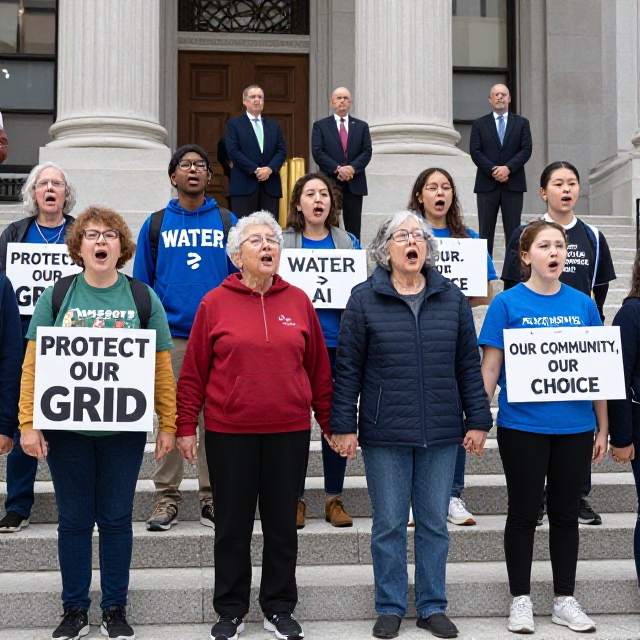
This past year, data centers have moved from the background to the front lines. In dozens of states, people are now taking to the streets to protest the rapid spread of these server farms. According to Data Center Watch, a group that monitors this growing pushback, there are now 142 different local activist groups across 24 states fighting new data center developments.
The concerns driving these movements are deeply personal. People are worried about the potential tolls on our environment and health, they’re uneasy about how the AI powered by these centers is being used, and they’re frustrated that this massive new drain on our power grid might be causing everyone’s electricity bills to climb.
This sudden wave of grassroots opposition makes sense when you see how fast the industry is expanding, literally into people’s backyards. The boom in artificial intelligence has sparked a parallel explosion in cloud computing. To give you a sense of the scale: since 2021, construction spending on data centers in the U.S. has shot up by a stunning 331%. We’re talking about hundreds of billions of dollars. So many projects have been proposed that experts doubt the grid or the landscape could even handle them all.
And the building frenzy isn’t letting up. Tech giants like Google, Meta, Microsoft, and Amazon have all outlined huge spending plans for the coming year, with a big chunk earmarked for this very infrastructure.
The push isn’t just coming from Silicon Valley. It has a powerful ally in Washington, D.C., where the Trump administration has placed AI development at the center of its agenda. The “Stargate Project,” announced at the start of the year, framed this buildout as a kind of national re-industrialization, setting the stage for the massive construction wave we’re seeing now.
What was once invisible is now impossible to ignore.
From Silicon to Soil: When the Cloud’s Data Center Hunger Hit Home
There’s a strange irony in our digital age. We stream, scroll, and search with effortless grace, rarely pausing to consider the physical heartbeat of it all. For decades, the data center—that anonymous, humming warehouse of servers—operated in beautiful obscurity. It was the industry’s worst-kept secret: the internet had a backbone, but it was tucked safely out of sight and out of mind.
That era is over.
In its relentless, exponential scramble to power our future—specifically, the blazing frontier of artificial intelligence—the tech industry has outgrown its shadow. It has moved from the isolated industrial park to the edge of town, from the specialist’s spreadsheet to the neighbor’s kitchen-table concern. And in doing so, it has ignited a grassroots firestorm of opposition that is reshaping communities, rewriting local politics, and proving that even the most abstract digital ambitions are finally, firmly, grounded in the very real world of people, power grids, and pocketbooks.

Danny Cendejas feels this shift in his bones. An activist with the nonprofit MediaJustice, he’s become a familiar face on the new front lines. Earlier this year, he stood with residents in Memphis, Tennessee, where locals gathered to protest “Colossus,” a sprawling data center project by Elon Musk’s xAI. For Cendejas, Memphis wasn’t an anomaly; it was a symptom. He now finds himself talking to new people every single week—parents, farmers, retirees—who are just beginning to ask questions about a mysterious facility proposed for a field down the road or an old plot on the outskirts of town.
“I don’t think this is going to stop anytime soon,” Cendejas tells me, his conviction clear. “I think it’s going to keep building, and we’re going to see more wins—more projects are going to be stopped.” There’s a sense of momentum in his voice, the energy of a movement finding its feet.
And the evidence for his assessment is written across the American landscape. The reaction to a new data center proposal in many communities today mirrors what you might expect for a hazardous waste facility or a major polluter. It’s no longer seen as a passive neighbor, but as an active invader.
Take Michigan, where developers have scouted 16 potential sites. The response wasn’t just a few letters to the editor. Protesters descended on the state capitol, their voices echoing through the halls with a plainspoken demand: “Michiganders do not want data centers in our yards, in our communities.” In Wisconsin, another hotspot, sustained local pressure appears to have convinced Microsoft to reconsider plans for a massive 244-acre data center campus, a testament to the power of concerted, vocal opposition. Out in Southern California, the small city of Imperial Valley took its county to court, filing a lawsuit to overturn the approval of a project, citing deep-seated fears over its environmental impact.
So, what’s driving this intense, almost visceral reaction? The concerns are layered, personal, and profoundly local.
First, there’s the elemental fear of the unknown. These are not gentle additions to the skyline. They are vast, windowless fortresses, often spanning dozens or hundreds of acres, demanding enough power for a small city. Their constant, deafening hum becomes a new soundtrack for the neighborhood. Their thirst for water for cooling is immense, raising alarms in areas already facing scarcity. For communities accustomed to fields or quiet industry, the arrival of a digital factory feels alien and imposing.

Then, there’s the thorny specter of AI itself. The public’s relationship with artificial intelligence is fraught with anxiety—about job displacement, about surveillance, about the opaque ethics of algorithms that shape lives. The data center is the physical embodiment of that anxiety. It’s no longer an abstract concept in a tech keynote; it’s the very concrete, very loud engine room where those ambiguous ambitions are forged. Protesting a data center becomes a tangible way to push back against a wave of technological change that feels too fast, too uncontrolled, and too dismissive of human consequence.
But perhaps the most potent catalyst, the one that has transformed concern into a coalition, is the monthly utility bill. Across the nation, electricity rates are climbing. And in region after region, a common villain is identified: the insatiable energy appetite of the new data center next door. When a single facility can consume more power than every home in a county combined, it strains the grid and drives up costs for everyone. This isn’t a philosophical debate about the future of tech; it’s a kitchen-table economic crisis.
“The whole connection to everybody’s energy bills going up—I think that’s what’s really made this an issue that is so stark for people,” Cendejas explains. “So many of us are struggling month to month. Meanwhile, there’s this huge expansion of data centers… People are wondering, ‘Where is all that money coming from? How are our local governments giving away subsidies and public funds to incentivize these projects, when there’s so much need in our communities?
This connection between the digital boom and tangible financial pain has propelled the issue straight into the heart of politics. The discontent is no longer just placards at a planning meeting; it’s a voting bloc. Analysts now suggest that rising electricity costs, heavily linked to data center and AI infrastructure demand, could be a decisive factor in the 2026 midterm elections. Politicians are being forced to pick a side: the promise of “future jobs” and “economic investment” from tech giants, or the immediate, angry needs of their constituents who feel they are subsidizing a billionaire’s race to AI supremacy with their own household budgets.
And in this evolving battle, the grassroots are scoring points. According to tracking by groups like Data Center Watch, nearly $64 billion worth of proposed developments have been delayed or blocked outright due to community opposition. This isn’t just theory; it’s a proven record. Cendejas feels this power. “All this public pressure is working,” he says, noting the “very palpable anger” fueling the movement. Every halted project becomes a blueprint for the next town, a story of victory that proves collective action can stand up to corporate gravity.
Unsurprisingly, the tech industry is not sitting idle. It is mounting a formidable counter-offensive. A new trade group, the National Artificial Intelligence Association (NAIA), has sprung up, working to shape the narrative in Washington and beyond. They distribute talking points to legislators and organize carefully curated “field trips” to data centers, aiming to showcase them as marvels of modern engineering rather than burdensome neighbors. Tech behemoths like Meta are launching direct advertising campaigns, targeting voters with messages touting the economic benefits—the construction jobs, the tax revenue, the aura of being “future-ready.”
Their message is clear: America is in a global AI arms race, particularly with China, and slowing down the compute buildout is akin to unilateral disarmament. The Stargate Project and similar federal initiatives have framed this infrastructure surge as a patriotic “re-industrialization,” a necessary reinvestment in national prowess. The industry’s entire trajectory, its trillions in market valuation, is pegged to this unhindered physical expansion.
Thus, we arrive at the stalemate that will define 2026 and beyond. On one side: an almost existential drive to build, fueled by geopolitical competition, investor expectation, and pure technological fervor. The construction spending is astronomical, up over 330% since 2021, with hundreds of billions more committed by the likes of Google, Amazon, and Microsoft.
On the other side: a growing, maturing network of citizens who feel their well-being, their environment, and their wallets are being sacrificed as fodder for this new industrial revolution. They are armed with lawsuits, zoning laws, and a powerful, simple question: “At what cost?”
The data center, once a ghost in the machine, has become the protagonist in a very human story. It’s a story about who gets to define progress, who bears its weight, and where we draw the line between our digital aspirations and our physical realities. The backlash is not against technology per se, but against imposition—against the feeling that decisions about a community’s very fabric are being made in distant boardrooms and legislative chambers, without true consent.
The humming from behind the fence is no longer just the sound of servers. It’s the sound of a looming negotiation, one that will determine the landscape of our nation, the cost of our progress, and the price of our place in the digital future. The surge will continue. And so, too, will the voices rising to meet it, demanding a say in what gets built, not just in the cloud, but in their own backyards.
FAQ: Understanding the Data Center Debate
Q1: Why are data centers suddenly such a big public issue? Weren’t they always around?
Yes, data centers have been around for decades, but their scale, location, and visibility have changed dramatically. The explosive growth of artificial intelligence (AI) and cloud computing requires a massive, unprecedented buildout of computing infrastructure. To meet this demand, tech companies are proposing enormous new data centers at a staggering rate, often in regions previously untouched by such large-scale industrial tech projects. This has moved them from isolated industrial parks directly into community backyards, making their impacts—on the landscape, the power grid, and local resources—impossible to ignore.
Q2: What are the main concerns driving community opposition?
Residents and activists cite a combination of interconnected issues:
- Soaring Electricity Costs: Data centers consume massive amounts of power—sometimes as much as a medium-sized city. This surge in demand can strain local grids and lead to higher electricity bills for everyone in the region.
- Environmental Strain: Concerns include immense water usage for cooling systems, potential impacts on watersheds, the carbon footprint of the electricity they draw from (often fossil fuels), and the physical transformation of land.
- Community Character & Health: The constant, low-frequency noise from facilities, the visual impact of massive, windowless buildings, and concerns about potential emissions or light pollution disrupt rural and suburban communities.
- The “Why Here?” Factor: Many object to the use of public subsidies and tax breaks to incentivize these projects, arguing that public money should address local needs like schools, roads, and housing, not subsidize trillion-dollar tech companies.
- The AI Connection: For some, opposing a data center is a tangible way to protest the rapid, unregulated rise of AI, which brings its own set of societal anxieties.
Q3: Is this opposition actually effective? Or is the buildout inevitable?
The opposition is proving surprisingly effective in many cases. Grassroots campaigns have delayed, altered, or outright canceled an estimated $64 billion in proposed projects. Tactics include packed zoning meetings, lawsuits, ballot initiatives, and state capitol protests. While the overall buildout driven by AI demand is enormous and will continue, it is no longer a foregone conclusion that any project will be approved. Companies are now facing a new cost of doing business: meaningful community engagement and compromise.
Q4: The tech industry says data centers bring jobs and economic investment. Is that true?
This is a major point of contention. The industry touts construction jobs and long-term operational roles. However, critics point out that modern, hyper-scale data centers are highly automated and create far fewer permanent jobs than traditional manufacturing plants of similar size. The economic benefit often comes down to property tax revenue, which can be significant but is sometimes minimized by the very subsidies used to attract the project. Communities are increasingly conducting cost-benefit analyses, weighing potential revenue against the strain on public utilities and infrastructure.
Q5: How is this becoming a political issue?
The combination of rising utility bills and community disruption has turned data centers into a potent local and state-level political issue. Candidates are being forced to take a stand. The issue cuts across traditional party lines, uniting environmentalists, rural conservatives, and cost-conscious suburbanites. As seen in Michigan and elsewhere, it is mobilizing voters. Furthermore, with the federal government pushing for AI leadership as a national priority, a clash is emerging between top-down industrial policy and bottom-up community sovereignty.
Q6: What is the industry doing to address this backlash?
Tech companies and their trade groups are launching major PR and lobbying campaigns. Strategies include:
- Direct Advertising: Running ads in local markets highlighting economic benefits and commitments to green energy.
- Political Outreach: Groups like the National Artificial Intelligence Association (NAIA) are briefing lawmakers and organizing tours to showcase data center technology.
- Promising “Green” Infrastructure: Emphasizing investments in renewable energy projects and more efficient cooling technologies to address environmental concerns. Critics, however, argue that even “green” data centers still place a huge burden on local resources and grids.
Q7: What about water usage? Is it really a major concern?
In many regions, absolutely. A single large data center can use millions of gallons of water per day for cooling, comparable to the consumption of a small city. In areas already facing drought or water scarcity, this poses a direct threat to residential supplies, agriculture, and ecosystems. This has become a flashpoint in communities from the desert Southwest to the Midwest.
Q8: What can a resident do if a data center is proposed near them?
A growing national network of activist groups provides resources. Steps often include:
- Forming or Joining a Local Group: Collective action is powerful. Groups like Data Center Watch track activism nationwide.
- Educating the Community: Researching the specific project’s details on energy, water, and tax incentives.
- Engaging the Political Process: Showing up at planning commission, city council, and county board hearings is critical. These bodies grant the necessary permits and zoning changes.
- Legal Action: In some cases, communities or environmental groups have filed lawsuits to challenge approvals based on procedural or environmental grounds.
Q9: What’s the likely outcome of this conflict?
A prolonged period of negotiation and conflict is expected. The demand for computing power won’t diminish, but the “land anywhere” model is over. We’ll likely see:
- More Stringent Regulations: New local and state laws governing noise, water use, grid impact contributions, and transparency.
- Strategic Relocation: More projects may be pushed toward locations with abundant, underutilized green energy (like certain wind-rich plains states), though this raises its own equity questions.
- Technological Innovation: Increased pressure to develop less resource-intensive cooling and faster adoption of on-site renewable energy.
- Continued Polarization: The issue will remain heated, symbolizing the broader debate over tech’s role in society, inequality, and who pays the price for progress.
Q10: Where can I learn more about specific projects or activism?
Organizations like Data Center Watch, the Blueprint for a Just Digital Future by MediaJustice, and local environmental groups are key sources. Following local news in major development corridors (like the Midwest, the Southwest, and the Atlanta region) also provides on-the-ground reporting.