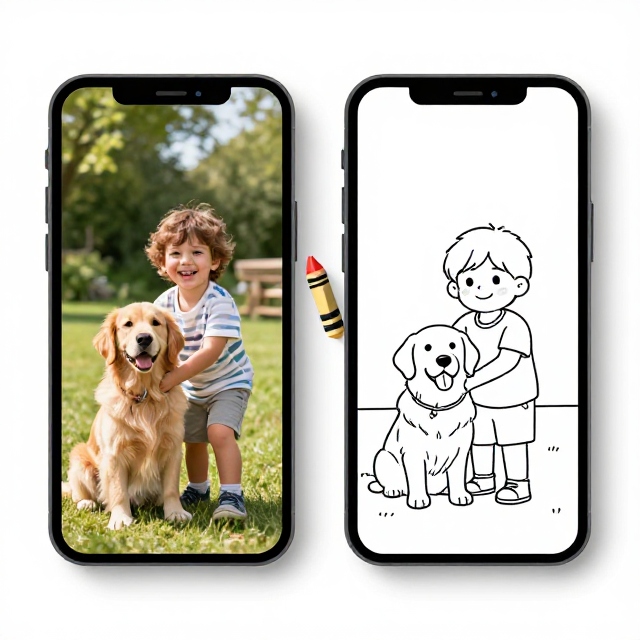
The team behind Retro, a photo-sharing app designed for close friends and family, is exploring more creative applications for generative AI. As an experiment with the latest technologies, they developed a new app named Splat. This tool allows users to convert any photograph into a coloring book page for children.
Any parent knows that children adore coloring. While the internet offers a vast and endless supply of printable coloring pages, the experience of finding them can often be frustrating. Many sites hosting these pages are cluttered with ads and disorganized, making them difficult to use. Additionally, printable pages frequently come with a small fee—a cost some parents prefer to avoid, given how quickly children’s scribbled-on artwork is discarded.
Inspired by this concept, the team behind Retro developed an app that allows you to print coloring book pages at home. These pages can be generated from your personal photos or chosen from the app’s own library of kid-friendly, educational categories like animals, space, flowers, fairy tales, robots, and cars.
To use Splat, you simply take a new picture or select one from your device’s gallery. Next, you choose a stylistic theme—such as anime, 3D movie, manga, cartoon, or comic. The app’s AI then processes the image, transforming it into a coloring page that can be used on-screen or printed out.
The app avoids a cumbersome sign-up process. Instead, on your first creation, it guides you through a few customization steps. You’ll select a preferred app icon and indicate which categories interest your child. You can also set a default preference for whether creations are intended for printing or for on-screen coloring—a handy feature for quick, screen-based entertainment that steers clear of more absorbing TV shows or video games.
In an age where children’s fingertips are often glued to tablets, navigating vibrant, fast-paced digital worlds, a quiet revolution is brewing. It’s a movement that doesn’t seek to eliminate technology, but to thoughtfully harness it as a bridge back to tangible, hands-on creativity. At the forefront of this shift is Splat, a deceptively simple app that uses generative AI to transform everyday photos into personalized coloring pages. What might sound like a neat party trick is, in practice, a powerful tool reimagining how technology can serve childhood development, one printable page at a time.
The Magic in the Mechanism: From Snapshot to Masterpiece
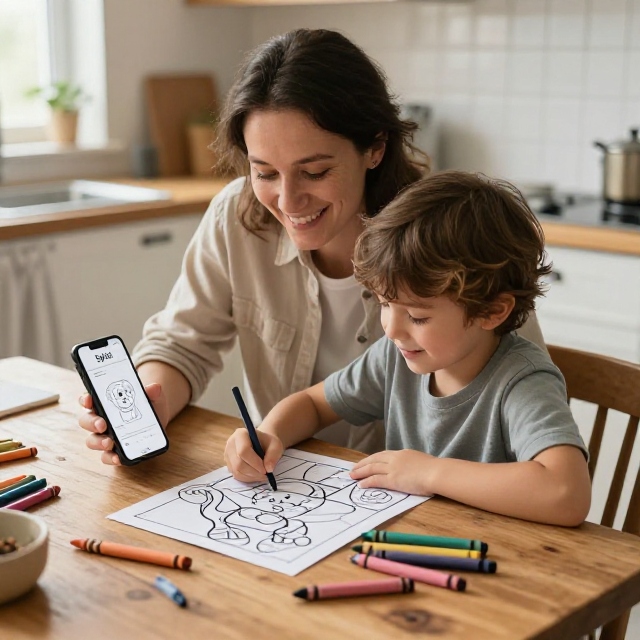
The true genius of Splat lies in its seamless and intuitive process, which dismantles the barrier between a digital idea and a physical creation. During hands-on testing, the app performs exactly as promised, with a generation time so brief it feels almost instantaneous. This efficiency is crucial—it respects the impatient energy of a curious child and the busy schedule of a modern parent. The journey from a captured moment to a ready-to-color artwork is a matter of taps: snap, select, splat.
Imagine your child’s delight at coloring a cartoon version of the family dog, or bringing a fantastical anime-style spacescape to life with their crayons. The app’s AI doesn’t just trace photos; it reinterprets them through selected stylistic lenses—be it the bold lines of a comic book, the whimsical charm of a 3D movie character, or the iconic aesthetic of manga. This transformation is more than a filter; it’s a translation of reality into a language of creativity that children instinctively understand: outlines waiting to be filled.
Designed for Real Life: Intuitive Onboarding and Purposeful Flexibility
Splat sidesteps a common digital pitfall: the tedious sign-up wall. Instead, it welcomes users with a clever, interest-based onboarding flow. Before diving in, parents are gently prompted to customize the experience. Choosing a fun app icon and ticking off a child’s preferred categories—robots, fairy tales, space, or animals—does more than personalize; it makes the app feel immediately relevant and engaging.
This thoughtful design extends to its core flexibility. The app acknowledges the varied rhythms of family life. On a quiet afternoon, the “printable page” option facilitates a focused, screen-free art session, resulting in physical art for the refrigerator gallery. In a “pinch” moment—waiting at a restaurant or during a long car ride—the on-screen coloring mode becomes a savior. It offers a creative, interactive alternative to passive video consumption or hyper-stimulating games. This dual functionality makes Splat a versatile tool in the parenting toolkit, promoting creativity whether grounded at the craft table or on the go.
Part of a Larger Canvas: The Rise of Generative AI in Child-Centered Innovation
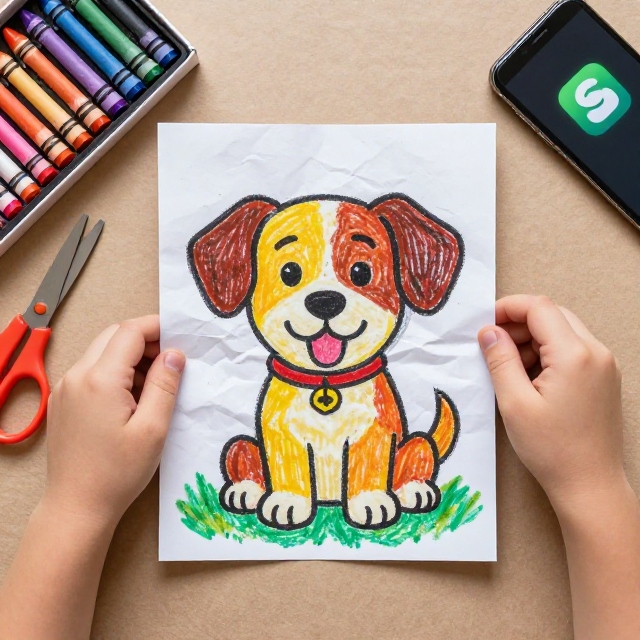
Splat is not an isolated phenomenon. It is a leading example of a burgeoning trend where generative AI is being engineered not to replace human creativity, but to activate and inspire it in young minds. This represents a significant pivot in educational and recreational technology, focusing on output rather than just consumption.
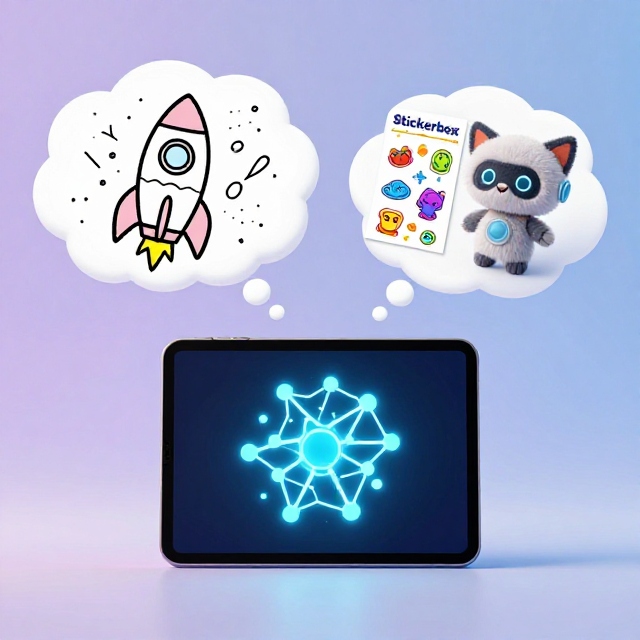
Consider Stickerbox, another innovation in this space. It takes a similar concept further into the physical realm by delivering AI-generated, colorable stickers to your doorstep. This merges the digital customization kids adore with the tactile joy of stickers, culminating in a collectible artifact of their own artistic effort.
On a different but related frontier, companies like Casio are exploring AI’s role in emotional and social development with creations like Moflin, a fluffy robotic pet. Moflin uses AI to develop a unique personality over time, responding to interactions and providing a sense of companionship. While distinct from Splat’s creative mission, Moflin shares the same foundational principle: using adaptive technology to foster a deeper, more personal connection with the user, encouraging empathy and nurturing behavior.
Together, these tools paint a picture of a future where AI is a playful collaborator. It’s no longer just about delivering answers or entertainment, but about providing scaffolds—a blank page styled from a personal photo, a sticker sheet from a chosen theme, a pet that grows alongside its owner.
The Tangible Benefits: More Than Just Keeping Busy
The value of an app like Splat transcends mere distraction. It cultivates a suite of developmental benefits:
- Fine Motor Skills: The physical act of coloring, whether on paper or carefully on a screen, enhances hand-eye coordination and dexterity.
- Creative Confidence: By starting with a familiar image—their pet, their home, their face—children engage with art without the intimidation of a blank page. They become artists enhancing a template, building confidence in their creative choices.
- Personalized Learning: The educational categories (animals, space, flowers) turn coloring into a conversational springboard. A page of a robot can lead to questions about engineering; a dinosaur can spark a prehistoric adventure story.
- Bonding and Memory-Making: The process is collaborative. Parents and children can choose the photo together, laughing at the AI’s stylistic interpretation, and then sit side-by-side to color. The final product is a hybrid keepsake: a digital memory transformed into a physical piece of shared art.
Looking Ahead: The Future of Creative Play
With availability on both iOS and Android, Splat is democratizing access to this new creative paradigm. Its success hints at a future where the line between digital and physical play is not a wall, but a permeable membrane.
We can anticipate further evolution: perhaps apps that animate the child’s colored creation back into a short video, or platforms where a child’s drawings can be used to train a personal AI art style. The core mission will remain—using technology as a launchpad for imagination, not a destination.
In a world saturated with pre-packaged digital content, Splat and its peers offer a refreshing alternative. They return a sense of agency and ownership to the child. The message is powerful: “Your world is the canvas. Your stories are the inspiration. And with a little help from AI, you can hold your imagination in your hands.” This isn’t just about coloring within the lines; it’s about drawing new connections between technology, creativity, and the irreplaceable joy of making something uniquely your own.
Frequently Asked Questions (FAQ) About Splat
Q1: What exactly is Splat?
A: Splat is a mobile app (available for iOS and Android) that uses generative artificial intelligence (AI) to instantly transform your personal photos into custom, kid-friendly coloring pages. You can choose from fun styles like cartoon, comic, or anime, and then either print the pages for a hands-on activity or color them directly on your device.
Q2: How does the AI work? Is it complicated to use?
A: The process is designed to be incredibly simple. You just pick a photo from your library or take a new one, select a style you like, and tap a button. The AI then analyzes the image and redraws it as a clean-lined coloring page. No technical skills are needed—it’s built for speed and ease so you can go from idea to activity in under a minute.
Q3: What kind of photos work best?
A: Clear, well-lit photos with a distinct subject (like people, pets, or objects) work wonderfully. The AI excels at turning portraits of family members, pictures of your dog or cat, vacation photos, or even toys into great coloring pages. You can also skip your own photos entirely and choose from the app’s built-in library of educational categories like animals, space, and fairy tales.
Q4: Do I need to create an account or sign up?
A: No. Splat prioritizes a hassle-free start. Instead of a lengthy sign-up, the app guides you through a quick, one-time customization when you first use it. You’ll pick a fun app icon and select your child’s favorite interest categories to personalize their experience.
Q5: Is it free? What are the costs?
A: The blog post reviewed the core, free functionality of the app. Splat may operate on a freemium model, where the basic AI transformation and access to some categories are free, while advanced styles, unlimited prints, or an ad-free experience might require a subscription or one-time purchase. For the most current pricing details, please check the official listing on the Apple App Store or Google Play Store.
Q6: Can my child use this app alone?
A: The initial setup and photo selection are best done with a parent. However, once a page is generated, the on-screen coloring mode is perfectly suited for a child to use independently. The printable option, of course, creates a completely screen-free activity. The app is designed to be a collaborative tool for families.
Q7: How is this different from just printing a black-and-white photo?
A: A simple grayscale photo retains complex shadows and textures, which can be frustrating for young children to color. Splat’s AI actively reinterprets the image. It simplifies details, creates bold, clear outlines, and adapts the photo into a chosen artistic style (like a cartoon or comic), resulting in a page that is genuinely optimized and fun for coloring.
Q8: Is Splat safe for my child’s privacy?
A: Based on the description, the app emphasizes a local, immediate process. For the core function of turning your personal photos into coloring pages, the image processing likely happens on your device or is handled securely without storing your photos long-term. It’s always recommended to review the app’s official Privacy Policy for detailed information on data collection and usage.
Q9: What makes Splat educational? It seems like just fun.
A: The fun is the gateway to learning. Coloring builds fine motor skills and hand-eye coordination. When children color a page of a dinosaur they chose or a cartoon version of their backyard, it sparks conversation, boosts vocabulary, and encourages storytelling. It turns a passive screen moment into an active creative and cognitive exercise.
Q10: How does Splat compare to other AI apps for kids, like Stickerbox?
A: Splat focuses on the creation process that leads to a coloring activity, either digital or physical. Stickerbox also uses AI for customization but focuses on a different final product: physical stickers you color and collect. Both use AI to inspire creativity but deliver different tactile experiences. Splat is about instant, customizable pages, while Stickerbox is about creating personalized collectibles.
Q11: Are there any plans for new features?
A: The blog post highlights Splat as part of an innovative trend. While specific roadmaps aren’t detailed, developers of such apps often expand style options, add new educational categories, or introduce features like themed coloring challenges or sharing galleries. Keep an eye on app updates for new developments.
Q12: What if I have technical issues or feedback?
A: For technical support, bug reports, or to share your ideas, you should use the “Contact Us” or “Support” section found within the Splat app or on its official website. Developers of creative apps like this often highly value user feedback to guide improvements.