Introduction: The Cosmic Address
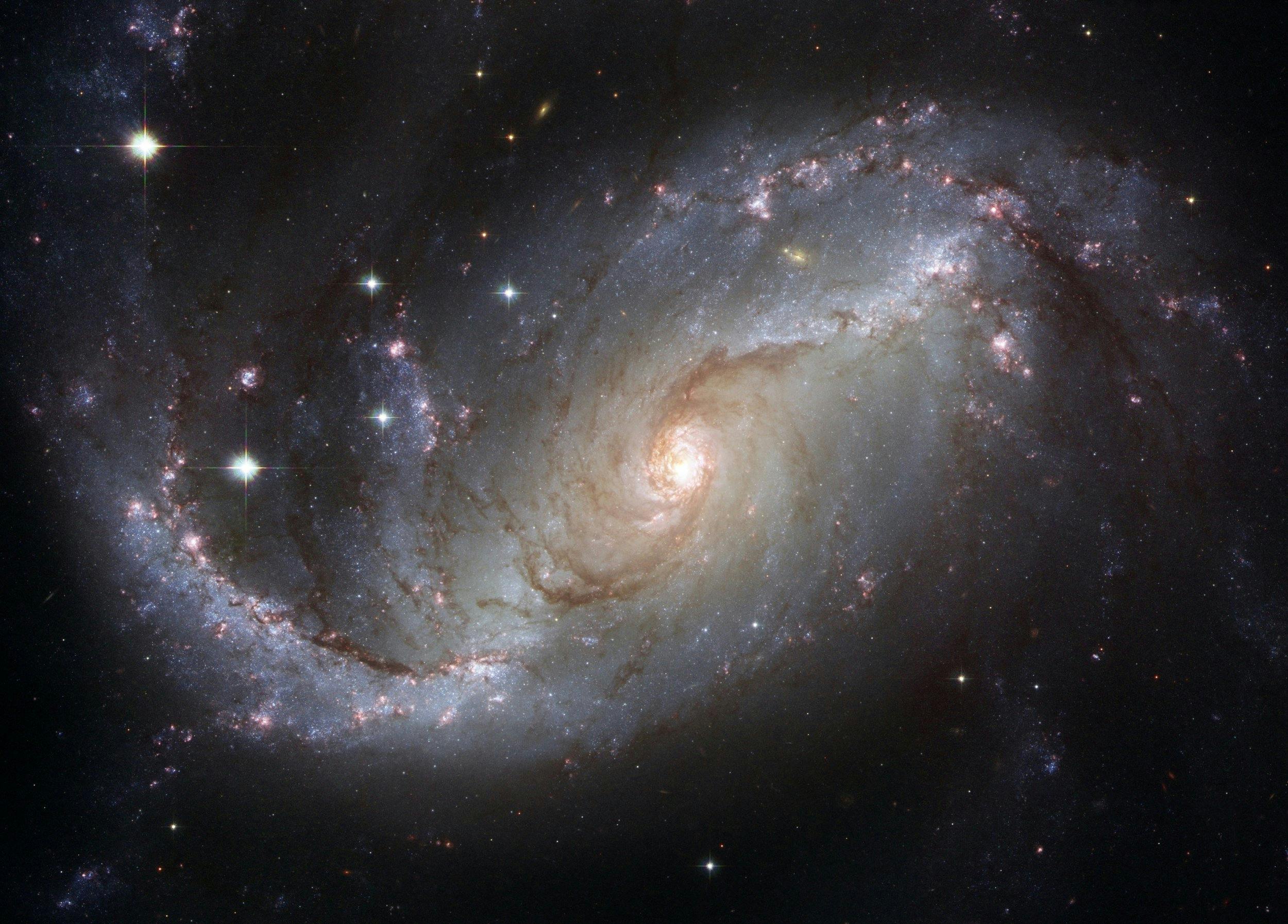
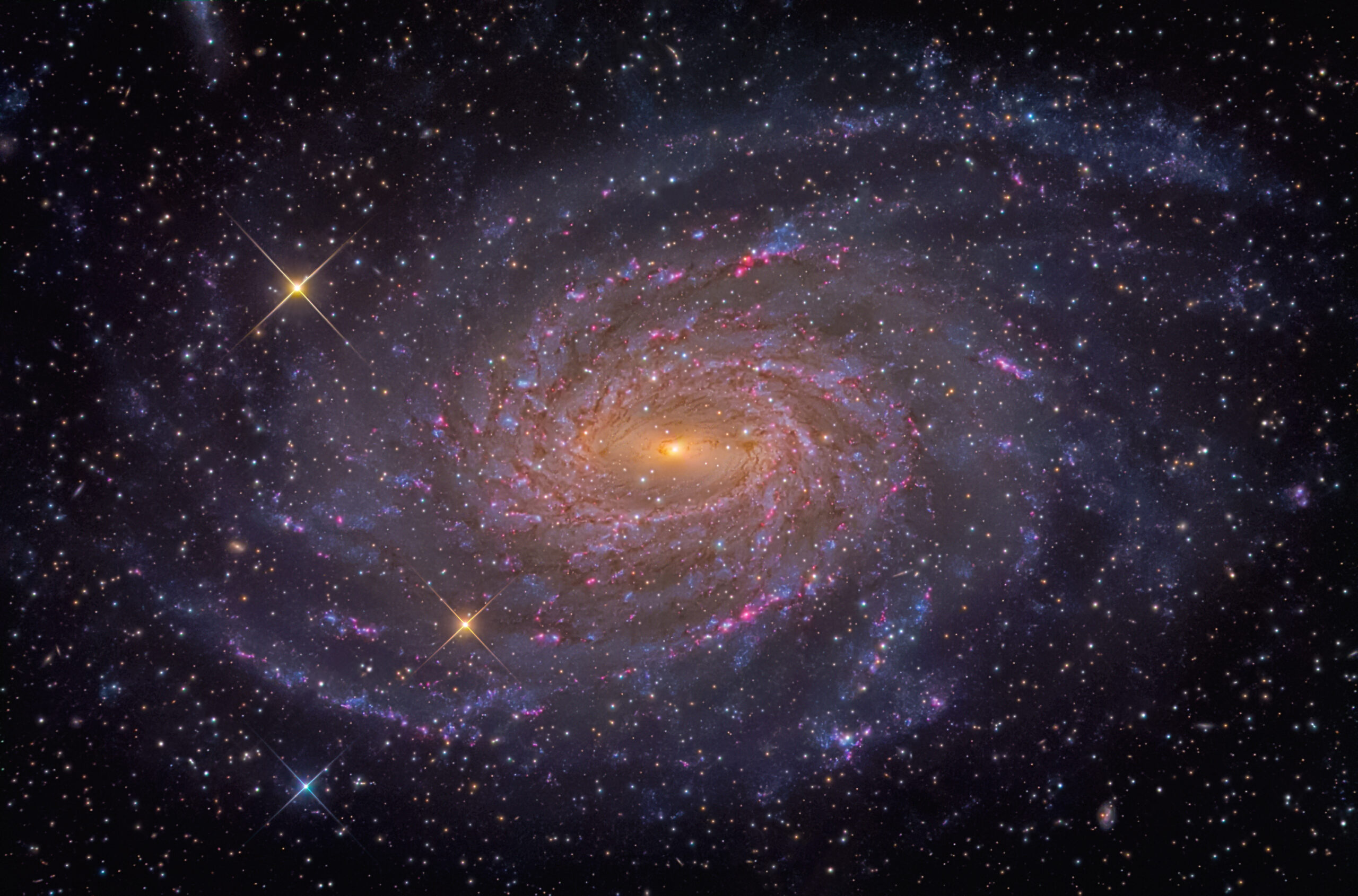
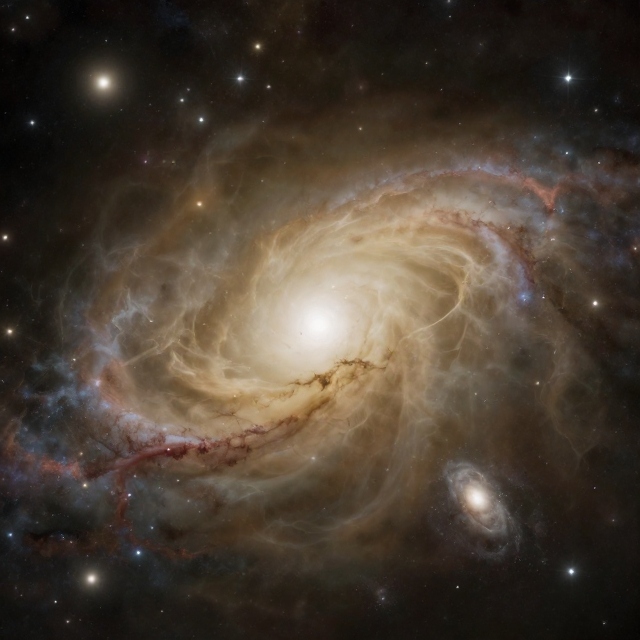
For centuries, when we imagined a star, we placed it firmly within the sparkling disk of a spiral galaxy, the dense core of an elliptical, or the chaotic beauty of an irregular star system. Our cosmic maps were clear: Truth About Stars, just as cities belong to countries. This foundational idea is so intuitive that the question “Do all stars exist in galaxies?” seems almost nonsensical. Yet, modern astronomy has unveiled a universe far more dynamic, violent, and surprising than we ever envisioned. The short, and astonishing, answer is no, not all stars exist within galaxies. A vast, invisible population of stellar nomads—rogue stars and orphaned clusters—roams the profound darkness of intergalactic space. Their existence rewrites our understanding of stellar ecology, galactic evolution, and the very structure of the cosmos.
The Galactic Home – Where Stars Are “Supposed” to Be
To appreciate the outlier, we must first understand the norm. Galaxies are gravitational metropolises, containing not only billions to trillions of stars but also vast clouds of gas and dust, dark matter halos, and planetary systems. Stars are born within these galactic nurseries—the dense, cold molecular clouds that condense under gravity. They live out their lives orbiting the galactic center, their paths shaped by the collective gravitational pull of all the galaxy’s mass. This is the stellar life cycle we know best: birth in a nebula like Orion, life within the galactic disk, and death often enriching the interstellar medium with new elements.
For a long time, our telescopes could only resolve individual stars within our own Milky Way and its nearest neighbors. Every pinprick of light in the distant cosmos was confirmed to be an entire galaxy itself. This reinforced the paradigm: stars are galactic citizens. But as our observational tools grew sharper, peering deeper into the “void,” we began to find clues that this rule was not absolute.
The Exiles – How Stars Are Ejected from Their Galactic Homes
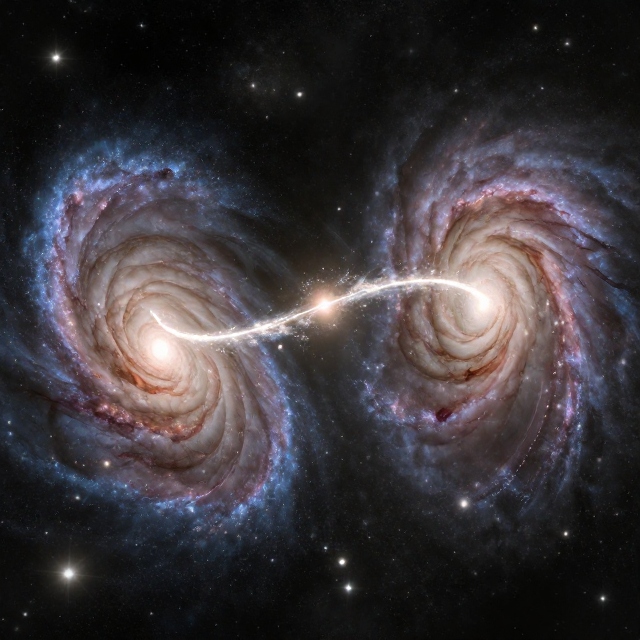
The primary mechanism creating stars outside of galaxies is one of cosmic violence. Stars can be forcefully evicted from their galactic birthplace through two major gravitational processes:
- Galactic Collisions and Mergers: This is the most prolific producer of intergalactic stars. When galaxies gravitationally tug on each other and eventually merge, it’s not a simple blending. It’s a chaotic gravitational dance. Stars can be flung far from the merging nuclei by immense tidal forces, like water droplets are ejected from a spinning wet rope. While many eventually settle into the new, larger galaxy, a significant percentage (simulations suggest up to 10% in major mergers) receive enough velocity to escape entirely, becoming true intergalactic wanderers.
- Supernova Kick: Within a galaxy, a star can go rogue on a smaller scale. In a binary star system, when one star goes supernova, the explosion is not always perfectly symmetrical. The collapsing core can receive a powerful “kick,” hurling it across space at high velocity. If this newborn neutron star or black hole is in a binary pair, it can be ejected, sometimes dragging its companion star along with it. These hypervelocity stars can achieve speeds exceeding the galactic escape velocity, catapulting them from the Milky Way into intergalactic space. We have observed several such stars, like the famous “LP 40-365,” a surviving shard of a white dwarf supernova, racing out of our galaxy.
The Born-Free –Truth About Stars That Form in the Great Void
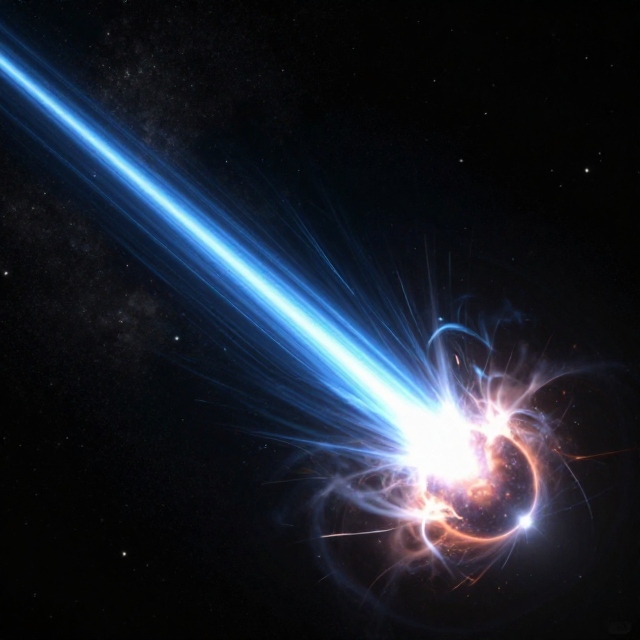
Even more mind-bending than ejected stars is the concept of stars forming outside of galaxies altogether. This occurs in a specific, spectacular environment: the massive gas trails created during galactic collisions.
When galaxies collide, not only are stars thrown out, but their immense reservoirs of hydrogen gas are also stripped and compressed. This can create colossal, dense streams of gas stretching for hundreds of thousands of light-years between and around galaxies. Under the right conditions, these orphaned clouds—often called “tidal dwarfs” or intergalactic gas clouds—can themselves collapse and fragment to form new stars. These stars are true natives of intergalactic space, having never known a galactic home. They are often found in sparse clusters or associations within the gaseous bridges between interacting galaxies, such as the famous Tadpole Galaxy or the Stefan’s Quintet.
The Invisible Majority – The Role of Dark Matter and Failed Galaxies
The story gets even stranger when we consider dark matter. Cosmological theories and simulations suggest that the dark matter halos that host galaxies like the Milky Way are surrounded by a swarm of smaller “subhalos.” Many of these may have attempted to form stars early in the universe but had their gas stripped away by the radiation from larger galaxies or by tidal forces. The result could be “dark galaxies”—halos of dark matter containing only a sparse population of stars, so faint and diffuse they are barely detectable. Are their stars considered intergalactic? They exist in a bound dark matter structure, but not in what we classify as a traditional, gas-rich galaxy. They blur the line.
Furthermore, the faintest and smallest true galaxies, “ultra-faint dwarfs,” contain only a few hundred stars. They are essentially barely more than a globular cluster ensconced in dark matter. This continuum from large galaxy to star cluster further challenges a rigid definition of where a star “belongs.”
Seeing the Unseeable – How We Detect Isolated Stars
Observing a single, isolated star millions of light-years from any galaxy is at the extreme limit of our technology. Their individual light is incredibly faint. So how do we know they exist?
- Intracluster Light: The most successful method is not spotting individual rogue stars, but detecting their collective glow. In massive galaxy clusters like the Virgo or Coma Clusters, long-exposure, ultra-sensitive telescopes have revealed a faint, diffuse light permeating the space between the galaxies. This “intracluster light” is the combined emission of billions of rogue stars, stripped from their galaxies over eons of collisions and interactions. It is the ghostly testament to the violent history of the cluster.
- Gravitational Microlensing: Occasionally, a rogue star in the Milky Way’s halo or intergalactic space may pass directly between us and a distant background star. Its gravity acts as a lens, briefly magnifying the background star’s light. These rare events can betray the presence of otherwise invisible compact objects, including solitary stars.
- Direct Imaging of Extreme Cases: In our local neighborhood, we can detect the fastest hypervelocity stars as they leave the Milky Way. And with instruments like the Hubble and James Webb Space Telescopes, astronomers have begun to directly resolve massive, luminous blue stars within the tidal tails of interacting galaxies.
Implications – A New Cosmic Picture
The existence of a vast intergalactic stellar population is not just a curiosity; it fundamentally changes our understanding of the cosmos.
- Baryon Accounting: A significant portion of the universe’s ordinary matter (baryons) is “missing” in our censuses. Intergalactic stars, especially those contributing to intracluster light, may account for a substantial fraction of this missing matter.
- Galactic Evolution: The process of losing stars through mergers and ejections is a key part of how galaxies evolve and lose mass. It helps explain the size and shape of galactic halos.
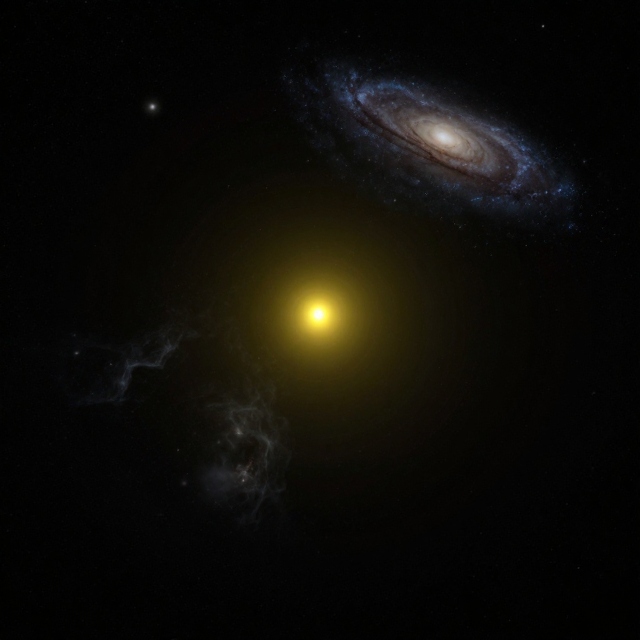
- A Home for Planets: If stars can exist in intergalactic space, so can their planets. Imagine a “rogue planet” orbiting a “rogue star”—a world with a permanent, star-filled night sky devoid of any galaxy, its only light a faint sun against an abyssal black. The potential for life there is remote due to energy scarcity, but not entirely zero from a theoretical standpoint.
- Cosmic Archaeology: The chemical composition of intergalactic stars serves as a fossil record. By studying them, we can learn about the conditions in their parent galaxies at the time they were ejected, offering a unique window into the past.
Conclusion: Redefining Our Place in the Darkness
So, do all stars exist in galaxies? Emphatically, no. Our galaxy, and every galaxy we see, is not an isolated island universe, but a dynamic entity constantly exchanging material with its surroundings. The space between galaxies is not a perfect vacuum; it is a sea of faint starlight, a testament to cosmic violence and resilience.
These stellar nomads teach us a humbling and expansive lesson: the universe is more fluid, more interconnected, and more surprising than we imagined. Stars, those universal symbols of constancy and guidance, can also be lonely voyagers on an endless journey through the intergalactic dark. In answering this simple question, we have not only expanded the map of the cosmos but have also redefined what it means to have a home in the universe. The next time you look up at a starry sky, remember that you are gazing not only at the citizens of our Milky Way but also, perhaps, at the distant, steady light of a traveler that belongs to no galaxy at all.
FAQ Section
Q1: So, not all stars are in galaxies? Is that confirmed?
Yes, this is a well-established fact in modern astronomy. While the overwhelming majority of stars do reside within galaxies, a significant number exist outside them. These are often called intergalactic stars, rogue stars, or intracluster stars. Their existence is confirmed through the detection of “intracluster light” in galaxy clusters and the observation of hypervelocity stars escaping our own Milky Way.
Q2: How do stars get “kicked out” of a galaxy?
The primary ejection methods are gravitational:
- Galactic Collisions: When galaxies merge or interact, their gravitational tides can fling stars out into the void at high speeds.
- Supernova Kicks: In a binary star system, an asymmetric supernova explosion can catapult the surviving companion or the newly formed neutron star out of the galaxy.
- Close Galactic Encounters: A star can get a gravitational slingshot effect from a close pass to the supermassive black hole at a galaxy’s center.
Q3: Can stars actually form outside of a galaxy?
Yes. During massive galactic collisions, huge streams of gas are stripped out into intergalactic space. These dense, tidal tails of gas can collapse under their own gravity and fragment, giving birth to new stars that have never been part of a stable galaxy. These are often found in the bridges between interacting galaxies.
Q4: Could a star floating between galaxies have planets?
Theoretically, yes. A rogue star ejected from its galaxy would likely retain any orbiting planets. Furthermore, planets could also form from the accretion disks around stars born in intergalactic gas clouds. However, any life on such planets would face a stark, energy-poor environment with no nearby stellar neighbors and a night sky of almost perfect blackness.
Q5: What is “intracluster light”?
It is the faint, diffuse glow emanating from the space between galaxies in a massive cluster. This light is the combined emission of billions of rogue stars that have been stripped from their home galaxies over billions of years. Detecting it requires extremely deep imaging with powerful telescopes like Hubble or JWST.
Q6: Does our Sun risk becoming a rogue star?
The probability is vanishingly small. Our Solar System is in a relatively stable orbit in the Milky Way’s outskirts, far from the disruptive central black hole. The next major galactic event—the collision between the Milky Way and the Andromeda Galaxy in about 4.5 billion years—could potentially eject some stars, but it will largely result in a merger to form a new, larger galaxy.
Q7: Why does this discovery matter?
It changes our cosmic accounting and understanding of galactic evolution. These stars represent a previously overlooked portion of the universe’s ordinary (baryonic) matter. Studying them helps us measure the violent history of galaxy clusters, understand mass loss from galaxies, and appreciate the dynamic, interconnected nature of the cosmos.
Q8: How many rogue stars are there?
Estimates vary, but studies suggest that in massive galaxy clusters, 10-20% of all stars may be in the intergalactic medium. That translates to billions or even trillions of stellar nomads within a single large cluster. The universe as a whole likely contains a staggering number of these isolated stars.