
We’ve all been there. You’re at a party, and someone brings up artificial intelligence. The conversation, fueled by a mix of excitement and trepidation, quickly turns to the usual suspects: the huge language models, the eerily human chatbots, the promise and the peril. Then, someone lowers their voice and says, “But you know, it’s all controlled by just a few companies. They’re all in bed with each other.”
This sentiment has found a powerful focal point in recent months with the rise of “circular deals” in AI. The term itself sounds suspicious. It conjures images of closed-door handshakes and incestuous capital flows designed to lock out competition. At the center of this storm is CoreWeave, the rapidly growing AI cloud infrastructure provider, and its CEO, Michael Intrator.
When Bloomberg and others reported on the complex financial ties—where CoreWeave, backed by billions from key AI players, turns around and spends heavily on hardware from those same partners—the narrative wrote itself: a self-serving loop to dominate the future. But what if we’re missing the forest for the trees? What if, in this breakneck race to build the infrastructure of tomorrow, what looks like a closed circle is actually a necessary alliance, a kind of high-stakes barn-raising for the digital age?
In a recent, revealing interview, Intrator didn’t shy away from the controversy. Instead, he reframed it entirely. His defense wasn’t couched in legalese or obfuscation, but in a simpler, more human concept: “We’re just working together.”
Untangling the Knot: What Are “Circular Deals” Anyway?
Let’s rewind. To understand the tension, you need to understand the players and the mind-boggling scale.
- CoreWeave: Started as an Ethereum mining operation, it pivoted brilliantly to become a specialized cloud provider for AI. Unlike generalist giants (AWS, Google Cloud, Microsoft Azure), CoreWeave’s entire stack is optimized for one thing: running the massive, computationally hungry workloads required to train and serve giant AI models. They’ve become the go-to for AI startups and researchers who need raw GPU power without the fuss.
- The “Circle”:
- NVIDIA: The undisputed king of the AI hardware hill. Their H100 and Blackwell GPUs are the gold standard, the engines of the AI revolution. Everyone needs them, but they’re famously hard to get.
- The Hyperscalers: Mainly Microsoft. In a strategic masterstroke, Microsoft has invested billions in CoreWeave, making it a preferred provider for its own burgeoning AI services, like Azure OpenAI.
So, where’s the “circle”? It goes something like this, as critics see it:
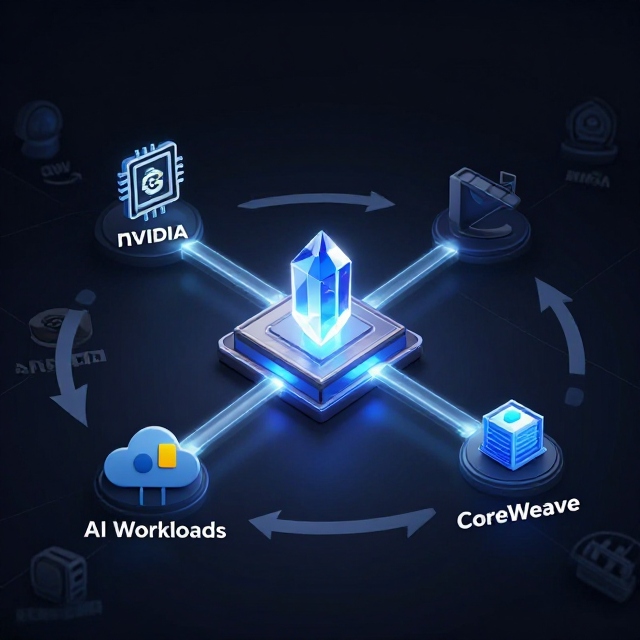
- NVIDIA invests in CoreWeave (or gives them favored access to scarce GPUs).
- Microsoft invests billions in CoreWeave, ensuring it has the infrastructure to meet demand.
- CoreWeave uses that capital to buy billions of dollars worth of GPUs from… NVIDIA.
- CoreWeave then provides cloud capacity to… Microsoft and its clients.
From the outside, the money and hardware seem to flow in a tight, opaque loop. Critics, like Matt Turck of FirstMark Capital, have pointed out that this creates a “self-reinforcing ecosystem” that could potentially marginalize other players. It’s a valid concern in an industry where competition is supposed to drive innovation.
The CEO’s Defense: It’s Not Collusion, It’s Cohesion
Enter Michael Intrator. When confronted with the “circular deal” label, his response was disarmingly straightforward. Paraphrasing his core argument: In a field moving this fast, with challenges this large, strategic partnership isn’t a dirty word—it’s the only way to get anything done.
He frames it not as a financial ouroboros, but as a vertical alignment of expertise.
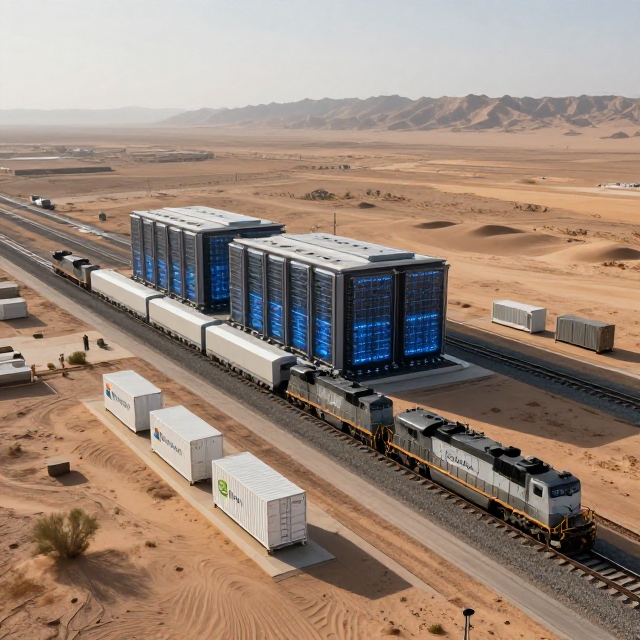
“Think about building a transcontinental railroad,” he might suggest. “You don’t have one company that miraculously knows how to forge the best steel, lay the most durable track, design the most efficient engines, and operate the entire line. You have steel mills, track layers, engine manufacturers, and railway operators. They all have to work in lockstep, often pre-buying from each other, to make the impossible happen on time.”
That’s the lens he applies to AI infrastructure.
- NVIDIA’s Role: They are the foundry, creating the most advanced computational “steel” (GPUs). Their deep knowledge of CoreWeave’s needs helps them build better products.
- CoreWeave’s Role: They are the specialized builder and operator, taking that raw horsepower and constructing a hyper-efficient, AI-native “rail network” (cloud infrastructure).
- Microsoft’s Role: They are the enterprise conduit and end-user, connecting the vast demand of global businesses to this new, high-performance network.
In this view, the investments and purchase commitments aren’t sneaky deals. They are the essential handshake agreements that de-risk a massively capital-intensive project. They signal confidence and ensure synchronization. As Intrator told The Verge, this alignment allows them to “move at a speed that is completely unprecedented.”
The Human Need for Collaboration in the Face of Insane Scale

To truly get this, we have to step back and appreciate the sheer, almost absurd, scale of modern AI.
Training a frontier model like GPT-4 or Claude 3 isn’t like launching a new app. It requires:
- Tens of thousands of the world’s most advanced GPUs running flat-out for months.
- Gigawatt-scale power demands, akin to powering a small city.
- A global network of data centers built with specific cooling and networking architectures.
No single entity, not even Microsoft or Google, can innovate fast enough on all these fronts simultaneously. The pace is simply too furious. The industry is facing a $1 trillion infrastructure spending spree, according to analysts.
In this environment, the classic, arm’s-length vendor-buyer relationship breaks down. When you need to guarantee delivery of 100,000 GPUs on a timeline that doesn’t exist in any catalog, a simple purchase order won’t cut it. You need to be partners. You need to share roadmaps, co-design solutions, and yes, sometimes invest in each other’s success.
This is the human truth at the core of Intrator’s argument: When the task is monumental, you huddle with the best team you can find. You stop worrying about whether the partnership looks too cozy from the sidelines and start worrying about whether you can actually deliver the future you’re promising.
The Other Side of the Coin: Valid Concerns We Can’t Ignore
Of course, to humanize this story, we must also give voice to the concerns. Intrator’s “working together” narrative is compelling, but it doesn’t automatically negate the risks. The fear isn’t irrational.
- The Barrier to Entry: If the only way to compete is to have a multi-billion-dollar partnership with NVIDIA and a hyperscaler, where does that leave the brilliant startup with a better technical idea? Does this “circle” become an impenetrable moat? The U.S. Federal Trade Commission (FTC) has indeed launched an inquiry into these investments, focusing on their potential anti-competitive nature.
- Innovation Stagnation: Could such tight alignment inadvertently stifle alternative technologies? What about AMD’s excellent MI300X chips, or Google’s TPUs, or the rise of custom AI chips from Amazon? If the dominant ecosystem is too efficient, does it squeeze out the space needed for disruptive, potentially better, alternatives to flourish?
- Price and Control: Ultimately, if a small group of interlinked companies controls the foundational plumbing of AI, do they gain outsized influence over its cost, direction, and accessibility? This is the core of the antitrust anxiety.
These aren’t accusations of malicious intent, but sober considerations about market structure. The history of tech is littered with examples of “productive partnerships” that slowly morphed into gatekeeping power.
The Path Forward: Conscious Collaboration
So, where does this leave us? Is CoreWeave’s Michael Intrator a visionary architect of necessary alliances, or is he spinning a dangerous concentration of power?
The truth, as it often does, lies in the messy middle. His defense humanizes a dynamic that is easily villainized. It highlights the very real, non-nefarious challenges of building something the world has never seen at a pace it can barely comprehend. The collaboration is likely genuine and born of necessity.
However, the concerns about competition and the long-term health of the ecosystem are equally real and human. They speak to our collective desire for a future where AI is built by a vibrant market of ideas, not a consolidated few.
The solution isn’t to ban collaboration—that would halt progress. It’s to ensure that the circle has openings. It means:
- Vigilant but thoughtful antitrust oversight that distinguishes between pro-innovation partnerships and anti-competitive lockouts.
- Continued strong funding for alternative hardware and software stacks from players like AMD, Intel, and a new wave of startups.
- Transparency from companies like CoreWeave, NVIDIA, and Microsoft about the nature of these deals, to build public trust.
The story of AI’s “circular deals” isn’t a simple tale of good vs. evil. It’s a human story about ambition, scale, and the eternal tension between the efficiency of a tightly-knit team and the generative chaos of an open field. Michael Intrator has given us a crucial perspective from inside the hurricane. It’s now on all of us—regulators, competitors, commentators, and users—to listen, understand, and ensure that in working together to build the future, we don’t accidentally wall it off.
FAQ: Understanding AI’s “Circular Economy” and Collaboration
Q1: What exactly is a “circular deal” in AI, in simple terms?
A: Think of it like three companies all helping each other build a single, massive project. Company A (like NVIDIA) makes the essential, high-demand parts. Company B (like CoreWeave) builds a specialized factory to use those parts. Company C (like Microsoft) needs the factory’s output and helps fund it. When Company B then buys parts from A and sells services to C, the money and resources flow in a connected loop. Critics call this a closed “circle” that locks others out, while participants call it efficient, necessary collaboration.
Q2: Why is CoreWeave’s CEO comparing it to building a railroad?
A: It’s an analogy to humanize the immense scale and specialization required. Building the first transcontinental railroad didn’t have one company doing everything. It required steel mills, track layers, and railway operators working in tight sync, often with pre-agreed deals, to achieve a huge, common goal. Intrator argues that building AI infrastructure is similar—it requires chipmakers, cloud builders, and tech giants to align closely to succeed at an unprecedented pace.
Q3: If these deals are just “working together,” why are regulators like the FTC concerned?
A: Regulators aren’t against collaboration. Their job is to ensure that collaboration doesn’t accidentally (or purposefully) squash competition, leading to higher prices, less innovation, and fewer choices for everyone. The FTC’s inquiry, as reported by Bloomberg, is a precautionary step to examine whether these deep financial and supply ties could create unfair barriers for other companies trying to compete.
Q4: Doesn’t this just lock out competitors like AMD or smaller cloud providers?
A: This is the core of the debate. The concern is that if the fastest chips and biggest capital form an exclusive club, it becomes incredibly hard for others to compete on a level playing field. However, proponents argue that the AI infrastructure market is so vast and growing so quickly that there is still room. Companies like AMD are making huge strides with their MI300X chips, and AWS and Google Cloud are aggressively developing their own custom AI chips and stacks. The market is still dynamic, but the “circular deal” model does raise the stakes and capital required to compete at the highest tier.
Q5: Is this kind of vertical integration new in tech history?
A: Not at all. Similar patterns have appeared in other technological revolutions. For example, in the early PC era, tight integration between Microsoft’s OS and Intel’s chips created the dominant “Wintel” alliance. The key lesson from history is that while such integrations can drive rapid initial progress, healthy oversight is needed to ensure the market remains open to new challengers and ideas over the long term. You can read more about the effects of vertical integration on Investopedia.
Q6: As a developer or business, should I be worried about this?
A: In the short term, this collaboration likely benefits you. It has accelerated the availability of powerful, specialized AI infrastructure that you can access today via CoreWeave, Azure, or others. Competition between these aligned giants and other providers (like AWS) is also fierce, which can drive down costs and improve services. The long-term worry would be if the market became so consolidated that choice, pricing power, and architectural diversity diminished. For now, the focus for most users is on accessing the best tools available.
Q7: What’s the difference between a “strategic partnership” and an “anti-competitive circular deal”?
A: It’s often a matter of perspective and scale. A strategic partnership is a broad collaboration where companies complement each other’s strengths. An anti-competitive deal implies a secretive or exclusive arrangement designed to manipulate the market or block competitors. The current AI partnerships are very public and born from a clear, massive technical need. The question regulators are asking is: at what point does scale and exclusivity tip the balance from healthy partnership to harmful market control?
Q8: What would a healthy, collaborative-but-competitive AI infrastructure market look like?
A: Ideally, it would feature:
- Multiple viable hardware options (from NVIDIA, AMD, Intel, and in-house chips from cloud giants).
- Several specialized and generalist cloud providers offer AI services.
- Transparent partnerships that don’t illegally exclude others.
- Open standards and interoperability where possible, so workloads aren’t permanently locked into one stack.
The current collaborations are building one powerful pillar of this ecosystem. The hope is that other pillars grow just as strong.