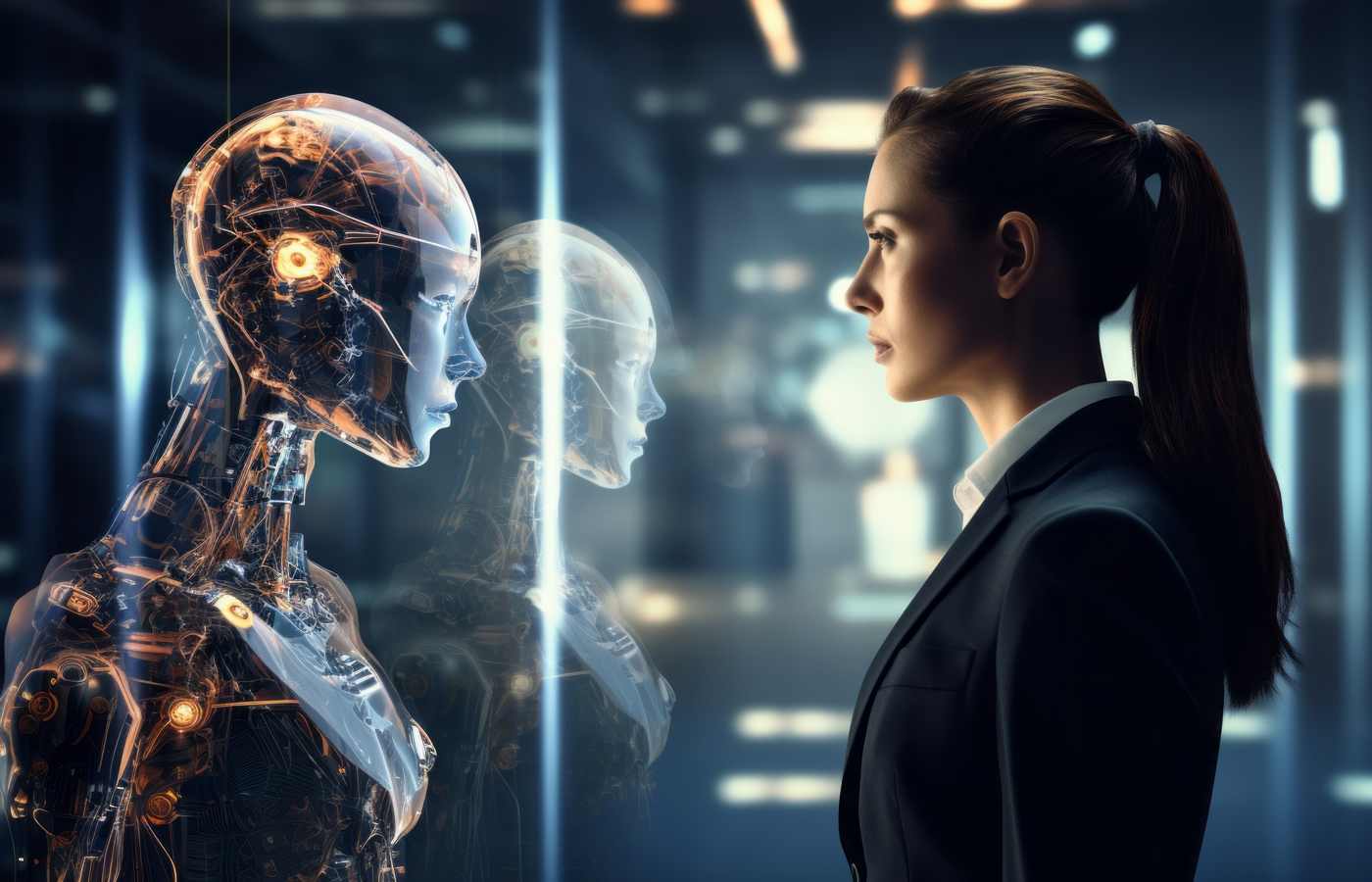
Remember the last time you had a brilliant idea—a scene for a story, a concept for a video, a new product design—but struggled to translate it from your mind into reality? You might have fumbled with words, sketches, or design software, feeling the friction between vision and execution. What if you could simply describe your idea and watch it come to life across formats: a detailed blog post, a companion image, a storyboard, even a voiceover?
This isn’t science fiction. It’s the emerging reality of cross-model content generation, a paradigm shift in how we create, communicate, and think. It’s moving beyond single-mode AI tools (like a text generator or an image maker) toward integrated systems that understand and produce multiple types of content—text, images, audio, video, code—seamlessly, from a single prompt or idea.
In this deep dive, we’ll explore what cross-model generation truly means, why it’s a game-changer, how it works under the hood, and the profound implications—both exciting and challenging—for creators, businesses, and anyone with a story to tell.
What Exactly Is Cross-Model Content Generation? Breaking Down the Jargon

Let’s simplify. Imagine you’re baking a cake.
- Single-Model AI: A master egg-cracker. Incredible at its one task, but it can’t mix flour or preheat the oven.
- Cross-Model AI: The entire kitchen, chef included. You say, “I want a decadent chocolate birthday cake with vanilla frosting and ‘Happy Birthday, Alex’ in blue.” It handles the recipe (text), designs the decoration (image), creates a tutorial video (video), and even generates a shopping list (structured data).
Technically, cross-model content generation refers to artificial intelligence systems that can understand inputs from one modality (like text) and generate coherent, aligned outputs in another modality (like an image, music, or 3D model), or vice-versa. More advanced systems act as a central “orchestrator,” using multiple specialized AI models in concert to produce a multi-format asset package from a unified starting point.
The Core Idea: It’s About Semantic Understanding, Not Just Conversion
The magic isn’t just converting text-to-image. It’s about the AI building a shared internal understanding of concepts that exist beyond any single format. When you prompt, “a melancholic robot sitting by a rainy window, digital art,” a sophisticated cross-model system doesn’t just match keywords. It understands:
- Emotion: “Melancholic” influences color palette (cool, desaturated), posture (slumped), and lighting (low contrast).
- Scene Composition: “By a rainy window” sets a foreground subject and background element with specific texture (water droplets).
- Style: “Digital art” informs the rendering technique.
This same core understanding could then generate a poignant short story from the robot’s perspective, a somber piano track, or a script for a short film scene.
Why Now? The Perfect Storm Fueling the Cross-Model Revolution
This shift isn’t accidental. It’s the result of several technological waves converging:
- The Rise of Foundational Models: Giants like GPT-4, DALL-E 3, Claude 3, and Stable Diffusion 3 are no longer one-trick ponies. They are trained on colossal, diverse datasets (images with captions, code with documentation, video with audio tracks), allowing them to develop richer, more interconnected representations of the world.
- Breakthroughs in Multimodal Architectures: Techniques like CLIP (Contrastive Language-Image Pre-training) created a “bridge” between text and images by learning to connect visual concepts with their textual descriptions in a shared semantic space. This is the foundational glue for text-to-image models.
- The Orchestration Layer (Agentic Workflows): Tools like Microsoft’s Copilot, ChatGPT with Advanced Data Analysis, or custom AI agents can now function as project managers. They take a high-level goal, break it down, call the right AI model (e.g., “generate a script,” then “create images for each scene,” then “synthesize a voiceover”), and stitch the results together.
- Compute Power & Accessibility: The cloud infrastructure and hardware needed to run these complex, interconnected processes are now accessible to developers and even consumers via APIs, making integrated experiences possible.
How Does It Actually Work? A Peek Under the Hood
Let’s follow the journey of a single prompt: “Create a marketing kit for a new sustainable coffee brand called ‘Canopy Coffee.’”
Step 1: Deconstruction & Planning (The Orchestrator)
An orchestrator model (like a powerful LLM) first breaks down the request. It plans:
- “Need a brand slogan and description.” → Text Model
- “Requires a logo and product package mockup.” → Image Model
- “Should include a short, uplifting brand jingle.” → Audio Model
- “A 30-second social video ad.” → Video Model
Step 2: Cross-Modal Understanding & Generation
Here’s where the “cross-modal” understanding shines. The system doesn’t do these tasks in isolation.
- The text model generates the slogan: “Wake Up to a Greener Tomorrow.” This slogan is passed to the image, audio, and video models as a guiding theme.
- The image model, using the brand name, slogan, and concept “sustainable coffee,” generates a logo with forest greens and earthy browns, and a bag mockup with minimalist, natural textures.
- The audio model creates a jingle with acoustic, upbeat instruments, using the emotional tone (“uplifting”) and thematic keywords (“green,” “morning”).
- The video model might even stitch together generated b-roll of coffee brewing, rainforest shots (from its training data or generated), and overlay the text and jingle.
Step 3: Alignment & Cohesion
The orchestrator checks that all outputs feel like part of the same brand world. Do the colors in the image match the mood of the audio? Does the video script align with the brand description? Advanced systems use feedback loops to adjust for consistency.
Real-World Applications: Where Cross-Model Creativity is Blooming

This technology is already moving beyond demos into practical, transformative use cases.
1. Revolutionizing Content Marketing & SEO:
Gone are the days of writing a blog post and then manually sourcing images. A cross-model system can:
- Generate a comprehensive, SEO-optimized pillar article.
- Produce unique, relevant header images, infographics, and social media banners tailored to each subsection.
- Create a summary newsletter script.
- Output a short, engaging TikTok or Instagram Reel script based on the article’s key points.
This ensures unparalleled thematic consistency and multiplies content output.
2. Accelerating Product Design & Prototyping:
A designer can prompt: “An ergonomic, minimalist water bottle for cyclists, with a one-handed lid.”
- The system generates product description copy.
- Produces multiple 3D model renders from different angles.
- Creates conceptual marketing copy for the target audience.
- Even suggests CAD file snippets or material descriptions.
This compresses weeks of ideation into hours.
3. Democratizing Game & Film Development (Pre-Production):
Indie developers and writers can worldbuild at unprecedented speed:
- Input: “A steampunk city floating on a cloud, with brass airships.”
- Output: Concept art for the cityscape, character sketches of its inhabitants, a snippet of lore, an ambient soundscape of grinding gears and hissing steam, and a dialogue snippet between two airship traders.
4. Personalizing Education & Training:
Learning becomes immersive. A module on “The Water Cycle” can be dynamically generated to include:
- A simplified textbook explanation.
- A diagram of the cycle.
- A narrated animation showing the process.
- An interactive quiz.
All are generated to match a specific student’s reading level (e.g., “5th grade”).
5. Enhancing Accessibility:
Cross-model generation is a powerful accessibility tool. It can:
- Describe images in rich detail for the visually impaired (image-to-text).
- Generate audio descriptions for videos automatically.
- Create visual summaries of complex text documents for those who process information better visually (text-to-image/chart).
The Human in the Loop: Why This Empowers, Not Replaces, Creators
The fear of “AI replacing humans” is loud, but in the cross-model context, the more accurate vision is “AI amplifying humans.” This technology is a co-pilot, a brainstorm partner, and a production assistant.
- It Eradicates the Blank Page: The hardest part of creation is often starting. A cross-model AI provides a rich, multi-sensory starting point that a creator can then refine, edit, and imbue with their unique voice and expertise.
- It Handles the Tedious, So You Can Focus on the Inspired: A graphic designer can spend less time searching stock photos and more time on the core creative direction. A marketer can spend less time on asset formatting and more on strategy.
- It Expands the Palette of Solo Creators: A novelist can now easily visualize their characters and settings. A musician can generate cover art inspired by their song’s mood. A blogger can become a mini media company.
The key is creative direction. The AI generates options; the human curator makes choices. The AI provides raw materials; the human editor adds soul, nuance, and strategic intent.
Navigating the Challenges: The Flip Side of the Coin
This power doesn’t come without significant questions and risks.
- The Cohesion Challenge: While improving, AI still struggles with true, deep narrative or brand consistency across long-form, multi-format content. A human eye is essential to catch tonal shifts or logical gaps.
- The “Average” Problem: Models trained on vast datasets can gravitate toward generic, “averaged” outputs. Truly groundbreaking, weird, and deeply original ideas still require a human spark to initiate and guide the AI away from the conventional.
- Ethical & Legal Quagmires:
- Copyright: Who owns the generated content? The prompter? The model maker? What about the training data—millions of copyrighted works ingested without explicit permission? The law is struggling to keep pace.
- Bias & Misinformation: If the training data contains biases, they will propagate across text, image, and video, potentially creating harmful, stereotyped, or false multi-format content at scale.
- Deepfakes & Misuse: The ability to generate convincing video and audio from text descriptions dramatically lowers the barrier to creating malicious deepfakes for fraud or disinformation.
- The Environmental Cost: Training and running these massive, interconnected models consumes immense computational power, raising concerns about their carbon footprint.
The Future Landscape: Where Are We Headed?

The trajectory points toward ever-greater integration and realism.
- The Rise of “Omni-Models”: Instead of orchestrating separate models, we’ll see single, giant models natively trained to generate any output—text, image, 3D, music, video—from any input, all within one incredibly coherent neural network.
- Real-Time, Interactive Generation: Imagine editing a video by simply talking to it: “Make the sky more dramatic,” or “Add a character walking in from the left.” Cross-model interfaces will become dynamic and conversational.
- Personalized AI Co-Creators: Your AI will learn your unique style—the words you use, the color palettes you love, the narrative structures you prefer—and will generate content that feels authentically “yours.”
- Integration with the Physical World (Robotics): Cross-model understanding will guide robots. “Clean up the spilled milk” requires understanding the instruction (text), identifying the milk and the spill (vision), and planning the physical actions (motor control).
Getting Started: Your First Steps into Cross-Model Creation
You don’t need a PhD to experiment. Start today:
- Leverage Existing Platforms: Use ChatGPT Plus (with DALL-E integration), Microsoft Copilot, or Google’s Gemini Advanced. Try giving them complex, multi-step tasks. “Write a press release for [my product], then create a bulleted list of key points for a slide deck, and suggest some visual themes for the slides.”
- Chain Tools Together Manually: Be the orchestrator yourself. Take the output from a text generator (like Claude) and feed it into an image generator (like Midjourney), then use an AI audio tool (like ElevenLabs) to create a voiceover based on that text.
- Focus on the Prompt: The key skill is prompt engineering. Learn to write descriptive, contextual, and structured prompts. Include style, mood, composition, and perspective. Example: Instead of “a dog,” try “Photorealistic close-up portrait of an old, wise-looking Bernese Mountain Dog, gazing softly at the camera, shallow depth of field, golden hour lighting, conveying loyalty and comfort.” This detailed prompt gives any cross-model system a rich semantic seed to propagate across formats.
- Always, Always Edit and Curate: Treat AI output as a first draft, a prototype, or a source of inspiration. Your value is in refining, fact-checking, emotionalizing, and aligning it with your purpose.
FAQ: Cross-Model Content Generation
Q1: Is this just a fancy term for using multiple single AI tools (like ChatGPT for text and Midjourney for images) back-to-back?
A: It’s a natural evolution of that process. Manually chaining tools together is indeed a form of cross-model creation. However, true integrated cross-model systems are moving toward a seamless, unified experience where a single AI “orchestrator” manages the flow between modalities internally. The key difference is shared context and alignment. In an integrated system, the image generator understands the nuance from the text generator, and the audio model aligns with the emotional tone of both, creating a more cohesive output with less manual back-and-forth from the user.
Q2: What’s the biggest limitation holding this technology back right now?
A: Beyond the ethical concerns, the primary technical hurdle is deep, narrative consistency. While AI can produce stunning individual assets, ensuring a character looks, acts, and sounds the same across a 50-page story, a series of images, and a voiceover is incredibly challenging. Maintaining logical plot points, world-building rules, and nuanced character motivations across multiple formats and over longer timelines still requires significant human oversight. The AI excels at “scene-by-scene” cohesion but struggles with “saga-level” consistency.
Q3: How can I, as a small business owner or solo creator, actually use this without a huge budget?
A: You can start today with accessible tools that are building these features. Use ChatGPT Plus (with DALL-E integration) to generate product descriptions and mock-up images in the same conversation. Leverage Canva’s Magic Studio or Adobe Firefly within their creative suites, which are designed to help you create text, images, and simple videos from a unified platform. The strategy is to use platforms that are already combining these models, acting as your free or low-cost “orchestrator.”
Q4: Doesn’t this lead to a homogenized, “same-y” look and feel across all content?
A: It absolutely can, if you use generic prompts. This is where the human creator’s unique voice and direction become more valuable than ever. The AI is a powerful style mimic. To avoid homogenization, you must become a skilled “creative director.” Feed it references of your unique brand aesthetics, use detailed, idiosyncratic prompts, and most importantly, use the AI output as a base layer to edit and customize extensively. Your unique perspective is the filter that prevents generic output.
Q5: What are the specific SEO benefits of using cross-model generation?
A: SEO is increasingly about comprehensive user experience and “E-E-A-T” (Experience, Expertise, Authoritativeness, Trustworthiness). Cross-model generation helps powerfully:
- Increased Dwell Time: A post with custom, relevant images, a summary video, and an audio option keeps users engaged longer.
- Image & Video SEO: You can generate alt-text-perfect images and create video transcripts natively, capturing traffic from image and video searches.
- Semantic Richness: Covering a topic in multiple formats (text, visual, audio) signals to search engines that your content thoroughly addresses the user’s intent.
- Scalability: It allows you to create this rich, multi-format content at a pace that would be impossible manually, helping you cover more topics and keywords.
Q6: What are the key ethical steps I should take when using this technology?
A: Develop a personal or company policy. Key pillars include:
- Transparency: Clearly label AI-generated or AI-assisted content when appropriate (e.g., “Images created with AI”).
- Provenance Checking: Use AI detectors and your own scrutiny to ensure final outputs don’t directly copy the style of a living artist or writer without attribution or permission.
- Bias Auditing: Actively look for and correct stereotypical or biased outputs in images, language, or concepts.
- Fact-Checking Relentlessly: Never publish AI-generated text claims without verification. The AI is a creative tool, not a research database.
- Considering the Human Impact: Ask if your use of the tool is augmenting your team’s creativity or simply replacing human jobs without consideration.
Q7: Will this make certain creative jobs obsolete?
A: It will reshape them, much like Photoshop did for graphic design. Jobs focused purely on repetitive, executional tasks (e.g., sourcing generic stock photos, drafting initial copy variations, creating basic social media banners) will evolve. Demand will skyrocket for roles that involve high-level creative direction, strategic prompting, expert editing, and curating AI outputs. The market will prize “AI-native” creators who blend artistic vision with technical fluency in guiding these systems.
Q8: What’s the next big milestone we should watch for?
A: Watch for the arrival of true “Omni-Models.” The current state often involves stitching together several specialized models. The next leap will be a single, massive model that natively and fluidly generates coherent text, images, 3D, and video from any input within one system. When this happens, the consistency and quality of cross-modal outputs will take another dramatic jump forward, making the experience even more intuitive and powerful.
Conclusion: A New Era of Synthetic Synesthesia
Cross-model content generation represents a fundamental leap in how we interface with technology and externalize thought. It’s a form of synthetic synesthesia, where ideas can flow freely between the senses of the digital world.
The ultimate promise is not a world devoid of human creators, but one where creative potential is radically democratized. It lowers the technical barriers between imagination and manifestation. The ability to think holistically about a story, a brand, or a lesson—and to see it realized in words, sounds, and images simultaneously—can deepen our understanding and enrich our communication in ways we are just beginning to grasp.
The challenge ahead is to wield this tool with intention, ethics, and wisdom. To use it not just for faster content, but for deeper connection; not just for commercial gain, but for education, art, and understanding. The machines are learning to speak our multifaceted language. It’s up to us to teach them what is worth saying.
The future of creation isn’t solo. It’s a symphony. And we’re just learning to conduct.
Ready to experiment? Start your next project not with a document, but with a vision. Describe that vision to an AI co-pilot. See what comes back. Then, make it truly yours.