

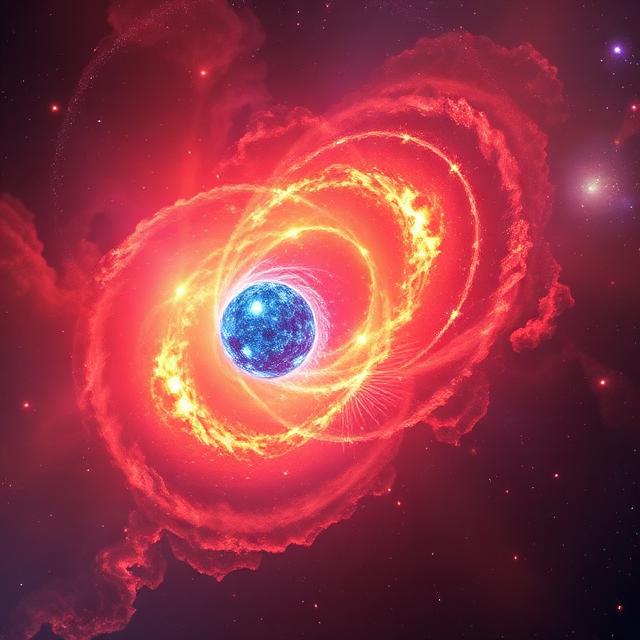
Have you ever looked up at a clear night sky, away from the city lights, and felt a profound sense of wonder mixed with a whisper of insignificance? Those pinpricks of light are not just stars; they are distant suns, galaxies, and the very history of our universe written in fire. Now, imagine a telescope so powerful it can read the very first chapters of that cosmic story, chapters written when the universe was in its infancy. That telescope is the James Webb Space Telescope (JWST), and it has just done something that sends shivers down the spine of every astronomer and dreamer alike: it has discovered the earliest supernova ever observed.
Let’s pause on that for a moment. A supernova is the cataclysmic, violent death of a massive star, an explosion so brilliant it can outshine an entire galaxy. What JWST has seen is the light from such an event that has been traveling for over 13 billion years to reach us. We are witnessing the final moments of one of the universe’s very first stars, a flash from a time when the cosmos was a mere toddler, just 1.8 billion years after the Big Bang.
This isn’t just a new record in a cosmic record book. It’s a paradigm shift. It’s like finding a perfectly preserved fossil from the dawn of life on Earth, but on a universal scale. This discovery opens a window into the Cosmic Dawn, a murky, formative era that has long been shrouded in mystery. How did the first stars and galaxies assemble? How did the primordial soup of hydrogen and helium get forged into the complex elements that make up our world and our very bodies? This single, ancient flash of light holds clues to these fundamental questions.
The Unfathomable Journey of a Photon
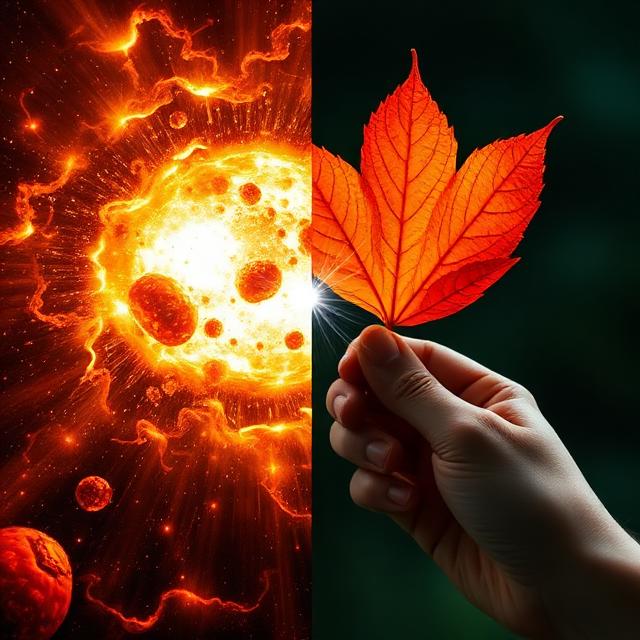
To grasp the magnitude of this, we need to take a quick, mind-bending trip through space and time. The light from this supernova, designated as a “high-redshift transient,” began its journey when the universe was only about 13% of its current age. The continents on Earth hadn’t formed. The Sun didn’t exist. Our entire Milky Way galaxy was likely just a hazy cloud of gas.
As this light raced toward us, the universe itself expanded, stretching the very fabric of space. This expansion stretched the light waves, shifting them from the visible spectrum into the infrared—a domain invisible to human eyes and to telescopes like Hubble. This is why we needed Webb. The JWST is an infrared telescope, specifically designed to catch this stretched, ancient light. It’s the ultimate time machine.
Think of it like the Doppler effect with sound. A siren approaching you has a higher pitch; as it moves away, the pitch drops. Light does the same. As the universe expands and the source of light races away, the light’s “pitch” is lowered, or redshifted. The higher the redshift (denoted by the symbol ‘z’), the farther back in time we are looking. This supernova is at a staggering redshift of z ~ 3.6, smashing previous records and placing it firmly in an epoch we’ve only theorized about.
Why Are Early Supernovae Such a Big Deal?
In the grand cosmic cycle, stars are both the creators and the destroyers. The first generation of stars, known as Population III stars, are thought to have been behemoths—hundreds of times more massive than our Sun. They lived fast and died young, burning through their nuclear fuel in just a few million years before exploding as spectacular supernovae.
These explosions were the universe’s first cosmic recycling plants. In their fiery hearts and in their violent deaths, they forged the heavier elements—carbon, oxygen, iron, silicon, gold—and then scattered them across the cosmos like cosmic seeds. This enriched gas later collapsed to form second-generation stars, planetary systems, and eventually, us. Every atom of calcium in your bones and iron in your blood was once inside a star that went supernova. By studying these earliest explosions, we are tracing our own elemental ancestry.
Furthermore, the sheer energy from these early supernovae may have played a crucial role in re-ionizing the universe, burning off the primordial fog of neutral hydrogen that filled space and allowing light to travel freely for the first time. They shaped the environment in which the first galaxies could grow. Finding one is like finding the archaeological evidence of a founding civilization that set the rules for all that followed.
How JWST Spotted the Needle in the Cosmic Haystack
Discovering a single, short-lived flash of light from an object 13 billion light-years away is a monumental technical challenge. It’s not something you find by staring at one spot. The JWST team used a technique called “deep-field imaging.” They pointed Webb’s incredibly sensitive instruments, like the Near-Infrared Camera (NIRCam), at a seemingly dark patch of sky for an extended period, gathering the faintest whispers of light.
But the real trick was in the comparison. They took images of the same patch over multiple days and weeks. A supernova is a transient event—it brightens and then fades. By meticulously comparing these deep-field images, scientists looked for a single, faint point of light that appeared in one image but was gone or changed in the next. Amidst the sea of millions of galaxies, one tiny dot blinked. That was the supernova.
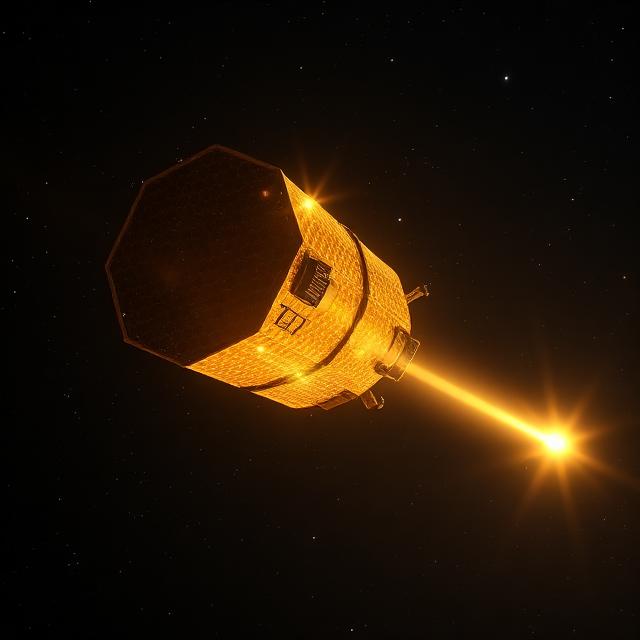
This feat is a testament to JWST’s revolutionary design. Its 6.5-meter gold-coated primary mirror collects more light than any space telescope before it. Its suite of infrared instruments, cooled to near absolute zero, operates with minimal interference, allowing it to see the faintest infrared signals. As NASA explains, Webb was built to “see” this era of cosmic history, and it’s delivering beyond our wildest dreams.
What Does This Mean for the Future of Astronomy?
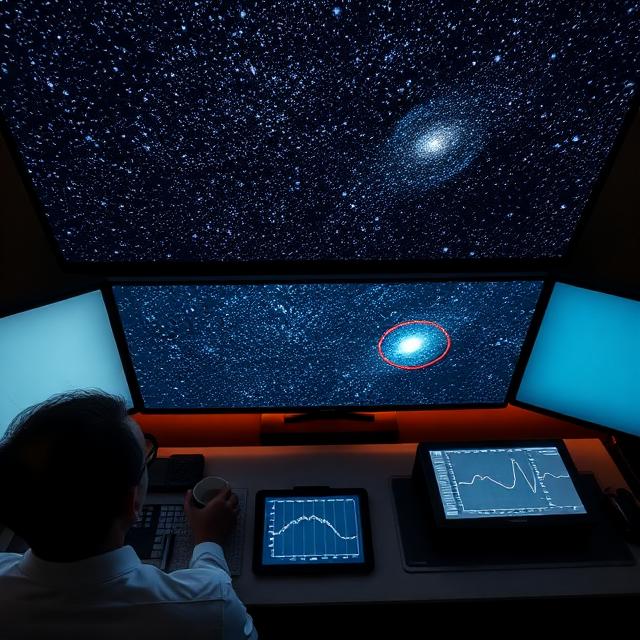
The confirmation of this one supernova is just the tip of the iceberg. It proves that JWST can and will find more of them. We are on the cusp of discovering an entire population of early supernovae, allowing us to move from studying a single data point to understanding trends and statistics.
- Characterizing the First Stars: By analyzing the light curve (how it brightens and fades) and spectrum (the chemical fingerprint) of these supernovae, astronomers can infer the mass and composition of the progenitor stars. Were they truly the mythical Population III giants? This is our first real chance to find out.
- Measuring Cosmic Expansion: Supernovae, particularly a type called Ia, are “standard candles”—their known brightness lets us measure cosmic distances with precision. Finding them at these extreme distances provides new, critical data points for measuring the expansion rate of the universe across time, potentially helping to resolve the current tension in our measurements of the Hubble Constant.
- Peering into Early Galaxies: These supernovae act as brilliant flares, illuminating their host galaxies from within. They can reveal details about the gas and dust in these infant galaxies that would otherwise be impossible to see.
A Human Story Written in Starlight
At its heart, this discovery is about a profound human desire: to understand our origins. We look to the stars not just as scientists, but as storytellers seeking our place in the narrative.
Every time a telescope like JWST pushes the boundary of the observable universe, it does something remarkable. It takes an abstract concept like “13 billion years ago” and turns it into data, into an image, into a story we can comprehend. It makes the unimaginable tangible. We are no longer just theorizing about the Cosmic Dawn; we are starting to watch its morning light, flash by brilliant flash.
The journey of the photon that hit Webb’s mirror began before Earth existed. It traveled across aeons, through the expanding vastness of space, surviving the trip to tell us its story. And here we are, a species on a pale blue dot, with the ingenuity to build a machine to catch it, the curiosity to seek it out, and the wisdom to listen.
The James Webb Space Telescope is more than an instrument; it’s an extension of our senses and our spirit. With this discovery of the earliest supernova it has given us a direct glimpse into the fiery forges where our universe was built. The dawn is breaking, and we finally have eyes to see it.
FAQ: Your Questions About the Earliest Supernova, Answered
Q: How much older is this supernova than the previous record-holder?
A: The previous record-holders for most distant supernovae were found by the Hubble Space Telescope and ground-based observatories at redshifts around z ~ 2-3 (around 10-11.5 billion years ago). This JWST discovery at z ~ 3.6 pushes the clock back to just 1.8 billion years after the Big Bang, adding a significant chunk to our view of cosmic history.
Q: Could JWST see the very first star ever born?
A: Directly seeing an individual first-generation (Population III) star is likely beyond even Webb’s incredible power, as they would be incredibly faint. However, finding their supernovae—their spectacular deaths—is our best and most promising method for proving they existed and studying their properties.
Q: What type of supernova was it?
A: Early analysis suggests it is a core-collapse supernova, the kind that occurs when a massive star (at least 8 times the mass of our Sun) runs out of fuel, and its core collapses. This is the most likely fate for the universe’s first massive stars.
Q: How does this differ from Hubble’s deep field images?
A: Hubble’s iconic Deep Field images revealed thousands of galaxies in the early universe, but largely as they existed over long periods. JWST’s power in the infrared allows it to see even farther back and to detect transient, changing events within those galaxies—like individual supernovae—giving us a dynamic, not just static, view of the early cosmos.
Q: Where can I follow updates on this discovery?
A: The best places are the official science channels:
- NASA’s James Webb Space Telescope Website
- The Space Telescope Science Institute (STScI) News
- Follow missions like NASA and ESA (European Space Agency) on social media.
Further Reading to Dive Deeper:
- Learn about the different types of stellar explosions: NASA’s Overview of Supernovae
- Understand the “time machine” effect of light: Hubble’s Law and the Expanding Universe
- Explore how Hubble paved the way: The Hubble Space Telescope’s Deep Fields
buy weed internationally secure shipping