
For decades, India has been more than just a market for global tech giants; it has been a crucible of talent, innovation, and staggering digital growth. In a move that signals a profound confidence in this trajectory, Microsoft has announced plans to invest a staggering $5 billion in India over the next few years, with a sharp focus on artificial intelligence (AI) and cloud infrastructure. This isn’t just a financial transaction; it’s a partnership in the truest sense, a meeting of minds between a tech titan and a nation on the cusp of a technological revolution.
Let’s unpack what this means, not just for balance sheets, but for developers in Bengaluru, students in rural Gujarat, startups in Hyderabad, and the very fabric of India’s digital economy.
The Backstory: A Relationship Forged in Code
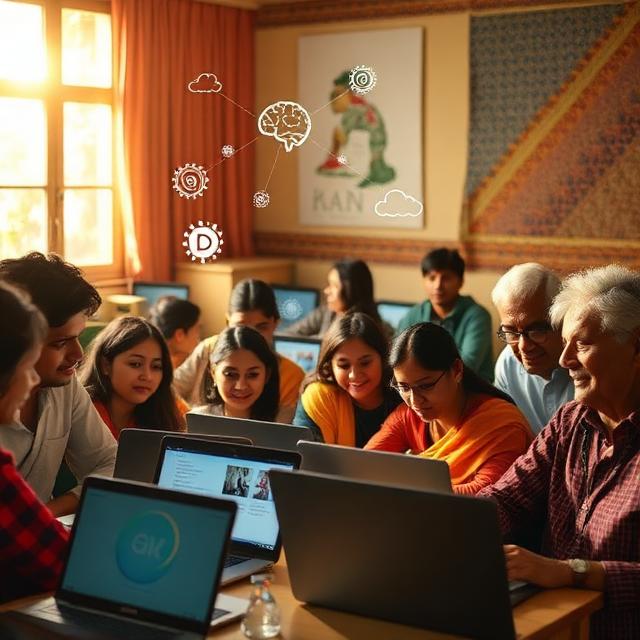
To understand the magnitude of this moment, we need to rewind. Microsoft’s journey in India began in 1990. It wasn’t merely about selling software; it was about nurturing an ecosystem. From establishing its R&D center in Hyderabad (now one of its largest globally) to launching Project Shiksha for digital literacy, Microsoft has woven itself into India’s tech story.
The appointment of Satya Nadella, born in Hyderabad, as CEO in 2014, added a deeply personal and strategic layer to this relationship. Under his leadership, the philosophy shifted decisively towards “cloud-first, mobile-first,” perfectly aligning with India’s own explosive leapfrog into the digital age, propelled by Jio’s affordable data and the government’s “Digital India” vision.
This new investment feels like the natural, accelerated evolution of a 30-year partnership. As Nadella himself often says, “India is not just a geography, it’s a talent geography.” This $5 billion pledge is a bet on that talent.
Breaking Down the $5 Billion: Where is the Money Going?

So, what will this massive infusion of capital actually build? It’s a multi-pronged strategy designed to supercharge India’s AI capabilities.
1. Next-Generation AI Data Centers: The backbone of this investment will be the expansion of Microsoft’s cloud infrastructure (Azure). The company plans to build state-of-the-art, hyperscale data centers across India. This is critical. For AI models to run, for businesses to scale, for research to happen, they need immense, local computing power. Bringing this infrastructure closer to Indian users means faster speeds, better data residency (a key concern for businesses and government), and a more resilient network. You can read more about Microsoft’s global datacenter strategy here.
2. Democratizing AI Access (The “AI for India” Mission): Microsoft isn’t just building the hardware; it’s determined to put the tools in everyone’s hands. This involves:
- Skilling Initiatives: A massive push to train over 2 million Indians in AI skills by 2025, partnering with governments, nonprofits, and educational institutions. This aims to create not just consumers of AI, but creators.
- Empowering Developers: Through initiatives like the AI Odyssey, Microsoft is providing developers with the platforms (like Azure OpenAI Service) and training to build India-specific AI solutions—be it in agriculture, healthcare, or language translation.
- Supporting Startups: Through programs like Microsoft for Startups Founders Hub, the company will provide crucial cloud credits, technical mentorship, and go-to-market support to Indian AI startups, helping them scale from idea to impact.
3. Fostering AI-First Solutions: The investment will catalyze the development of AI solutions tailored for India’s unique challenges. Imagine:
- Agriculture: AI models predicting pest attacks or optimizing water usage for smallholder farmers.
- Healthcare: Diagnostic tools that can assist doctors in remote clinics.
- Languages: AI-powered translation and content creation tools for India’s 22 official languages, breaking down digital barriers.
- Governance: Smarter cities with AI-managed traffic and utilities.
By providing the platform and tools, Microsoft is enabling Indian innovators to solve Indian problems.
Why India? Why Now?

The timing and scale of this investment are no accident. Several powerful currents are converging:
- The Global AI Race: The world is in a sprint to define the future of AI. India, with its vast pool of engineers, data scientists, and a digitally savvy population of over 700 million internet users, is a critical battleground and partner. For Microsoft, establishing Azure as the premier platform for AI development in India is a strategic imperative in its competition with Google Cloud and AWS.
- India’s Digital Public Infrastructure (DPI) Success: India’s homegrown tech stacks—Aadhaar (digital identity), UPI (instant payments), and ONDC (open commerce)—have shown the world how to build scalable, inclusive digital platforms. Microsoft sees immense potential in layering its AI capabilities on top of this robust “India Stack” to create transformative services. Learn more about India’s revolutionary UPI system here.
- Government Push and Policy Support: The Indian government has been actively pushing for “AI for All” and has drafted a forward-looking National AI Strategy. This investment aligns perfectly with national priorities, making collaboration smoother and impact greater.
- The Silicon Valley of the East: India’s startup ecosystem is now the third-largest in the world. From mature unicorns
The Ripple Effect: What This Means for India
The impact of this investment will ripple far beyond Microsoft’s own balance sheet.
For the Indian Economy: It’s a massive vote of confidence that will attract further foreign investment into the tech sector. It will create high-skilled jobs, not just within Microsoft, but across the entire ecosystem of partners, vendors, and startups that will bloom around this infrastructure. The NASSCOM CEO has hailed it as a “significant milestone” for the industry.
For Indian Businesses (Big & Small): Local data centers mean enterprise clients in banking, healthcare, and manufacturing can move sensitive workloads to the cloud with greater confidence, adhering to data sovereignty norms. For small and medium businesses (SMBs), access to enterprise-grade AI tools via a pay-as-you-go cloud model can be a game-changer, allowing them to compete with larger players.
For the Common Indian: This is about the democratization of technology. A village schoolteacher could access AI-powered lesson planners. A fruit seller in a tier-2 city could use an AI-powered app to manage inventory and predict demand. The local municipal corporation could use AI to optimize garbage collection routes. The promise is of a more efficient, more personalized, and more accessible digital experience for all.
The Human Face: Stories Behind the Headlines

Beyond the numbers, this is about people.
Take Anjali, a computer science student in Pune. With Microsoft’s expanded skilling programs, she might get certified in AI engineering, landing her a dream job at a cutting-edge Agri-tech startup in Indore that runs entirely on Azure.
Consider Rajesh, the founder of a fledgling health-tech startup in Chennai. With cloud credits and technical mentorship from Microsoft’s startup program, he can afford to train his AI model on anonymized local medical data to build a better TB screening tool, something he could never have done with upfront server costs.
Think of Priya, a government official in Bhubaneswar. With access to powerful AI analytics on a secure local cloud, her team can better analyze sanitation data to improve public health outcomes in her district.
This investment is fuel for millions of such stories.
Challenges and the Road Ahead
The path isn’t without its bumps. The rapid proliferation of AI brings ethical questions around bias, misinformation, and job displacement to the forefront. Microsoft will need to work closely with Indian regulators, academia, and civil society to promote responsible AI principles. Furthermore, ensuring that the benefits of this AI boom reach beyond the major metros into India’s small towns and rural heartland will be the true test of its inclusivity.
There’s also the competitive landscape. Amazon Web Services (AWS) and Google Cloud are also investing heavily in India. This competition is ultimately healthy for the market, driving innovation, better services, and more choices for customers.
Conclusion: A Partnership for the Next Decade
Microsoft’s $5 billion investment in India is more than a headline. It is a handshake between a corporation and a country, both betting big on a future shaped by artificial intelligence. It acknowledges India not as an outsourcing destination, but as a primary source of global innovation.
This is about building the digital public infrastructure of the 21st century—a foundation of intelligent cloud and inclusive AI—upon which India’s next generation of entrepreneurs, developers, and citizens will build a more prosperous, efficient, and equitable society.
As Satya Nadella might say, it’s about empowering every person and every organization on the Indian subcontinent to achieve more. The code is being written, and the future, powered by this partnership, looks incredibly intelligent.
FAQ: Microsoft’s $5 Billion Investment in India
Q1: What is Microsoft’s main goal with this $5 billion investment?
A1: The primary goal is to accelerate India’s digital transformation by massively expanding cloud and AI infrastructure, skilling millions in AI technologies, and empowering developers and businesses to build AI-driven solutions for local and global challenges.
Q2: How will this benefit ordinary Indians or small businesses?
A2: Benefits will trickle down through:
- Better & Faster Services: Local data centers mean faster, more reliable apps and online services.
- Affordable AI Tools: SMBs can access powerful AI for marketing, logistics, and customer service without huge upfront costs.
- New Job Opportunities: Demand for AI-related skills will create new career paths.
- Localized Solutions: Expect more AI apps addressing Indian languages, agricultural issues, and healthcare needs.
Q3: Where will the new data centers be located?
A3: While Microsoft hasn’t released an exact city-by-city map, it has confirmed a significant expansion of its existing cloud regions. It already has regions in Central India (Pune), South India (Chennai), and West India (Mumbai). The new investment will likely add capacity to these and potentially establish new regions to ensure nationwide coverage and resilience.
Q4: How does this compare to investments by Google (Google Cloud) and Amazon (AWS) in India?
A4: All three cloud giants are in a fierce race to capture the high-growth Indian market. AWS has committed significant investments, and Google Cloud is also expanding its infrastructure and partnerships. Microsoft’s move is notable for its sheer scale ($5B) and its explicit, integrated focus on end-to-end AI development—from infrastructure to skilling.
Q5: What are the potential risks or downsides?
A5: Key challenges include:
- The AI Ethics Gap: Ensuring AI systems are developed and used responsibly, without bias.
- The Skilling Divide: Making sure AI education reaches beyond urban elites.
- Market Concentration: Over-reliance on a few foreign tech giants for critical digital infrastructure.
- Job Displacement: Managing the transition as AI automates certain tasks, requiring proactive reskilling initiatives.
Q6: How can Indian developers or startups get involved?
A6: They should explore Microsoft’s dedicated programs:
- Microsoft for Startups Founders Hub: For cloud credits and support.
- Microsoft Learn & AI Odyssey: For skilling and certifications.
- Azure OpenAI Service: To start building with the latest AI models.