Introduction
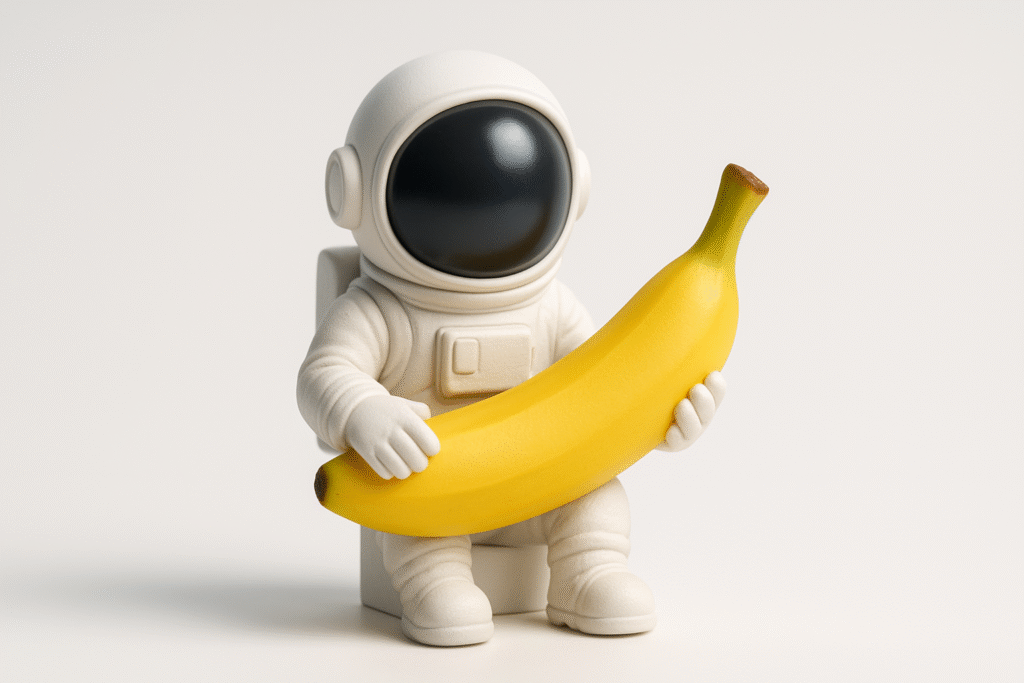
You’re scrolling through TikTok, Instagram, or X (formerly Twitter), and you see it. An incredibly detailed, miniature 3D figurine of a fantasy warrior, a cool anime character, or even someone’s friend. It looks like a collectible you’d find in a specialty shop. But there’s one catch: they’re all holding a comically, absurdly large banana.
Welcome to the internet’s latest obsession: the Nano Banana.
This isn’t just another fleeting meme. It’s a fascinating collision of AI art, pop culture, and our innate desire to see ourselves miniaturized into something cool. If you’ve been wondering what these tiny figures are, where they came from, and—most importantly—how you can make your own, you’ve come to the right place. Let’s peel back the layers (pun intended) on this viral sensation.
What in the World is a “Nano Banana”?
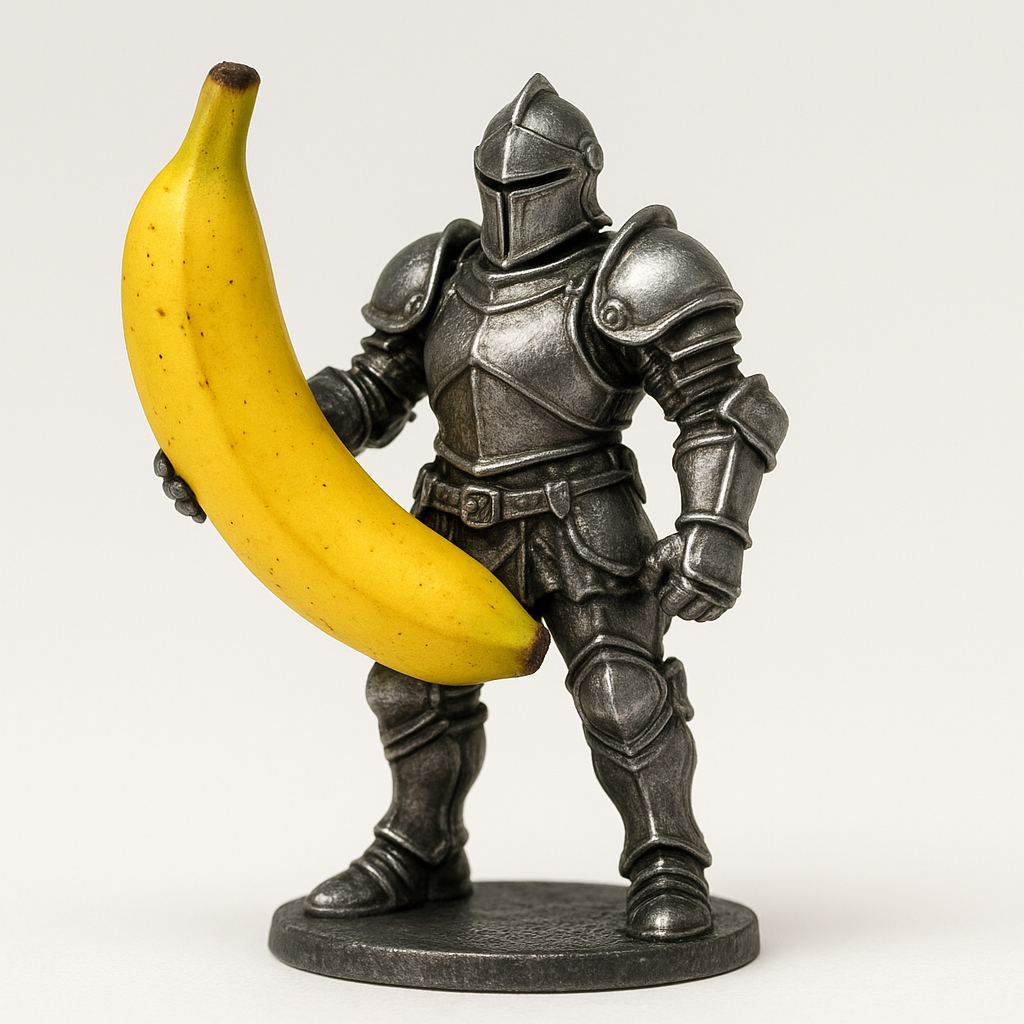
Let’s start with the basics. A “Nano Banana” is a specific style of AI-generated image that creates a hyper-detailed, 3D-rendered miniature figurine. The “Nano” part refers to the miniature, collectible-style aesthetic, making the subject look like a small, high-end toy. The “Banana”? Well, that’s the inexplicably hilarious and crucial part of the formula.
The subject—whether it’s a photo of a person, an original character, or a textual description—is always depicted holding a giant banana, often as large as they are. This bizarre element is what makes the trend so instantly recognizable and shareable. It’s the digital equivalent of an inside joke that everyone is in on.
Powered primarily by advanced AI models like Stable Diffusion, these images aren’t just simple filters. They are complex renderings that mimic professional product photography, complete with studio lighting, sharp focus, and clean backgrounds, making the digital figurine look startlingly real.
From Niche AI to Viral Sensation: The Origin Story of the Nano Banana
So, how did a giant piece of fruit become the must-have accessory for AI-generated miniatures? The trend didn’t emerge from a major tech company’s marketing department. Like most organic internet phenomena, it bubbled up from the creative cauldrons of social media platforms like TikTok, Twitter, and Reddit.
As user-friendly interfaces for AI image generators (like Tensor.Art, JanitorAI, and others) became more accessible, people began experimenting with prompts for “3D figurines.” At some point, an anonymous user added “holding a giant banana” to their prompt. The result was so absurd, so perfectly weird, that it captured everyone’s imagination.
The trend exploded for a few key reasons:
- The Absurdity Factor: In an algorithm-driven world, weirdness stands out. The giant banana is a non-sequitur that breaks the monotony of your feed, making you stop and ask, “Why?”
- Accessibility: You no longer need to be a 3D modeling expert to create stunning digital art. These platforms put immense creative power in the hands of anyone with an internet connection.
- Personalization: It taps into a powerful desire to see ourselves—or our imagined selves—as tangible objects. It’s a new form of digital identity play.
Your Turn! How to Make Your Own Nano Banana Figurine (Step-by-Step)
Ready to jump in and create your own tiny, banana-wielding doppelgänger? It’s easier than you think. Follow this simple guide to go from curious observer to AI figurine artisan in just a few minutes.
Step 1: Pick Your AI Playground
You don’t need to install complex software. Several web-based platforms are perfect for this. The most popular for the Nano Banana trend are:
- Tensor.Art: A favorite for this trend, it’s user-friendly, offers free daily generations, and has a community where you can see others’ prompts.
- JanitorAI: While known for its chatbot features, its image generation is powerful and widely used for creating these figurines.
- Stable Diffusion WebUI (Automatic1111): This is for more advanced users who have set it up locally on their PCs. It offers the most control but has a steeper learning curve.
For this tutorial, we’ll focus on a beginner-friendly option like Tensor.Art.
Step 2: Master the Art of the Prompt
This is the most important step. The AI is only as good as the instructions you give it. You can’t just type “Nano Banana.” You need to be descriptive. Here is a proven template prompt you can copy and paste:
A 3D figurine of [YOUR SUBJECT HERE], highly detailed, miniature style, holding a giant banana, studio lighting, professional product shot, clean white background, octane render.
Now, let’s break down why this prompt works so well:
A 3D figurine of [YOUR SUBJECT]: This is the core instruction. Be specific! Instead of “a man,” try “a cyberpunk samurai with neon lights.” Instead of “a woman,” try “a powerful elf queen with intricate silver armor.” The more descriptive, the better. To use a real person, you can try “a 3D figurine of a photo of [celebrity name]” or, for yourself, “a 3D figurine based on a photo of me.”highly detailed, miniature style: These keywords are crucial for achieving that high-quality, “Nano” look.holding a giant banana: The star of the show. This is the element that defines the trend.studio lighting, professional product shot: This tells the AI to mimic professional photography, ensuring good shadows, highlights, and a polished finish.clean white background: Helps the subject pop and makes the image look like a true product shot.octane render: This is a technical term for a high-quality rendering engine. Including it in your prompt often results in better lighting and material quality.
Step 3: Generate, Iterate, and Perfect
Your first result might not be perfect—and that’s okay! The magic of AI is in iteration. Don’t be afraid to:
- Run the same prompt multiple times. The AI creates something new each time.
- Tweak your description. Change “cyberpunk samurai” to “futuristic ronin” and see what happens.
- Adjust the settings. Most platforms have a “CFG Scale” (how closely the AI follows your prompt) and “Sampling Steps” (image quality). Don’t be shy about experimenting.
Step 4: Go Hi-Res with Upscaling
Once you get an image you love, most platforms have an “Upscale” button. This increases the resolution of your Nano Banana, making it crystal clear and perfect for sharing on social media.
Beyond the Banana: The Evolution of the Trend
The human creative spirit is restless. While the banana is the iconic starting point, the trend has already sprouted countless variations. The core formula is so strong that people have started swapping out the fruit for other objects, leading to a whole new world of “Nano” creations.
- Nano Taco: Swap the banana for a giant, drippy taco.
- Nano Coffee: A cozy figurine holding a massive mug of coffee.
- Nano Giant Sword: For when a banana just isn’t epic enough for your fantasy character.
- Themed Scenes: People are creating elaborate scenes, like “a 3D figurine of a detective in a rain-soaked alley, miniature style, holding a giant magnifying glass.”
This shows that the trend is less about the banana itself and more about the fun of placing a familiar, often oversized, object into a miniature, hyper-realistic world. It’s a creative sandbox that is constantly expanding.
From Pixels to Plastic: Can You Actually Buy a Physical Nano Banana?
This is a question many people have. You’ve created this incredibly cool digital figurine—can you hold it in your hand? The answer is a fascinating “yes, but…”
The images generated by the AI are 2D. To create a physical object, you need a 3D model file (like an .STL or .OBJ). Converting a 2D image into a printable 3D model is a complex process that typically requires another set of AI tools or manual 3D modeling.
However, the path to a physical Nano Banana does exist:
- 2D to 3D Model Conversion: You can use AI tools like CSM (ClipMesh) or TripoSR to convert your 2D Nano Banana image into a rough 3D model. The results can be hit or miss and often require cleaning up in a 3D modeling program like Blender.
- 3D Printing Services: Once you have a clean 3D model, you can upload it to a service like Shapeways, Treatstock, or JLCPCB. These companies will print and ship the figurine to you in various materials, like resin or plastic.
- Custom Figurine Companies: Some companies specialize in creating miniatures from photos. You could theoretically send them your best Nano Banana render, and they would create a physical version, though it might not be a perfect 1:1 match.
It’s important to set expectations: turning your digital creation into a high-quality physical object requires extra effort, some technical skill, and a higher cost. For now, most people are happy with their digital collectibles.
Why We’re Obsessed: The Psychology of the Nano Banana Trend
Why has this particular trend captured our collective attention? It’s more than just a silly meme. It taps into deep-seated human psychology.
- The Joy of the Absurd: In an often-serious world, pure, unadulterated silliness is a form of therapy. The giant banana is a visual joke that brings a moment of lighthearted joy.
- Digital Self-Expression and Identity: This is a powerful one. The trend allows us to project an idealized version of ourselves or our characters into a tangible (if digital) form. It’s a new avatar, a new profile picture, a new way to say, “This is me.”
- The Collector’s Instinct: Humans love to collect things. From baseball cards to Funko Pops, we get satisfaction from owning and displaying unique items. The Nano Banana trend digitizes this instinct. Each creation is a unique, personal collectible for your digital shelf.
- Democratization of Creation: Not all of us can draw, sculpt, or model in 3D. This trend removes those barriers. The feeling of typing a sentence and watching a professional-looking image appear is empowering and deeply satisfying.
The Future is Miniature: What the Nano Banana Tells Us About AI Art
The Nano Banana trend is a crystal ball into the future of digital creativity. It’s not a fad that will simply vanish; it’s a signpost.
It shows us that the future of AI art is personalized, accessible, and playful. We are moving from generating generic landscapes to creating highly specific, personal artifacts. This trend is a precursor to a world where we will use AI to design custom clothing, conceptualize home decor, and even prototype product ideas in seconds.
The line between the digital and physical will continue to blur. As AI-powered 3D modeling becomes more sophisticated, the jump from a “Nano Banana” image on your phone to a “Nano Banana” figurine on your desk will become as simple as clicking a “Print” button.
This trend is a testament to human creativity, showing that when given a powerful new tool, we won’t just use it for serious tasks—we’ll use it to invent new forms of joy, community, and self-expression.
Nano Banana FAQ: Your Questions, Answered!
Here are answers to some of the most common questions about this viral trend.
Q: What is the best AI to use for making a Nano Banana?
A: For beginners, Tensor.Art is highly recommended due to its ease of use and free credits. JanitorAI is also a very popular and effective choice.
Q: Why is there always a giant banana?
A: It started as a random, humorous element in the early prompts. Its absurdity made the images stand out, and it quickly became the signature, defining feature of the trend—a shared badge of membership in the internet’s latest art movement.
Q: Is the Nano Banana trend completely free?
A: Most platforms offer free credits to get you started (e.g., Tensor.Art gives 100 free credits per day). Once you use those, you may need to wait or purchase additional credits for more generations or higher-quality outputs.
Q: Can I make a Nano Banana of a real person, like myself or a friend?
A: Yes! The most straightforward way is to use a clear photo in your prompt: “a 3D figurine of a photo of [Person’s Name]…” For more consistent and accurate results, some advanced users create a “LoRA” (a small AI model trained on specific faces), but that requires more technical know-how. Starting with a clear photo in the prompt is the easiest method.
Q: I’m tired of the banana. Are there any alternatives?
A: Absolutely! The trend has happily evolved. Feel free to replace “giant banana” with anything you like: “giant taco,” “oversized magic wand,” “massive book,” or “comically large cup of coffee.” Let your imagination run wild!
Ready to create your own piece of internet history? The digital workshop is open. Head over to Tensor.Art or your platform of choice, use the prompts from this guide, and unleash your inner miniature artist. Don’t forget to share your creations online with the hashtag #NanoBanana