If you’re a researcher, student, or simply an enthusiast in the thrilling world of quantum materials, you’ve likely heard the name npj Quantum Materials. And when you hear it, it’s almost always followed by a hushed, almost reverent question: “What’s its impact factor?”
It’s a fair question. In the fast-paced, competitive landscape of academic publishing, the Impact Factor (IF) has become a kind of currency. It’s a quick, quantifiable metric that universities, funding bodies, and even tenure committees use to gauge a journal’s prestige.
But here’s the thing: focusing solely on the npj Quantum Materials impact factor is like judging a groundbreaking film solely by its box office numbers. You get a data point, but you miss the entire story—the artistry, the innovation, the cultural impact.
In this deep dive, we’re going to go far beyond that single number. We’ll explore what the npj Quantum Materials impact factor represents, why the journal has earned such a formidable reputation so quickly, and, more importantly, why the number itself is just one piece of a much larger and more fascinating puzzle.
First Things First: The Official npj Quantum Materials Impact Factor

Let’s not bury the lede. As of the most recent Journal Citation Reports (JCR) from Clarivate Analytics, the official impact factor for npj Quantum Materials is:
npj Quantum Materials Impact Factor: 5.7 (2022 JCR)
(Note: This figure is updated annually. Always check the latest Journal Citation Reports for the most current data.)
Now, a 5.7 is a very strong impact factor, especially for a journal that published its first articles in 2016. To put that in perspective, it places npj Quantum Materials firmly in the top tier of condensed matter physics and materials science journals, competing with and often surpassing many established, traditional journals in the field.
But what does a 5.7 actually mean? In simple terms, it indicates that, on average, articles published in npj Quantum Materials in the preceding two-year window were cited 5.7 times each in the following year. It’s a measure of the journal’s influence and the reach of the science it publishes.
However, this is where our real journey begins. The “why” behind this number is infinitely more interesting than the number itself.
Deconstructing the “npj”: What Makes This Journal Unique?
To understand the impact factor, you first need to understand the journal’s DNA. The “npj” stands for Nature Partner Journals, a crucial part of the story.
npj Quantum Materials is not Nature Physics or Nature Materials. It’s a partner journal, published in collaboration between Springer Nature and leading academic institutions. This model is revolutionary. It combines the rigorous editorial standards, brand recognition, and publishing infrastructure of the Nature family with a focused, community-driven approach.
Here’s how that translates into its success:
- A Niche of Profound Importance: The journal isn’t about “all materials” or “all physics.” It has a razor-sharp focus on quantum materials—a term that encompasses systems where quantum mechanical effects lead to emergent phenomena. Think high-temperature superconductivity, topological insulators, multiferroics, complex oxides, and quantum magnetism. This is one of the hottest and most promising areas in modern physics and materials science. By focusing here, the journal immediately became the central hub for the world’s leading research in this subfield.
- The Gold Standard of Open Access: Every article in npj Quantum Materials is published online immediately upon acceptance, and it is fully open access (OA). This is a game-changer. There are no paywalls. A researcher at a small university in Latin America has the same instant access as one at MIT or Max Planck. This dramatically increases the visibility, readership, and, consequently, the potential for citations of every paper it publishes. In the digital age, open access is a powerful catalyst for a high impact factor.
- Rigorous and Selective Peer Review: While it’s not a Nature brand journal, it inherits the same commitment to high-quality, rigorous peer review. The editorial board is comprised of top-tier scientists in the field. Getting a paper accepted is a significant achievement. This selectivity ensures that only the most novel, impactful, and robust research makes the cut, which in turn builds the journal’s reputation for excellence.
- Speed and Professionalism: Authors often report a smooth and efficient editorial process. In a field where being first matters, the ability to get groundbreaking research through a rigorous but timely review process is a massive advantage. This attracts top authors who might have other high-profile options.
So, the impact factor of 5.7 isn’t a random achievement. It’s the direct result of a brilliant publishing strategy: High Quality + High Focus + Open Access = High Impact.
Why Do We Care About the Impact Factor? (The Good, The Bad, and The Ugly)
Before we go further, let’s have an honest conversation about the Impact Factor itself. It’s a metric with profound influence, but it’s also deeply misunderstood and often misused.
The Good: The Utility of a Proxy Metric
- A Quick Benchmark: For a young researcher trying to decide where to submit their magnum opus, the IF provides a quick, rough benchmark of a journal’s reach and prestige. A higher IF generally correlates with a larger, more influential audience.
- Administrative Convenience: For university deans and funding agency panels who may not be specialists in every sub-field, the IF offers a seemingly objective number to compare candidates or institutions. It’s a convenient, if flawed, shorthand.
- Reflection of Community Engagement: At its core, a high IF means the papers in that journal are being read, discussed, and built upon. For npj Quantum Materials, a 5.7 reflects the vibrant and active state of quantum materials research.
The Bad and The Ugly: The Pitfalls of Over-reliance
- It’s a Journal Metric, Not an Article Metric: This is the most critical point. An IF of 5.7 does not mean your paper will be cited 5.7 times. The distribution of citations is highly skewed. A small number of “blockbuster” papers get hundreds of citations, while many solid papers receive a modest number. Your paper could be in the long tail.
- Field Dependency: The average number of citations varies wildly by field. A top mathematics journal might have an IF of 3.0, while a top cell biology journal might have an IF of 30.0. Comparing npj Quantum Materials (IF ~5.7) to, say, CA: A Cancer Journal for Clinicians (IF ~500) is meaningless.
- Game-playing and Inflation: The obsession with IF has led to undesirable practices, like editors encouraging authors to add superfluous citations to their own journal to inflate the metric.
- It Obscures Individual Merit: Judging a scientist by the average impact factor of the journals they publish in ignores the actual quality and impact of their specific work. A truly groundbreaking paper can be published in a journal with a lower IF.
So, when you look at the npj Quantum Materials impact factor, see it for what it is: a strong, positive signal about the journal’s health and the importance of its niche, but not the definitive measure of the value of any single piece of research within it.
A Deeper Look: Alternative Metrics and the True Impact of npj Quantum Materials
The scientific community is wisely moving beyond the classic Impact Factor. A more holistic picture of a journal’s influence emerges when we consider other metrics.
The SCImago Journal Rank (SJR) and Source Normalized Impact per Paper (SNIP)
These metrics, found on the Scopus database, attempt to correct for some of the IF’s flaws.
- SJR: It weights citations based on the prestige of the citing journal. A citation from Nature counts more than a citation from a lesser-known journal. npj Quantum Materials typically has a very strong SJR, often ranking in the top quartile (Q1) for its categories, confirming its prestige among peers.
- SNIP: This accounts for differences in citation potential across fields. It measures contextual citation impact. A strong SNIP for npj Quantum Materials indicates that its papers are cited well above the average for the field of “Condensed Matter Physics.”
Altmetric Attention Score and Societal Impact
This is where the “humanized” part truly comes in. The Altmetric Attention Score tracks where a paper is being discussed online—in news media, blogs, Wikipedia, policy documents, and social media platforms like Twitter.
npj Quantum Materials papers frequently achieve high Altmetric scores. Why? Because the topics it covers are not just academically profound, they have sci-fi-like appeal and tangible future applications. A groundbreaking paper on:
- Room-temperature superconductivity? The New York Times, The Economist, and Wired will pick that up.
- Majorana fermions for quantum computing? Tech blogs and investor reports will be all over it.
- New topological materials for low-power electronics? This captures the attention of the tech industry and policymakers.
This “buzz” is a form of impact that the traditional IF cannot capture. It measures the penetration of science into the public consciousness and its potential to drive technological innovation. npj Quantum Materials, by virtue of its exciting subject matter and open access model, excels at generating this kind of broader impact.
For Authors: Is npj Quantum Materials the Right Choice for Your Next Paper?
This is the million-dollar question. You know the impact factor is strong, but should you submit your work here?
Consider submitting to npj Quantum Materials if:
- Your research represents a significant advance in the understanding, synthesis, or application of quantum materials.
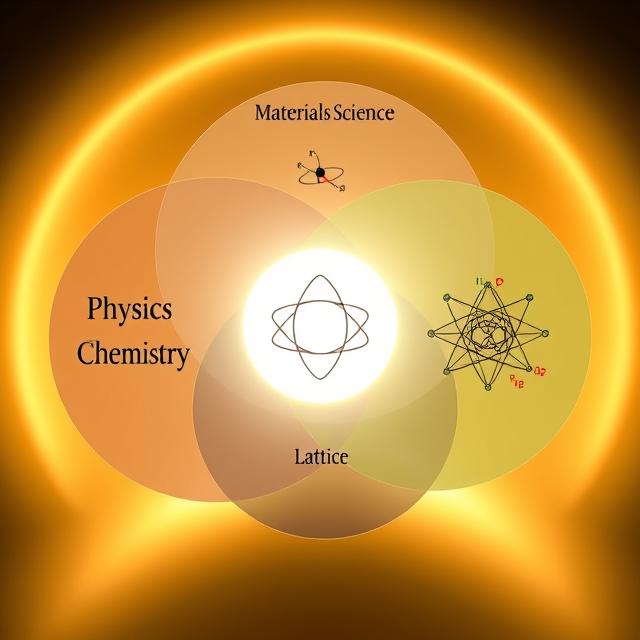
- You believe your work will have a broad appeal to the interdisciplinary community of physicists, chemists, and materials scientists working in this area.
- You have funding for Open Access publication fees (APCs). As a high-quality OA journal, the APCs are substantial but are an investment in maximum visibility.
- Your goal is to have your work seen, read, and built upon quickly by the entire global community, without barriers.
You might consider an alternative if:
- Your work is highly specialized and of primary interest to a very narrow sub-community that a more focused, society-run journal might better serve.
- Open Access fees are a prohibitive barrier.
- Your work is of a more incremental nature; the journal’s high selectivity means it prioritizes novelty and broad significance.
The Future: Where is npj Quantum Materials Headed?
The trajectory of npj Quantum Materials looks exceptionally bright. The field of quantum materials is only growing in importance, fueled by global quests for quantum computing, energy-efficient technologies, and new paradigms for electronics.
We can expect its impact factor to remain strong and potentially even climb as the field expands. More importantly, we can expect the journal to continue to be a curator and a catalyst for the science that will define the next technological revolution.
The editorial team will likely continue to publish special issues on emerging frontiers—like moiré quantum matter, non-Hermitian physics, and quantum sensing—ensuring it stays at the bleeding edge.
FAQ Section
1. What is the current impact factor of npj Quantum Materials?
As of the latest Journal Citation Reports (JCR) from Clarivate, the official npj Quantum Materials Impact Factor is 5.7 (2022 JCR). This is a very strong impact factor, placing it in the top tier of journals in the condensed matter physics and materials science fields. It’s important to note that this number is updated annually, so it’s always best to check the official JCR for the most recent data.
2. Is a 5.7 impact factor good for a materials science journal?
Yes, an impact factor of 5.7 is considered excellent, especially for a journal that launched in 2016. It signifies that the research published in npj Quantum Materials is highly influential and widely cited within the global scientific community. This impact factor is competitive with, and often surpasses, many long-established and respected journals in the same niche.
3. What does the “npj” in the journal name stand for, and why does it matter?
“npj” stands for Nature Partner Journals. This is a collaborative publishing model between Springer Nature and academic institutions. It means the journal benefits from the rigorous editorial standards and high visibility of the Nature brand while being entirely focused on the specific, high-growth field of quantum materials. This partnership is a key reason for its rapid rise in prestige and impact.
4. How does the Open Access model affect its impact factor?
The Open Access (OA) model is a significant factor in its high impact. Since every article is free to read immediately upon publication, there are no paywalls blocking researchers, students, or industry professionals anywhere in the world. This maximizes the visibility, readership, and potential for citation of every paper, directly fueling the journal’s influence and impact factor.
5. Should I publish in npj Quantum Materials just because of its high impact factor?
While the high impact factor is a positive signal, it shouldn’t be the sole reason for submission. You should choose npj Quantum Materials if your research represents a significant, novel advance in quantum materials (e.g., superconductivity, topological insulators) and you want it to have a broad, immediate impact across an interdisciplinary audience. Remember, the impact factor is a journal-level metric; the citation count for your individual paper will depend on its specific contribution and reach.
Conclusion: The Number is a Signpost, Not the Destination
So, let’s return to our original question: “What is the npj Quantum Materials impact factor?”
We now know the answer is 5.7, a number that signifies a prestigious, influential, and rapidly growing journal.
But the more profound answer is that the impact factor is a signpost pointing toward a much richer reality. It points to:
- A vibrant scientific community pushing the boundaries of our understanding.
- A progressive publishing model that believes in open science.
- A focus on one of the most exciting areas of modern research.
- A commitment to quality that attracts the best minds.
When you read a paper in npj Quantum Materials, you are engaging with a piece of this ecosystem. The impact factor is a reflection of the collective energy and innovation of this community. It’s a useful number, but the true value of the journal lies not in its metric but in the transformative science it disseminates to the world.
So, the next time someone asks you about the npj Quantum Materials impact factor, you can tell them the number. But then, perhaps, you can tell them the story behind it.