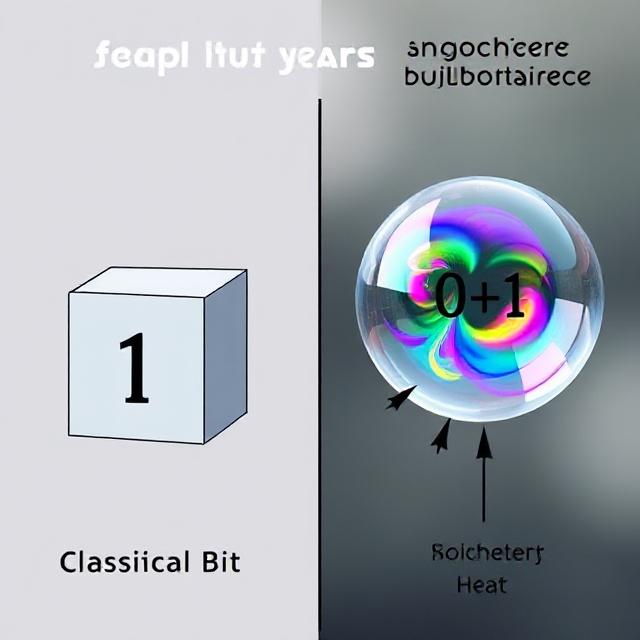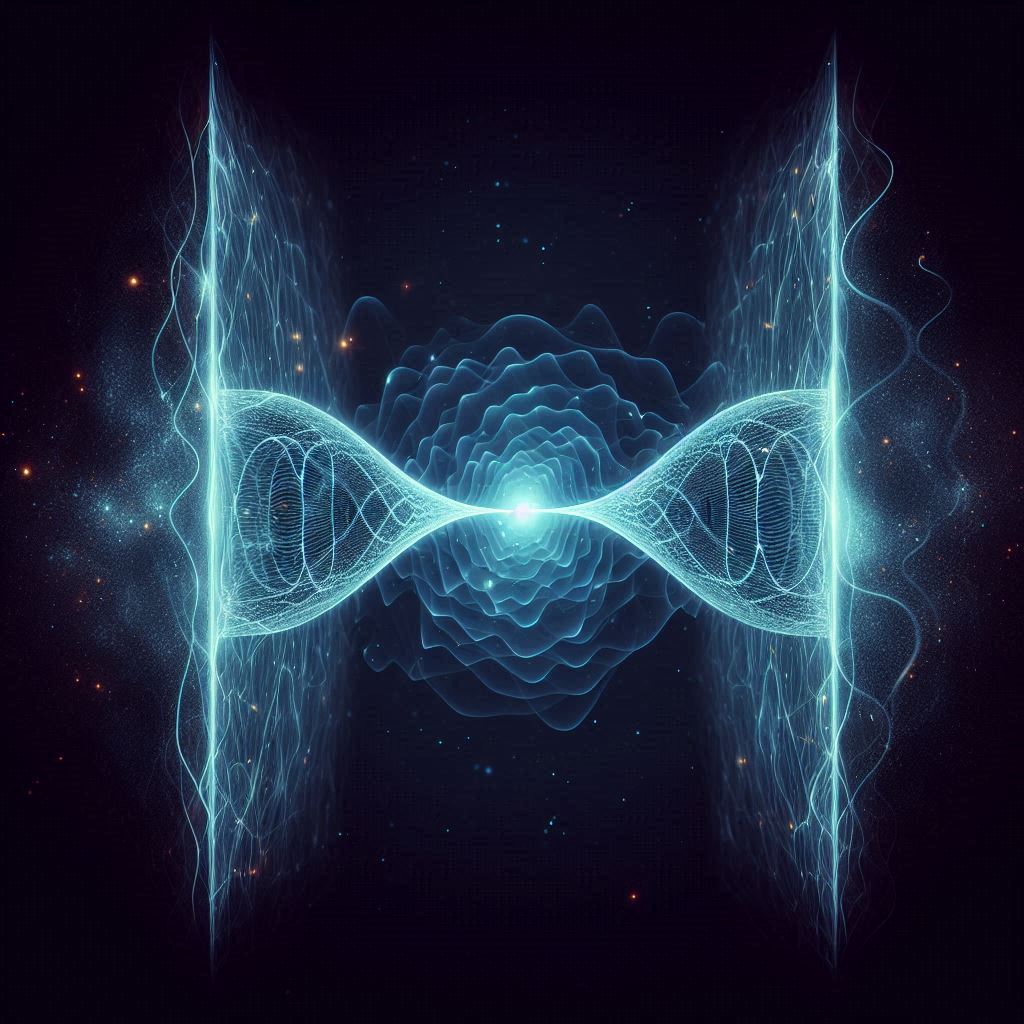
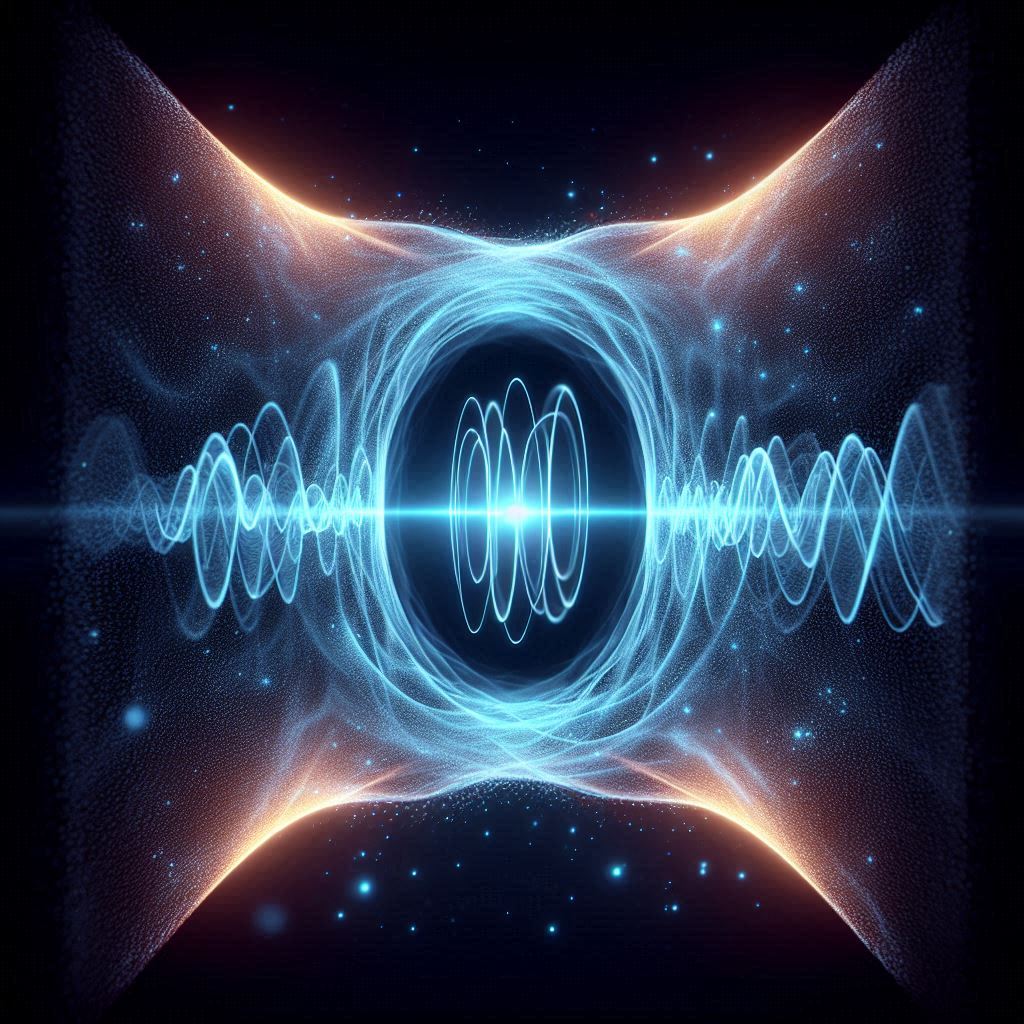
Imagine walking toward a solid brick wall, closing your eyes, and taking a step forward. In our everyday world, the result is predictable: a sore nose and a profound sense of frustration. But in the bizarre and wondrous realm of the quantum world, there’s a tiny, yet finite, chance that you’d simply pop out on the other side, completely unscathed.
This isn’t a magic trick or science fiction. This is quantum tunneling, one of the most fundamental and mind-bending phenomena in the universe. It’s a process that defies our classical intuition, powers the stars in our sky, and operates inside the very device you’re using to read this.
And in 2025, the Nobel Committee in Stockholm may very well finally shine its brightest spotlight on this cornerstone of modern physics. This post is your guide to why.
Breaking the Rules: A Simple Guide to Quantum Tunneling
To understand why tunneling is so revolutionary, we first need to know how it shatters our classical view of the world.
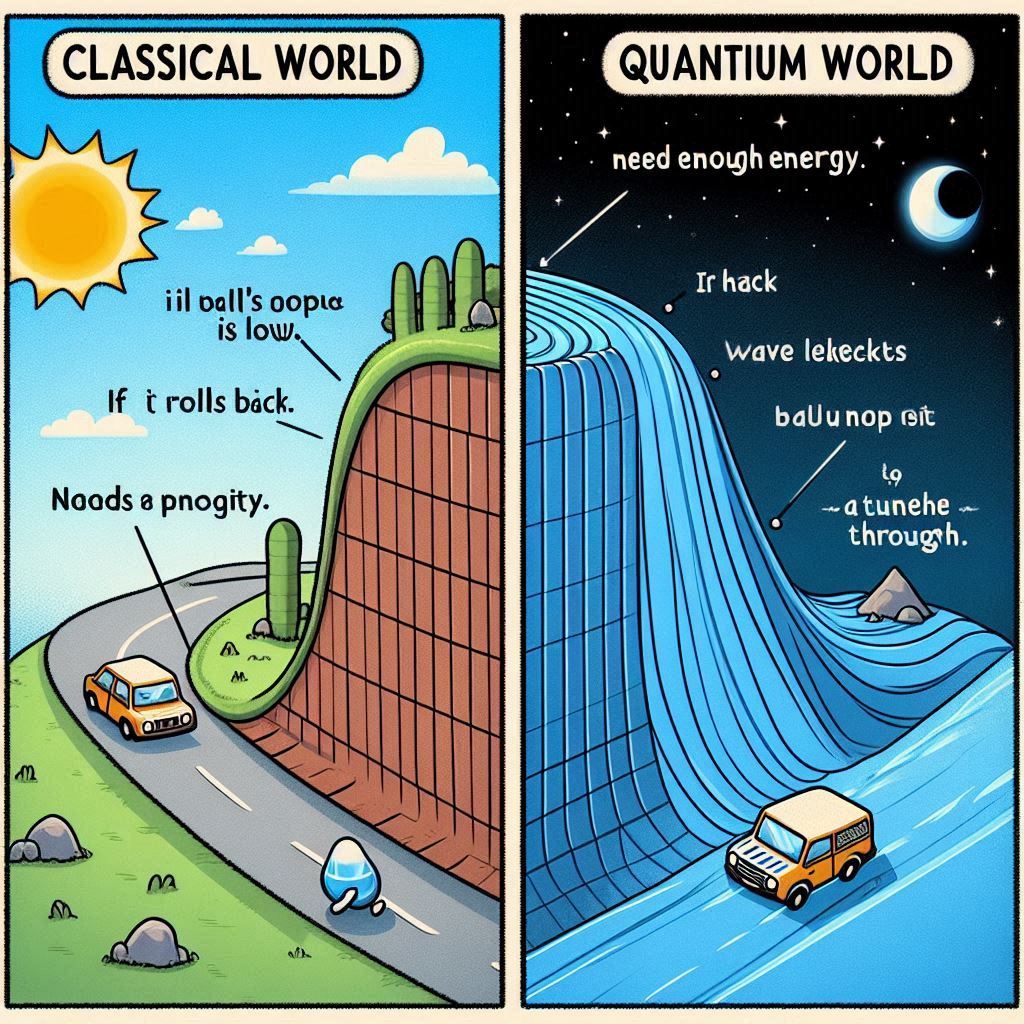
In the “classical” physics described by Newton, things are predictable. A ball rolling up a hill needs enough energy to reach the top and roll down the other side. If it doesn’t, it rolls back. Simple. For you to get from one room to another, you need to expend energy to open the door or, less politely, break through the wall. A barrier is a barrier.
The quantum world, governed by the rules laid out in the early 20th century, operates according to a different set of rules—one where probabilities and wave-like behavior prevail.
Here’s the core idea:
Particles, like electrons, are also waves. This isn’t a metaphor; it’s the bedrock of quantum mechanics. We describe this wavy nature with a “wavefunction,” which essentially tells us the probability of finding a particle in a specific location.
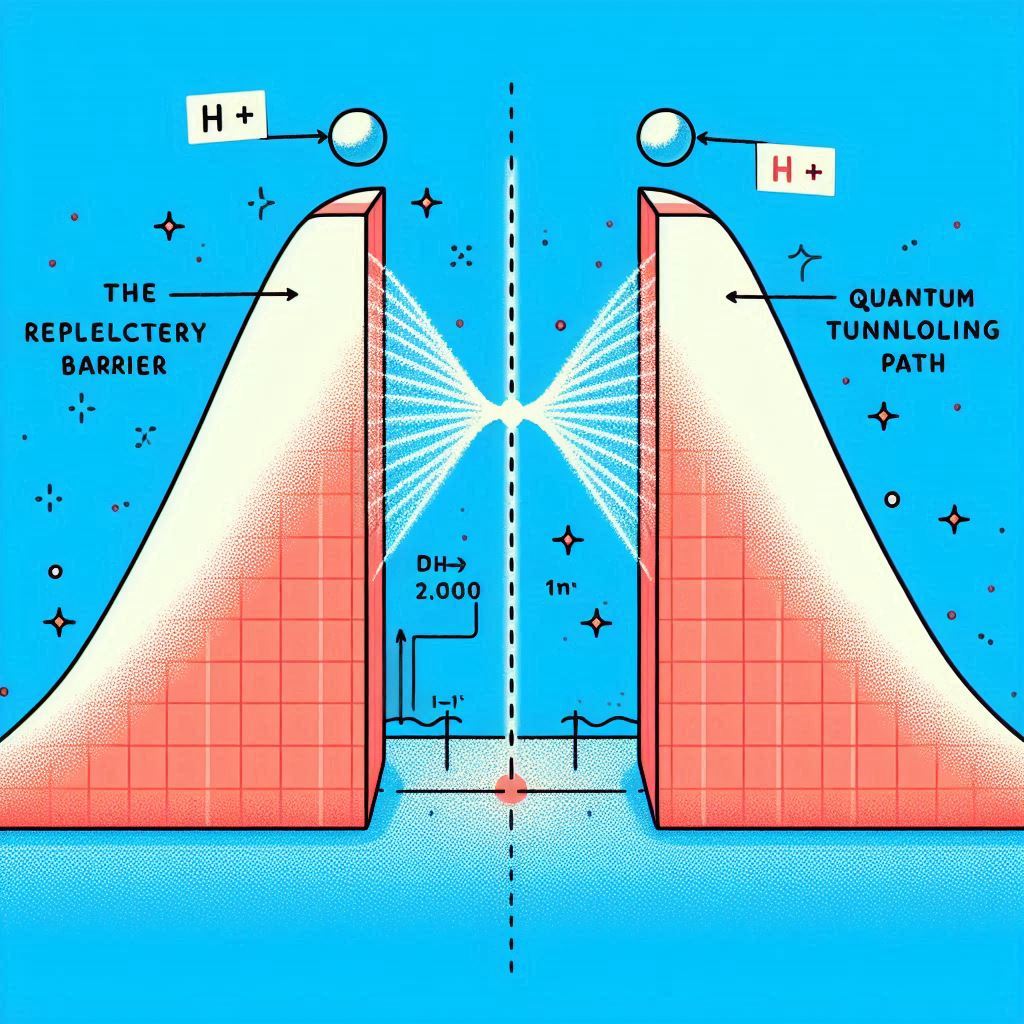
Now, imagine that a particle-wave is approaching a barrier. In the classical view, it’s game over. But in the quantum view, the wavefunction doesn’t abruptly stop at the barrier’s edge. It decays exponentially inside the barrier, like a fading echo.
If the barrier is thin enough, this fading echo doesn’t completely vanish before it reaches the other side. A small, but non-zero, part of the wavefunction—and therefore a probability of the particle itself—emerges on the far side.
The particle has, in effect, “tunneled” through an impossible barrier.
Think of it like a ghost walking through a wall. The wall is still there, but the ghost’s ethereal nature allows it a chance to simply appear on the other side. For an electron facing a thin electrical barrier, that chance is not just possible; it’s a regular occurrence that we can measure and, crucially, harness.
From the Sun to Your Smartphone: How Quantum Tunneling Powers Our World
If quantum tunneling were just a theoretical curiosity, it would still be one of physics’ coolest party tricks. But its true claim to fame—and a core reason it’s Nobel-worthy—is its profound, tangible impact on our lives. It’s literally the force behind the light of our sun and the memory in our pockets.
1. The Cosmic Furnace
Let’s start on the grandest scale: the universe. Our sun, and every other star like it, shines because of nuclear fusion. Hydrogen nuclei (protons) are forced together under immense heat and pressure to form helium, releasing colossal amounts of energy in the process.
But there’s a problem. Protons are all positively charged, and as we know, like charges repel. The electrical repulsion between two protons is a massive “energy barrier.” For them to get close enough for the strong nuclear force to take over and fuse them, they’d need to be moving impossibly fast—faster than the actual temperatures at the sun’s core should allow.
So, why does fusion happen? Quantum tunneling.
The protons don’t have to “go over” the repulsion barrier. They can tunnel through it. This process is incredibly slow for any single pair of protons, but in the vast, dense core of a star, it happens constantly. Without quantum tunneling, our sun would be a dark, cold ball of gas. The universe would be devoid of starlight, and life would not exist.
2. The Flash Memory Revolution
Now, let’s zoom in on the microscopic world inside your smartphone, laptop, and USB drive. The technology that allows for instant-on, durable, and massive data storage—NAND flash memory—relies entirely on quantum tunneling.
Inside a flash memory chip are billions of tiny transistors called “floating-gate” MOSFETs. To store a ‘1’ or a ‘0’ (a bit of data), you need to trap electrons on an isolated piece of silicon (the floating gate).
How do you get electrons onto an isolated island? You can’t just open a door. The solution is to apply a strong electric field, which makes the energy barrier thin enough for the electrons to quantum tunnel from the channel onto the floating gate, where they become trapped. To erase the data, you apply a field in the opposite direction, and the electrons tunnel right back out.
Every photo you save, every app you download, and every word in this document stored on an SSD exists because we have mastered the art of coaxing electrons to tunnel on command.
3. Seeing the Atomic Landscape
In 1986, the Nobel Prize in Physics was awarded for a direct application of tunneling: the Scanning Tunneling Microscope (STM). Gerd Binnig and Heinrich Rohrer were recognized for this invention, which allows us to see individual atoms.
How does it work? An incredibly sharp metal tip is brought very close to a conducting surface. A voltage is applied. Even though the tip and the surface aren’t touching, electrons tunnel across the space between them, creating a measurable “tunneling current.”
This current is exquisitely sensitive to distance. By scanning the tip across the surface and maintaining a constant current, the tip moves up and down, tracing the atomic contours. It literally produces a topographical map of the surface, atom by atom. The STM didn’t just make the invisible visible; it launched the entire field of nanotechnology.
A Nobel-Worthy Legacy: The Unfinished Business of Quantum Theory
Given that tunneling already has a Nobel to its name (the STM), why are we talking about it again for 2025? The 1986 prize rightly honored a specific, revolutionary instrument. The case for a 2025 prize is to honor the deeper, more fundamental theoretical and experimental breakthroughs that underpin the phenomenon itself and its broader application across physics and chemistry.
The Nobel Committee has a history of awarding prizes for foundational quantum concepts long after their discovery, once their full impact has become undeniable. The 2022 prize for Bell’s Inequalities is a perfect example.
Here’s the three-part case for quantum tunneling:
- Foundational Maturity: The theory dates back to the late 1920s, with pioneering work by George Gamow, Ronald Gurney, and Edward Condon, who used it to explain alpha decay (where an atomic nucleus spits out a helium nucleus—also via tunneling!). It is a pillar of quantum mechanics that has stood the test of time.
- Overwhelming and Diverse Impact: As we’ve seen, its influence spans astrophysics, electronics, chemistry, and nanotechnology. A prize now would recognize the cumulative weight of its applications, which have only multiplied since the STM was invented.
- The “Theoretical/Experimental Gap”: The theorists who developed the profound implications of tunneling, or the experimentalists who first conclusively demonstrated its stranger predictions in condensed matter systems, have not yet been specifically honored. Their work provided the toolkit that the STM and flash memory engineers used to change the world.
The time is ripe. The stars have literally and figuratively aligned.
The Architects of the Impossible: Who Could Win?
Predicting Nobel laureates is a famously difficult game, akin to forecasting the weather a year in advance. However, by looking at other major awards (like the Wolf Prize or the Buckley Prize) and towering citation records, we can identify a few key contenders.
(A necessary disclaimer: This is informed speculation. The final decision rests with the Royal Swedish Academy of Sciences.)
Contender Profile 1: The Master Theorist
This would be a theorist who fundamentally expanded our understanding of tunneling beyond its basic formulation. Their work might have provided the framework for understanding tunneling in complex condensed matter systems, disordered materials, or chemical reactions.
- Why them? While the initial theory is old, its application to real-world materials and complex systems was a monumental task. This theorist’s equations and models are the ones used by engineers and scientists today to design new transistors, understand molecular switches, and explore the fundamentals of quantum transport. Awarding them would honor the intellectual architecture that made the modern technological applications possible.
Contender Profile 2: The Experimental Visionary
This would be an experimentalist or a team that performed a landmark experiment demonstrating a non-intuitive consequence of quantum tunneling. This could be the direct observation of dynamical localization, the demonstration of tunneling in superconducting circuits, or a groundbreaking experiment in electron tunneling in solids that confirmed key theoretical predictions.
- Why them? The Nobel Committee loves elegant, conclusive experiments that bring a strange quantum effect into sharp, undeniable focus. This work would have taken tunneling from a “well-accepted idea” to an “observably proven phenomenon” in a new and dramatic way, opening up new fields of research.
Contender Profile 3: The Applied Physics Pioneer
While the STM was honored, the application of tunneling to the semiconductor industry—specifically the development of the tunnel diode (or Esaki diode) by Leo Esaki, who won a Nobel in *1973* for it—and the foundational physics that enabled flash memory could be recognized. A key figure in the early research of Fowler-Nordheim tunneling (the specific mechanism used in flash memory) or the integration of tunneling concepts into semiconductor device physics could be a contender.
- Why them? The global impact of flash memory is incalculable. It reshaped the digital world. Honoring the physics pioneers who laid the groundwork for this multi-billion-dollar industry would be a powerful statement about the practical value of fundamental research.
It’s also entirely possible the prize could be split, honoring one theorist and one experimentalist whose work, while separate, collectively built the modern edifice of tunneling applications.
FAQ Section
Q1: Has quantum tunneling already won a Nobel Prize before?
Yes, but in specific contexts. The 1957 Nobel Prize was awarded for theoretical work on parity violation, which involved tunneling concepts. The 1973 Prize went to Leo Esaki for his experimental discovery of the tunnel diode. Most famously, the 1986 Prize was awarded for the invention of the Scanning Tunneling Microscope (STM). A 2025 prize would likely honor the broader, foundational theoretical and experimental work that underpins all these applications.
Q2: Is quantum tunneling faster than the speed of light?
This is a common and fascinating question. The answer is no. While the particle appears instantly on the other side of the barrier, the probability of it tunneling is governed by the speed of its wavefunction, which does not exceed the speed of light. Information and causality are preserved. The tunneling event itself is instantaneous, but the process leading to it is not superluminal.
Q3: Can large objects, like humans, quantum tunnel?
Technically, yes, but the probability is so infinitesimally small that for all practical purposes, it’s impossible. The probability of tunneling decreases exponentially with the mass of the object and the width of the barrier. For an electron and a nanoscale barrier, it’s common. For a person and a wall, the odds are so low that you would need to wait for many times the current age of the universe for it to have a chance of happening once.
Q4: What’s the difference between quantum tunneling and teleportation?
They are fundamentally different. Quantum teleportation is a protocol where the quantum state (the properties) of a particle is transferred to another distant particle using quantum entanglement. Quantum tunneling is the physical relocation of a particle through a barrier. One transfers information; the other moves the actual object.
Q5: How does quantum tunneling relate to quantum computing?
It’s a double-edged sword. On one hand, it’s a nuisance, causing “leakage” where qubits lose their information by tunneling into undesirable energy states. On the other hand, some proposed quantum computer designs use tunneling as an essential mechanism for qubit operation and reading their state. Mastering tunneling is key to building stable, scalable quantum computers.
Q6: When will the 2025 Nobel Prize in Physics be announced?
The announcement is scheduled for Tuesday, October 7, 2025. It will be made by the Royal Swedish Academy of Sciences in Stockholm, typically around 11:45 AM local time (CEST).
The Final Verdict: Waiting for an October Announcement
Quantum tunneling is more than just a footnote in a physics textbook. It is a fundamental feature of our universe, a subtle whisper of the quantum rules that underpin reality itself. From the cosmic fire of creation to the silent storage of our most precious digital memories, its signature is everywhere.
The 2025 Nobel Prize in Physics represents a perfect opportunity to honor this profound concept. It would be a recognition of a century of theoretical brilliance and experimental ingenuity—a celebration of the humans who decoded one of nature’s most magical secrets and, in doing so, gave us the tools to build the modern world.
When the announcement is made in Stockholm in early October 2025, and the world’s science journalists scramble to explain the winning work, don’t be surprised if you hear the term “quantum tunneling” echo through the news. You’ll already know the story—a story of ghosts walking through walls, stars shining in the void, and the impossible made possible.
What do you think? Is quantum tunneling Nobel-worthy? Who are your picks for the potential laureates? Share your thoughts in the comments below!
Want to stay updated on the latest in science? Subscribe to our newsletter to get our instant analysis the moment the 2025 winners are announced.