


The global artificial intelligence landscape is tilting eastward. In mid-February, a quiet but significant movement is set to unfold in New Delhi, as OpenAI CEO Sam Altman plans his first visit to India in nearly a year. It is a strategic maneuver at a pivotal moment, coinciding with India’s inaugural major AI event—the India AI Impact Summit 2026—and emblematic of the intense competition among Western AI giants to secure a foothold in what has unequivocally become the world’s most consequential emerging technology market.
Scheduled for February 16-20, the summit itself is a statement of intent. Its roster reads like a who’s who of tech royalty: Nvidia’s Jensen Huang, Google’s Sundar Pichai, and Anthropic’s Dario Amodei are confirmed, alongside Indian industrial titan Mukesh Ambani. While Altman’s name is absent from the main stage agenda. The company plans to host closed-door meetings on the sidelines of the summit and a dedicated event for venture capitalists and industry executives in New Delhi on February 19. This approach of complementing the main stage with intimate, high-stakes networking is a telling strategy, one being mirrored by rivals like Anthropic, which will host a developers’ day in Bengaluru, and Nvidia, planning its own evening event in the capital.
This clustering of satellite events is far from coincidental. It underscores a fundamental recognition: India is no longer just a market for user growth; it is a complex battleground for enterprise contracts, developer mindshare, and strategic influence. Altman’s expected meetings with tech executives, startup founders, and government officials during this trip highlight OpenAI’s dual focus: to aggressively expand ChatGPT’s enterprise adoption while continuing to nurture its staggering mass-market reach.
The Allure of the Indian AI Ecosystem
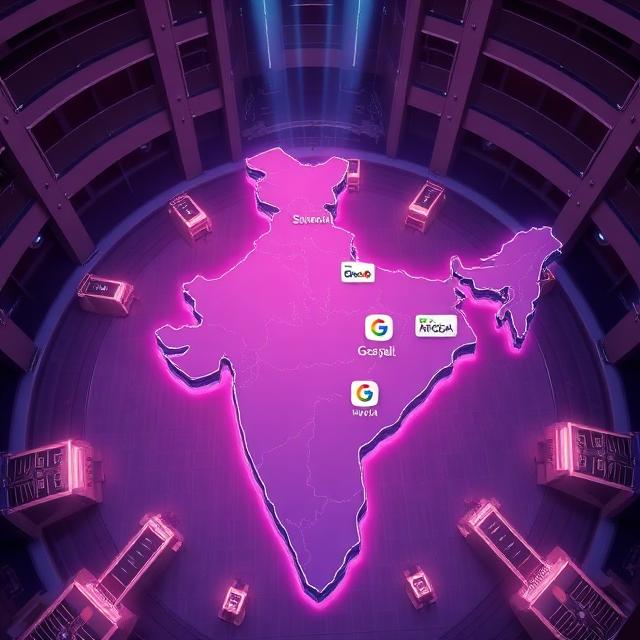
The statistics are compelling. India has emerged as ChatGPT’s largest market by downloads and its second-largest by active users. This organic, grassroots adoption demonstrates a profound hunger for AI tools across the population. However, as OpenAI has discovered, converting vast user numbers into sustainable revenue is the central challenge. The introduction last year of “ChatGPT Go,” a plan priced under $5 and offered free for a year, was a direct response to this monetization puzzle, tailored to India’s unique price sensitivity.
The opportunity, however, extends far beyond consumer subscriptions. India’s vast enterprise sector, its thriving startup ecosystem—the world’s third-largest—and its immense pool of technical talent represent the real prize. American firms are moving swiftly to embed themselves. In recent months, Anthropic announced a Bengaluru office headed by former Microsoft India veteran Irina Ghose; Google and Perplexity have struck landmark partnerships with telecom giants Reliance Jio and Bharti Airtel, respectively, to bundle AI subscriptions for hundreds of millions. OpenAI’s own expansion is evident in its hiring spree across enterprise sales, technical deployment, and legal roles focused on AI regulation in New Delhi, Mumbai, and Bengaluru.
Altman’s visit, following OpenAI’s August 2025 announcement of a New Delhi office (a plan he had pledged to revisit), signals a readiness to move from groundwork to aggressive engagement. The company is actively exploring partnerships across sectors like education and media, seeking to demonstrate tangible value beyond the chat interface.
The Infrastructure Imperative and Its Daunting Challenges

Yet, ambition in India’s AI sphere meets a stark infrastructural reality. Sources indicate that OpenAI, like its competitors, is evaluating India as a potential base for infrastructure expansion. This is a logical step for enhancing resilience, reducing latency, and ensuring data sovereignty. However, the path to building AI infrastructure in India is fraught with constraints that even the deepest-pocketed firms must navigate.
Last year saw Google and Microsoft announce multi-billion-dollar investments in Indian data centers and AI cloud capacity. But the blueprint faces headwinds: uneven power availability, high energy costs, and significant water scarcity in key regions. These factors can dramatically slow build-out timelines and elevate operating costs, posing a complex calculus for cloud providers. The dream of a seamless, global AI fabric must contend with the on-the-ground challenges of India’s physical and resource landscape. This makes strategic partnerships with domestic telecom and infrastructure players, like those pursued by Google and Perplexity, not just commercially astute but operationally essential.
Sovereign Ambitions and the Geopolitics of AI
Beneath the surface of this global corporate rush lies a powerful undercurrent of national ambition. The Indian government is not a passive host. The AI summit is a calculated platform to position the nation as a destination for large-scale investment; the IT Minister has suggested the event could help attract up to $100 billion. Moreover, New Delhi is actively pushing a dual strategy: welcoming foreign investment and technology while fiercely championing homegrown innovation.
A key pillar of this strategy is the federal government’s push for domestic startups to develop smaller, more efficient AI models tailored to India’s diverse languages and specific use cases—from agriculture to healthcare. The long-term goal is clear: to gradually reduce reliance on U.S.-based systems and cultivate sovereign AI capabilities. This creates a nuanced dynamic for leaders like Altman. Engagement must balance the offer of cutting-edge technology with support for India’s indigenous ecosystem, navigating a partnership model that aligns with, rather than contradicts, New Delhi’s vision for technological self-reliance.
A Defining Juncture

Sam Altman’s impending visit to New Delhi, therefore, is a microcosm of a larger shift. It represents the next phase of global AI commercialization, where scaling users must be succeeded by embedding solutions into the core of a nation’s economy and society. The India AI Impact Summit 2026 is not merely a conference; it is a convening of the forces shaping this future.
For OpenAI, the trip is a critical test of its ability to translate global leadership into localized, sustainable success in a market that is both wildly enthusiastic and intensely competitive. The challenges are significant: monetizing a price-sensitive user base, competing for enterprise deals against entrenched rivals and well-funded newcomers, building infrastructure in a constrained environment, and engaging with a government that has its own sovereign AI playbook.
As executives from Meta, Google, Anthropic, Nvidia, and OpenAI descend upon New Delhi in February, the message is unmistakable. India’s AI moment has arrived. The question is no longer if global AI will shape India, but how India—with its vast market, unique challenges, and formidable ambitions—will irrevocably shape the future of global AI. The conversations in those closed-door meetings may well determine the balance of power in the next decade of technological evolution.
FAQ Section
Q1: Why is Sam Altman visiting India in February 2026?
A1: Altman’s visit aligns with India’s first major AI event, the India AI Impact Summit 2026. While not a main-stage speaker, he is expected to host closed-door meetings and a private event for VCs and executives. The trip aims to boost OpenAI’s enterprise adoption, engage with India’s developer ecosystem, and advance the company’s strategic expansion in a critical growth market.
Q2: What is the significance of the India AI Impact Summit 2026?
A2: The summit, hosted in New Delhi, marks India’s formal entry as a major convening power in global AI. With confirmed attendees like Jensen Huang (Nvidia), Sundar Pichai (Google), and Dario Amodei (Anthropic), it signals India’s market importance and its government’s ambition to attract large-scale AI investment, potentially up to $100 billion.
Q3: What challenges do global AI companies like OpenAI face in India?
A3: Key challenges include converting massive user bases into paid subscriptions in a price-sensitive market, competing for enterprise deals against rivals forging local telecom partnerships, and navigating significant infrastructure constraints—such as power variability and water scarcity—that can slow and raise the cost of data center expansion.
Q4: How is India positioning itself in the global AI landscape?
A4: India is pursuing a dual strategy: actively welcoming foreign investment and technology from U.S. giants while simultaneously pushing its domestic startups to build smaller, localized AI models. The goal is to cater to specific Indian use cases and reduce long-term reliance on foreign systems, fostering sovereign AI capabilities.
Q5: Are other U.S. AI companies also expanding their presence in India?
A5: Yes, the competition is intense. Anthropic has established a Bengaluru office with local leadership, Google and Perplexity have partnered with major Indian telecom providers (Jio and Airtel), and Nvidia is hosting events during the summit. This cluster of activity highlights a concerted scramble to engage India’s enterprises, startups, and developers.
Q6: What is OpenAI’s current standing in the Indian market?
A6: India is ChatGPT’s largest market by downloads and second-largest by users. OpenAI is building on this by hiring locally for sales, deployment, and regulatory roles and has introduced a lower-cost “ChatGPT Go” plan to drive subscription uptake. The focus is now shifting from user growth to deep enterprise and developer integration.


Когда вы ищете прямые воздушные рейсы из Еревана в Европу или дополнительные направления, стоит взглянуть на аэропорты черногория, литва, Польши и Болгарии — оттуда постоянно летают выгодные lowcost рейсы. Наиболее выгодно искать дешевые авиабилеты из Москвы за границу, с учетом горящие предложения и бюджетные варианты, например, в Чехию, Новую Зеландию или Доминикану. Для разработки поездки рекомендую проверить опции по направлениям и аэропортам на дешевые авиабилеты из москвы , где просто смотреть сразу и прямые рейсы, и наиболее дешевые билеты.
Также, если вам нужны дешевые авиабилеты из Ташкента, Анталии или Берлина, не забывайте про распространенные аэропорты Израиля, ОАЭ и Англии. Эти дестинации нередко дают очень интересные тарифы и low cost варианты. А если хочется понять, куда недорого слетать из Москвы или куда есть прямые авиа рейсы из Тель-Авива, стоит ознакомиться с аэропорты Норвегии и Португалии — там можно получить действительно бюджетные варианты для отдыха и вояжей.
В том случае, если вы планируете странствия и вы ищете прямыми рейсами из различных городов, нужно обратить внимание на предложения по аэропортам Филиппин, Зимбабве, Дании и Венесуэлы. Например, доступны прямые рейсы из Стамбула в Европу и Анталию, а также рейсы из Еревана в европейские столицы города, что может ощутимо облегчить передвижения. Для подбора самых экономных авиабилетов из Москвы, Лондона, Стамбула или Минска, а также из подобных городов, как Екатеринбург и Вроцлав, можно использовать ресурс аэропорты в португалии , где есть информация о недорогих вариантах и специальных билетах.
Вдобавок, необходимо знать, что аэропорты США, Польши, Албании и ОАЭ открывают большой выбор направлений, вместе с популярные места в Таиланде, Доминикане и Нидерландах. Интересно, что в определенных странах, как на Мальте или в Англии, количество аэропортов дает возможность легко определять оптимальные маршруты. Если вы пытаетесь определить куда дешево улететь из Москвы, Дубая или Стамбула, нужно изучить варианты по лоукостам и прямым рейсам, чтобы по максимуму сэкономить на перелетах.
I recently been exploring the deep summer color palette and how it corresponds to different skin tones, especially light skin with yellow undertones. Using applications like color analysis pro and no-cost online color analysis quizzes can truly help find out what season I am and which clothing colors work with my skin best—this was a game changer when I understood soft summer and dark summer color palettes offer different vibes for my appearance. If you’re not sure about your undertone, the vein test undertone and skin tone chart can be exceptionally helpful in determining whether you have olive skin, amber skin tone, or more of a neutral skin tone.
For anyone trying to dig deeper into seasonal color analysis, I’d advise checking out resources that include a skin shade chart and analysis of what colors work best on pale skin or yellow undertone skin. Understanding your skin color palette, whether it’s more like deep autumn colour palette or light spring color palette, can make selecting clothes and hair color try on way easier and more interesting. For a reliable overview and some helpful tools, here’s a great site with data on color-analysis pro and more undertone vein test .
Готовя поездку в Таиланд, следует заранее представлять, сколько стоит отдых, чтобы захватить достаточно денег. К примеру, путёвка в Таиланд, прайс на которую заметно зависят от периода, обычно изменяется, а на месте необходимо учитывать издержки на продукты, трансфер, путешествия и аренду байка (хотя без прав правильнее воздержаться). Важным вопросом представляется, сколько взять денег в Таиланд на 10 дней — это варьируется от вашего варианта отдыха и приоритетов, но желательно изучить мнения, например, на Andamanda Phuket, а также детали о рынке Патонг и торговых комплексах на Патонге, чтобы распределить покупки и питание. Больше информации об этом можно изучить тут рынок патонг .
Что относительно времени поездки, то Пхукет выступает более комфортным летом и осенью, когда меньше палящего солнца и сезон фруктов в Таиланде в разгаре. Если актуально, как доехать с Пхукета на Самуи независимо — есть и трансфер, и переправа, и даже такси, при этом период в пути растягивается на около 4-6 часов. Важно стоит узнать о правилах въезда в Таиланд для россиян в 2025 году и как навигироваться в аэропорту Пхукета. Смотрю, что в тренде экскурсии на Пхукете, а также массажные салоны и спа — это отличное завершение полного впечатлений дня на пляже.
Hi there! Wishing you a great day ahead.
Hello, I’m looking to sponsor quality websites through financial grants. If you have development plans that need funding, I’d welcome the opportunity to contribute. Please contact me on WhatsApp +380733200811