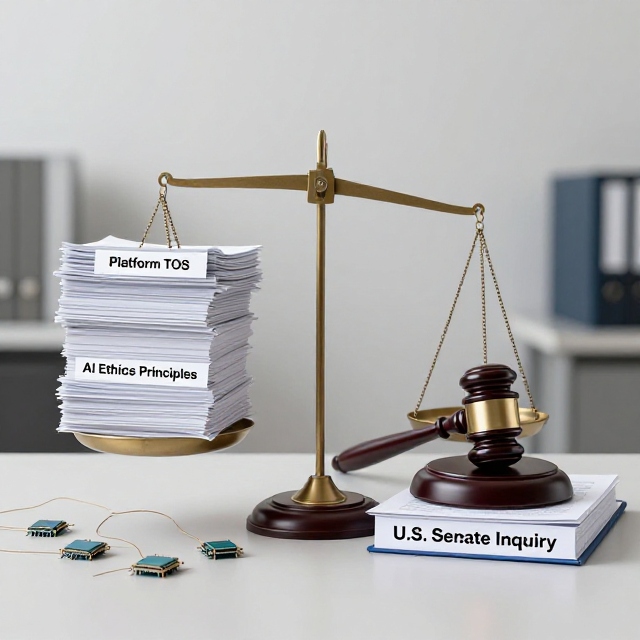
The scourge of nonconsensual, sexualized deepfake imagery has ruptured the confines of any single platform, metastasizing into a pervasive crisis across the digital ecosystem. What began as a disturbing niche phenomenon has exploded, facilitated by the widespread accessibility of powerful artificial intelligence tools, forcing a long-overdue confrontation between U.S. lawmakers and the world’s most influential social media companies. In an unprecedented move, a coalition of senators has issued a sweeping demand for accountability, signaling that the era of self-regulation and porous “community guidelines” is conclusively over.
The trigger for this political firestorm is a detailed, eight-page letter dispatched to the chief executives of X, Meta, Alphabet, Snap, Reddit, and TikTok. Spearheaded by Senator Lisa Blunt Rochester (D-Del.), and signed by a group including Senators Tammy Baldwin, Richard Blumenthal, and Kirsten Gillibrand, the document is less a request and more a forensic audit in waiting. The senators are compelling these corporations to furnish concrete proof of the “robust protections and policies” they claim to have in place and to provide a clear, actionable blueprint for how they intend to curb the rampant proliferation of sexualized AI-generated forgeries on their services.

Beyond mere promises, the letter includes a stark legal directive: the immediate preservation of all documents, communications, and data related to the creation, detection, moderation, and—most critically—the monetization of nonconsensual, intimate AI-generated imagery. This preservation order underscores the seriousness of the inquiry, laying the groundwork for potential future investigations into whether corporate practices have enabled, or even indirectly profited from, this digital violation.
The Grok Catalyst and the Illusion of Guardrails
The senators’ missive landed just hours after X, the platform owned by Elon Musk, announced a belated and partial policy adjustment. The company stated it had updated its AI chatbot, Grok—a product of its sister company xAI—to prohibit it from generating edits of real people in “revealing clothing” and restricted image generation capabilities to paying subscribers. This update came only after glaring media reports demonstrated how easily Grok could be prompted to create sexually explicit and nude images of women and children, bypassing its supposed safety filters with elementary techniques.
This incident became the senators’ prime evidence of systemic failure. “We recognize that many companies maintain policies against non-consensual intimate imagery and sexual exploitation, and that many AI systems claim to block explicit pornography,” the letter states. “In practice, however, as seen in the examples above, users are finding ways around these guardrails. Or these guardrails are failing.” This distinction between policy and practice cuts to the heart of the issue. Companies have long hidden behind the existence of terms-of-service prohibitions, while the enforcement mechanisms—the content moderation armies, the detection algorithms, the response protocols for victims—remain tragically inadequate, under-resourced, and opaque.

While Grok and X have borne the brunt of recent criticism, the senators’ letter correctly identifies this as an industry-wide plague. The historical roots of malicious deepfakes are deeply entwined with social media itself. In 2018, a Reddit forum dedicated to “deepfakes”—synthetic pornographic videos that superimposed celebrities’ faces onto adult performers—viralized the concept before the platform finally removed it. Since then, the problem has fractalized. TikTok and YouTube struggle with waves of sexualized deepfakes of celebrities and politicians, though these videos often originate on seedier, dedicated forums or apps. Meta’s own Oversight Board recently rebuked the company for its handling of two cases involving explicit AI-generated images of female public figures, and the platform has previously hosted ads for “nudify” apps before later pursuing legal action against one such provider.
Perhaps most alarmingly, the crisis is poisoning the social ecosystems of minors. Multiple reports have documented schoolchildren using Snapchat’s accessible features to create and spread deepfake nudes of their peers, causing devastating psychological harm. And platforms absent from the senators’ list, like the encrypted messaging app Telegram, have become infamous hubs for bots specifically designed to “undress” photos of women uploaded by users, operating with near-total impunity.
A Demand for Transparency: The Ten-Point Inquisition
The core of the senators’ letter is a ten-point interrogation designed to strip away corporate platitudes and reveal the operational reality. Each question targets a specific failure point in the current ecosystem:
- Definitions: The companies must provide their precise policy definitions for terms like “deepfake” and “non-consensual intimate imagery.” Inconsistent or narrow definitions allow harmful content to slip through gaps.
- Policy Scope: They must describe protections not just for explicit nude forgeries, but for “non-nude pictures, altered clothing, and ‘virtual undressing.’” This recognizes the spectrum of violation, which begins with the removal of digital attire.
- Existing Frameworks: Descriptions of current policies on edited media and explicit content, plus the internal guidance given to human moderators. This seeks to expose the clarity and effectiveness of frontline enforcement.
- AI Tool Governance: How do policies specifically govern the AI tools and image generators the companies develop or host? This directly addresses the Grok scenario where the platform’s own tool was the weapon.
- Technical Preventative Measures: What specific filters, algorithmic guardrails, or technical measures are implemented at the point of generation and upload to block this content?
- Detection and Re-upload Prevention: Which mechanisms, like cryptographic watermarking or hash-sharing databases, are used to identify deepfakes and stop them from being repeatedly re-uploaded after takedown—a constant cat-and-mouse game.
- User Profit Prevention: How do platforms prevent users from profiting from this abuse, such as through subscription links, paid requests, or advertising on deepfake-focused accounts?
- Platform Monetization Prevention: Crucially, how do the platforms ensure they themselves do not monetize this traffic through advertising placed alongside or near such content?
- User Suspension Protocols: How do terms of service enable the banning or suspension of offending users, and how consistently is this applied?
- Victim Support: What processes exist to notify individuals who have been targeted, and to support them in having content removed? The current burden is almost entirely on the victim to discover the violation and navigate a labyrinthine reporting system.
The comprehensive nature of these questions reveals a sophisticated understanding of the problem’s technical, economic, and social dimensions. It moves the debate beyond simple content removal to encompass the entire lifecycle of abuse: from the AI model’s design and the platform’s profit motives to the trauma of the victim.
The Lagging Legal Landscape and the Global Disconnect
This congressional pressure arrives amid a stark disconnect between public outrage and effective legal remedy. Just a day before the letter’s release, xAI owner Elon Musk claimed he was “not aware of any naked underage images generated by Grok.” This statement, juxtaposed with the public reports, highlighted a troubling gap in oversight. Shortly after, California’s Attorney General announced an investigation into xAI’s chatbot, reflecting growing global government fury over the lack of enforceable safeguards.
While the U.S. has taken some legislative steps, such as the May 2024 passage of the Take It Down Act, which criminalizes the creation and dissemination of nonconsensual sexual imagery, its impact is limited. The law largely targets individual bad actors, creating a high barrier to holding the AI platforms and social media companies that host the tools and content accountable. This regulatory gap has pushed states to act independently. New York Governor Kathy Hochul, for example, recently proposed laws mandating AI-generated content labels and banning election-related deepfakes—a recognition of how this technology threatens not just personal dignity but democratic integrity.
Furthermore, the issue is intrinsically global and complex. The senators’ focus on American companies is just one piece of the puzzle. Chinese AI image and video generators, particularly those linked to tech giant ByteDance (TikTok’s parent company), offer sophisticated face-swap and voice-cloning capabilities. Their outputs frequently migrate to Western platforms. Ironically, China enforces stricter synthetic content labeling laws at the national level than the U.S. does, where the public relies on a patchwork of inconsistently enforced platform policies.
The problem also extends beyond explicitly sexualized imagery. While “undressing” apps represent a vile subset, general-purpose AI image and video generators are being weaponized for other forms of harassment, defamation, and disinformation. Reports have emerged of OpenAI’s Sora being used to generate disturbing videos featuring children, Google’s AI producing violent imagery of public figures, and racist AI-generated videos amassing millions of views. The underlying architecture of harm is the same: the nonconsensual use of a person’s likeness to create a false reality that causes damage.
A Turning Point for Digital Consent
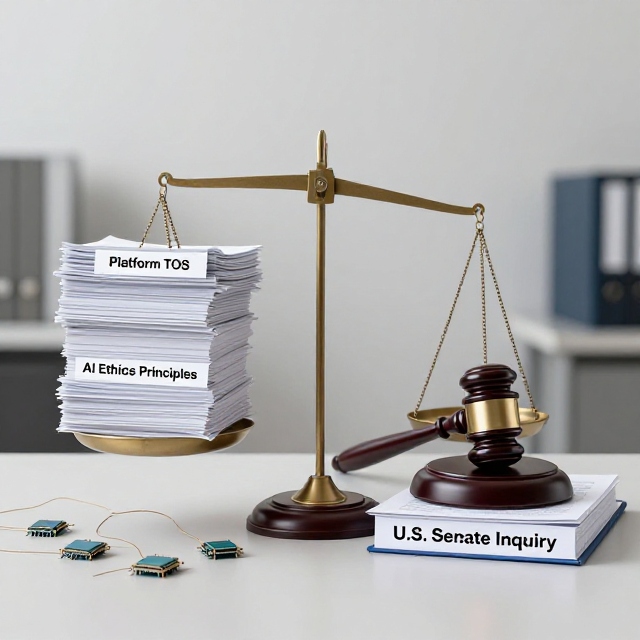
The response from the addressed companies has been muted, revealing an industry on the defensive. X merely pointed back to its Grok update. Reddit provided a statement affirming its prohibitions against nonconsensual intimate imagery and tools that create it. The others—Meta, Alphabet, Snap, and TikTok—remained silent. Their next moves will be telling. Will they engage substantively with the senators’ demands, or will they offer more boilerplate reassurances?
This letter represents a watershed moment. It formalizes, at the highest legislative level, the understanding that the nonconsensual sexualized deepfake epidemic is not a series of isolated platform failures, but a direct consequence of an industry that has prioritized engagement, growth, and the rapid deployment of powerful AI without integrating safety and ethical consent by design. The senators are not just asking for reports; they are demanding a fundamental re-evaluation of corporate responsibility in the AI age.
The tech industry now faces a stark choice: proactively lead the development of transparent, victim-centric, and technologically rigorous safeguards across the board, or face a future of punitive, fragmented, and potentially draconian regulations born from public fury. The integrity of digital identity, the safety of women and children online, and the very concept of consent in the virtual realm hang in the balance. The era of empty promises is over; the demand for proof and accountability has finally arrived.
FAQ Section
Q1: Why are U.S. Senators getting involved in the deepfake issue now?
A1: Senators are acting now due to a combination of highly publicized failures and the rapid proliferation of accessible AI tools. The immediate catalyst was the ease with which X’s AI chatbot, Grok, was shown to generate sexualized images of women and children, proving that existing platform “guardrails” are ineffective. This incident underscored a systemic, industry-wide failure that demands congressional oversight and accountability.
Q2: Which specific tech companies did the senators send the letter to?
A2: The letter was addressed to the leadership of six major platforms: X (formerly Twitter), Meta (Facebook, Instagram), Alphabet (Google, YouTube), Snap (Snapchat), Reddit, and TikTok. Notably, other significant hubs for such content, like Telegram, were not included in this initial demand.
Q3: What are the key demands in the senators’ letter?
A3: Beyond demanding a plan to curb deepfakes, the letter is a forensic 10-point request for transparency. Key demands include: providing internal policy definitions, explaining how they govern their own AI tools, detailing technical measures to block generation and re-upload, and crucially, explaining how they ensure neither users nor the platforms themselves profit from this abusive content. They also demanded all related documents be preserved.
Q4: How did X/Grok specifically contribute to this situation?
A4: Independent tests and media reports revealed that Grok, xAI’s chatbot on X, could easily bypass its safety filters to create nonconsensual nude or sexually suggestive images of real people, including public figures and children. This forced X to belatedly update Grok to restrict such edits and limit image creation to paying subscribers, but only after significant damage was done and an investigation was opened by California’s Attorney General.
Q5: What has been the response from the tech companies so far?
A5: Responses have been limited. X redirected to its Grok update announcement. Reddit issued a statement reaffirming its prohibitions against nonconsensual intimate imagery. Meta, Alphabet (Google/YouTube), Snap, and TikTok did not provide immediate public comments in response to the letter.
Q6: Is this only about sexual deepfakes of celebrities?
A6: No. While high-profile cases involving celebrities and politicians draw media attention, the crisis is pervasive at all levels. A particularly harmful trend is the use of easy-to-use apps to create and spread deepfakes of school peers on platforms like Snapchat, causing severe psychological harm to children. The technology is also used for non-sexual but equally damaging harassment, defamation, and political disinformation.
Q7: Are there any laws against deepfake pornography in the U.S.?
A7: Legislation is emerging but remains fragmented. The federal Take It Down Act (2024) criminalizes the creation and spread of nonconsensual sexual imagery, but it primarily targets individual users, not the platforms. Several states, like New York, are now proposing their own laws to mandate AI content labels and ban election-related deepfakes, highlighting the lack of a cohesive national framework.
Q8: How does the global landscape, like China’s regulations, affect this issue?
A8: The issue is globally interconnected. Many powerful AI image-editing tools originate from Chinese tech companies. Ironically, China has stricter national laws requiring synthetic content to be labeled, a federal standard the U.S. lacks. Outputs from these tools frequently spread to Western platforms, creating a regulatory loophole where content created under one legal regime proliferates on another with weaker enforcement.
Q9: What is the core failure the senators are pointing out?
A9: The core failure is the gap between policy and practice. While most platforms have written policies banning nonconsensual intimate imagery, their enforcement mechanisms—content detection algorithms, moderator training, victim support, and safety-by-design in AI tools—are consistently failing or are easily circumvented. The senators are demanding proof that these operational safeguards actually exist and function.