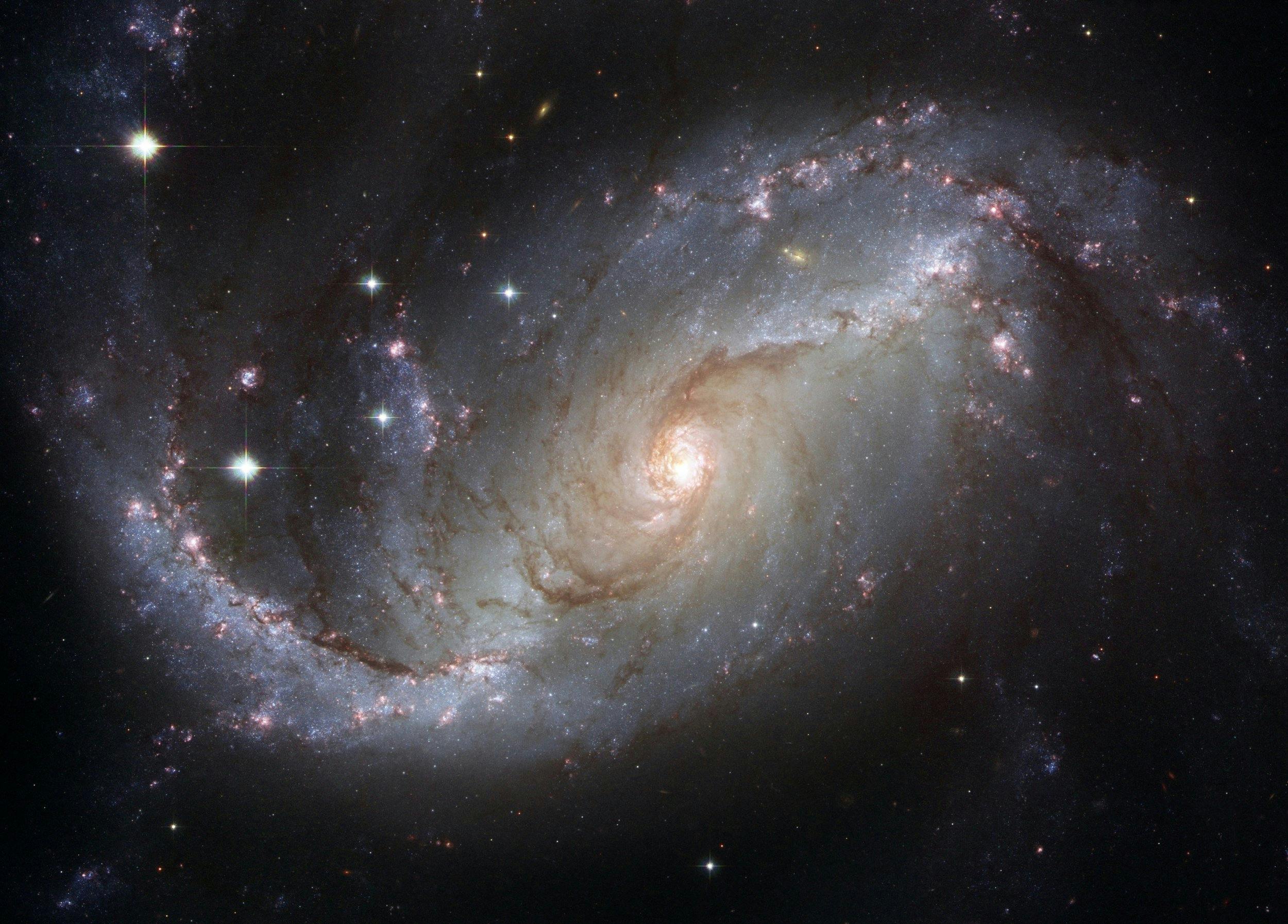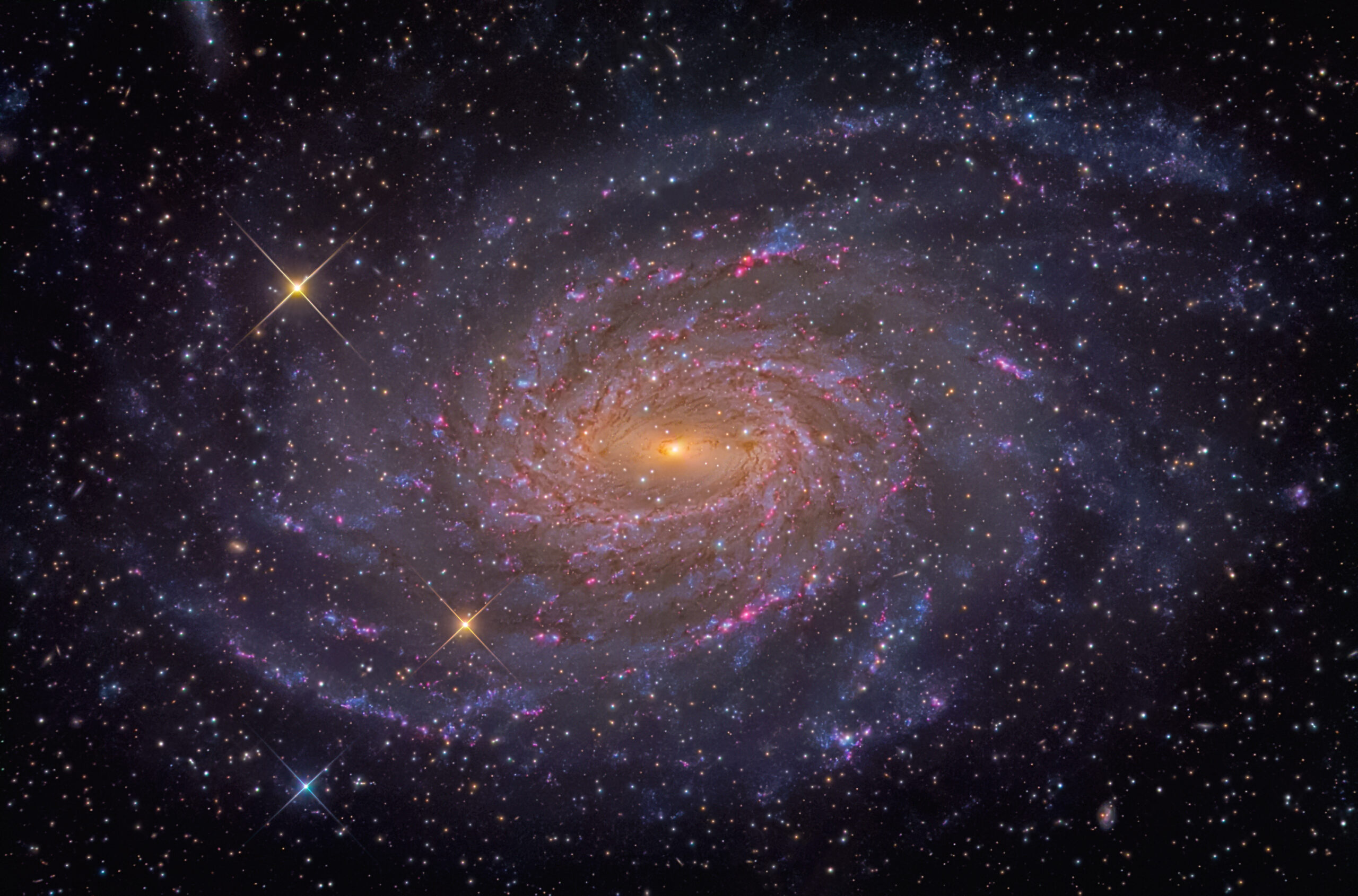
Look up at the night sky. Those tiny, twinkling pinpricks of light aren’t just beautiful ornaments—they are distant suns, titanic furnaces of nuclear fusion, and the very architects of existence. Every atom in your body, from the calcium in your bones to the iron in your blood, was forged in the heart of a star that lived and died long before our Sun was a glimmer in the cosmos. But where do these colossal engines of light and life come from? How does a star, like our own Sun, come to be?
The story of star formation is the ultimate cosmic phoenix tale. It’s a saga of chaos and collapse, of immense clouds giving birth to brilliant light, and of the delicate balance between gravity’s relentless pull and the fierce resistance of heat and pressure. It’s happening right now, in the hidden corners of our galaxy, a process as old as time itself. Let’s embark on a journey to understand this magnificent celestial ballet.
The Stellar Nursery: Not All Clouds Bring Rain
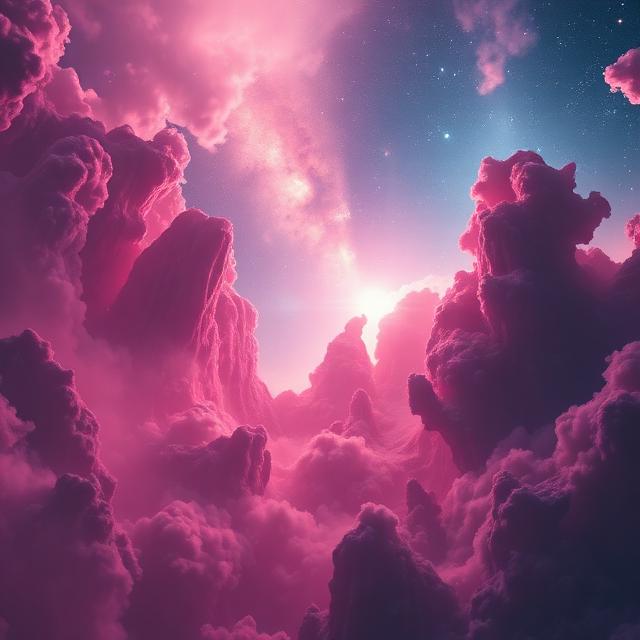
Before a star can shine, it needs a womb. This womb isn’t a place of serene quiet, but a turbulent, dark, and frigid expanse called a molecular cloud, or more poetically, a nebula (Latin for “cloud”).
Imagine a cloud so vast it could swallow our entire solar system a thousand times over. Now imagine it’s not made of water vapor, but of gas—primarily hydrogen (the universe’s simplest and most abundant element)—and fine, dusty grains of silicates and carbon compounds. This is the raw material of stars. The “molecular” part is key: here, atoms bind together into molecules, most importantly molecular hydrogen (H₂).
These clouds are spectacularly cold, hovering just 10-20 degrees above absolute zero (-263°C / -441°F). This chill is vital. In the physics of star birth, cold is the catalyst. Cold gas has very low pressure. Why does that matter? Because the force that initiates star formation is gravity, and gravity’s main opponent is internal pressure. Think of it like this: a hot air balloon stays aloft because the heated air inside has higher pressure than the cooler air outside, pushing against gravity. In a cold molecular cloud, the pressure is minimal, giving gravity the upper hand.
But these nebulae aren’t just sitting idle. They are dynamic structures, laced with filaments, knots, and caverns. They are also incredibly diffuse. Even the densest parts of a nebula are a vacuum far more perfect than any we can create on Earth. A teaspoon of air at sea level contains about 10¹⁹ molecules. A teaspoon of a stellar nursery? Maybe a few thousand.
So, how does this near-nothingness collapse into a dense, blazing star? It needs a trigger.
The Triggers of Birth: A Gentle Nudge from Chaos
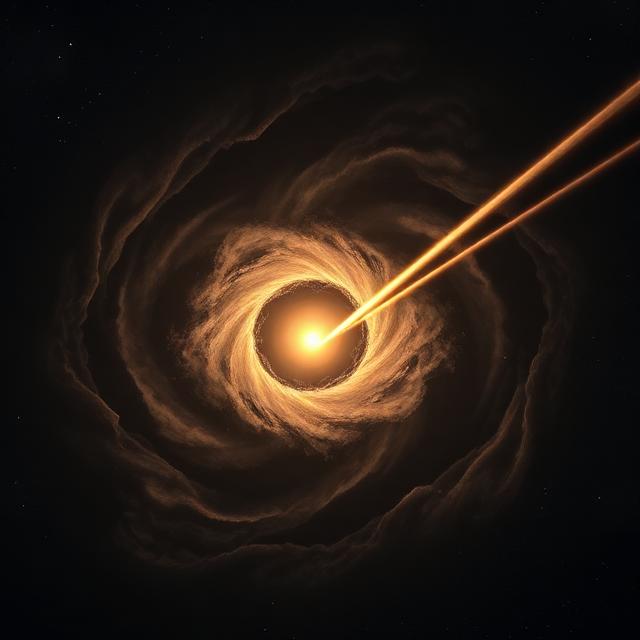
A stable molecular cloud can drift for millions of years. To begin the process of star formation, it needs a triggering event—a cosmic nudge that compresses a region of the cloud, increasing its density just enough for gravity to take over. These triggers are the dramatic forces that shape our galaxy:
- The Shockwave of a Supernova: The death of a massive star is the ultimate act of creative destruction. A supernova explosion sends a cataclysmic shockwave rippling through space at thousands of kilometers per second. When this wave slams into a nearby molecular cloud, it can crush vast regions, triggering the birth of a new generation of stars. We are, in a very real sense, children of stardust.
- Galactic Collisions: When galaxies merge, it’s a slow-motion, billion-year fireworks display. The collision doesn’t involve stars hitting each other (space is too empty), but their immense gravitational fields churn and compress the giant gas clouds within them, sparking frenzies of star formation called starbursts.
- The Pressure of Spiral Arms: Our Milky Way is a spiral galaxy. As clouds orbit the galactic center, they periodically pass through the dense spiral arms. This passage acts like a traffic compression, squeezing the clouds and often initiating collapse.
- The Winds from Massive Stars: Even before they die as supernovae, the most massive stars are violent neighbors. They flood their surroundings with intense radiation and powerful stellar winds. This can erode nearby clouds, but it can also compress their outer layers, triggering star formation on their peripheries—a process called “triggered star formation.”
Once triggered, the dance between gravity and pressure begins in earnest.
The Pillars of Creation: A Step-by-Step Journey to Stardom
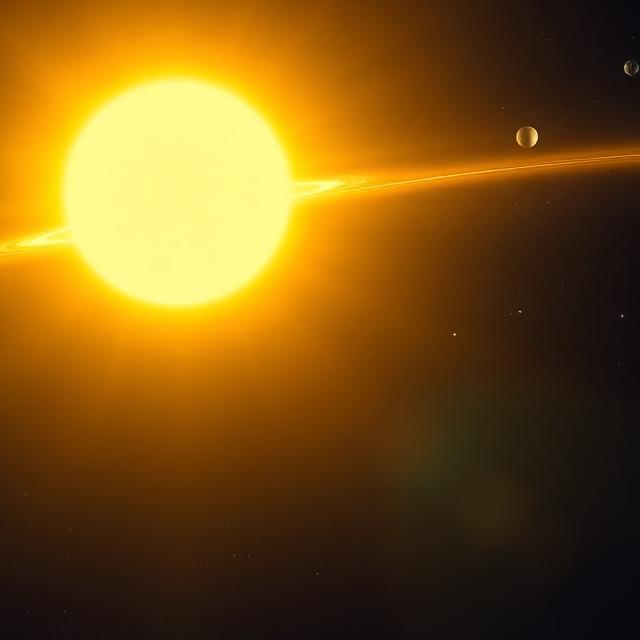
Let’s follow the life of one typical star, not unlike our Sun, from its humble beginnings in the nebula to its main-sequence adulthood.
Stage 1: The Collapse – Gravity Takes the Throne
The triggered region of the cloud, now called a dense core, begins to contract under its own weight. As it shrinks, it fragments. A giant molecular cloud doesn’t collapse into one giant star; it shatters into hundreds or thousands of clumps, each destined to become a star or a binary star system. This is why stars are almost always born in clusters.
As a clump collapses, the gravitational energy it releases is converted into heat. The core heats up. However, at this early stage, the cloud is still transparent enough for this heat to escape as infrared radiation. This allows the collapse to continue. For about 100,000 years, the protostar (a term we’ll use soon) has been in a state of free-fall collapse.
Stage 2: The Protostar – A Hidden Inferno
When the dense core becomes sufficiently opaque, trapping its heat, the central object is officially called a protostar. It is not yet a true star—no fusion is taking place at its core. It shines solely from the heat of contraction, the same way a contracting gas heats up (a principle known as the Kelvin-Helmholtz mechanism).
The protostar is now hidden deep within a cocoon of gas and dust, accreting more material from a surrounding accretion disk. This disk is a flat, spinning pancake of material that couldn’t fall directly onto the protostar due to the conservation of angular momentum (the same reason why an ice skater spins faster when they pull their arms in). From this disk, planets will eventually form.
Material from the disk rains down onto the protostar at its poles, often creating powerful, focused jets of gas called bipolar outflows. These jets, traveling at supersonic speeds, can stretch for light-years, punching through the surrounding cloud and clearing away the protostar’s gaseous womb. They are a telltale sign of active star formation, visible to radio telescopes.
Stage 3: The T-Tauri Phase – The Stormy Adolescent Years
As the protostar continues to contract and clear its surroundings, it enters the T-Tauri phase (named after the prototype star in the constellation Taurus). This is stellar adolescence: violent, moody, and highly active.
A T-Tauri star:
- Has a surface temperature similar to a main-sequence star but is much larger and more luminous.
- It is highly variable and irregular in its brightness.
- Possesses extremely powerful stellar winds.
- Has a furious magnetic field that drives intense surface activity, including starspots hundreds of times larger than sunspots.
This phase lasts about 100 million years for a sun-like star. The powerful winds finally blow away the remaining envelope of gas, revealing the young star. What’s left is a pre-main-sequence star, still contracting, still heating up, but about to cross the most important threshold in its life.
Stage 4: Ignition! – The Main Sequence Begins
Deep in the core, the temperature and pressure have been climbing relentlessly. For a star like our Sun, the magic number is about 15 million Kelvin.
At this unimaginable temperature and pressure, hydrogen atoms, stripped of their electrons to form a plasma, are moving so furiously that they overcome their natural electromagnetic repulsion. They begin to slam into each other and fuse, in a multi-step process, to form helium.
This is nuclear fusion. In this process, a tiny amount of mass is converted into a colossal amount of energy, as described by Einstein’s famous equation, E=mc². For the first time, the star generates its own energy from within. The outward pressure from this thermonuclear furnace finally balances the inward, crushing force of gravity.
Hydrostatic equilibrium is achieved. The star stabilizes. Contraction halts.
The star has arrived on the Main Sequence—the long, stable, adult phase of its life where it will spend roughly 90% of its existence. Our Sun has been on the Main Sequence for 4.6 billion years and has another 5 billion or so to go.
Not All Stars Are Created Equal: The Stellar Spectrum
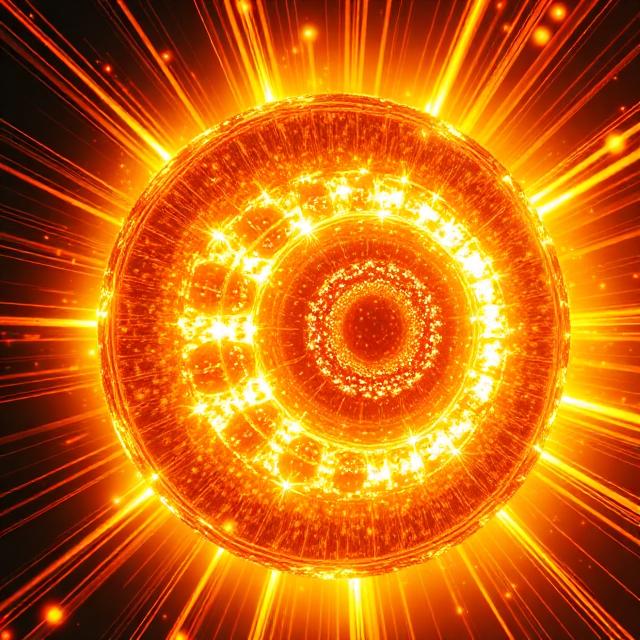
The story above describes a star like our Sun. But stars come in a breathtaking variety. What determines whether a collapsing cloud becomes a red dwarf, a blue giant, or something in between?
The key factor is mass. The initial mass of the collapsing core dictates everything:
- Luminosity: A star’s brightness scales with mass to an immense power (L ~ M³.⁵). A star twice the Sun’s mass isn’t twice as bright; it’s over ten times brighter.
- Temperature & Color: More massive stars have fiercer fusion in their cores, making their surfaces hotter. Hotter stars glow blue/white (like Sirius). Cooler stars glow red/orange (like Betelgeuse). Our yellow Sun is in the middle.
- Lifespan: This is the cosmic irony: the biggest, brightest stars live the shortest lives. A monster star with 20 times the Sun’s mass burns its fuel with such profligate brilliance that it may last only 10 million years—a cosmic blink. A humble red dwarf, with a tenth of the Sun’s mass, sips its hydrogen fuel so slowly it can shine for trillions of years, far longer than the current age of the universe.
The Stellar Zoo: From Red Dwarfs to Blue Giants
Let’s meet the family, categorized by the mass of the initial collapsing core:
- The Red Dwarfs (M-type, < 0.5 Solar Masses): The universe’s silent majority. They make up about 75% of all stars. Dim, cool, and incredibly long-lived, they burn steadily for trillions of years. Their formation process is slower and quieter.
- The Sun-Like Stars (G-type, 0.5 – 1.5 Solar Masses): Our Sun’s class. Stable, long-lived main-sequence stars that forge heavier elements in their cores. The ideal candidates for potentially hosting life-bearing planets.
- The Massive Stars (B & O-type, > 1.5 Solar Masses): The rock stars of the cosmos. Born from the largest, most turbulent cores, they live fast and die young. Their formation is a more violent, rapid process, often accompanied by fierce radiation that can inhibit star formation nearby or trigger it in surrounding shells. They end their lives in spectacular supernovae.
- The Failed Stars: Brown Dwarfs: What happens if a collapsing core doesn’t have quite enough mass (less than about 0.08 Solar Masses) to reach the 15 million Kelvin needed for sustained hydrogen fusion? You get a brown dwarf. It may briefly fuse deuterium (a heavy isotope of hydrogen), but it primarily glows from the heat of its initial contraction, slowly fading over billions of years. It is the celestial in-between—not a planet, not quite a star.
The Legacy of Star Birth: Building Planetary Systems and Life
Star formation is never a solo act. The same accretion disk that feeds the protostar becomes the construction site for planets—a protoplanetary disk.
The dust grains in this disk begin to stick together in a process called accretion, forming pebbles, then planetesimals, and finally, planets. The fierce stellar wind from the young star blows away the remaining light gases (hydrogen and helium), determining what kind of planets form. Close to the star, only rocky, metallic worlds can coalesce (the terrestrial planets). Farther out, where it’s colder, ice and gas can remain, allowing gas giants and ice giants to form.
This means that planet formation is a direct byproduct of star formation. Every star we see likely has at least some planetary companions. Our solar system is just one example of this universal architecture.
Furthermore, the violent deaths of massive stars (supernovae) and the steady winds from aging mid-sized stars enrich the interstellar medium with heavier elements—carbon, oxygen, nitrogen, iron, and gold. These elements, forged in stellar cores and scattered by stellar deaths, become part of the next generation of molecular clouds, stars, and planets. The iron in your blood, the oxygen you breathe, the calcium in your bones—all were made inside stars. We are, quite literally, star stuff contemplating the stars.
Observing the Invisible: How We Peer Into Stellar Nurseries
The most active stellar nurseries are hidden from optical telescopes by the very dust that creates them. So how do astronomers study star formation? They use light that can pierce the dust:
- Infrared Telescopes (like Spitzer and JWST): Dust absorbs visible light and re-radiates it as infrared heat. IR telescopes can see the warm glow of protostars still embedded in their cocoons and the detailed structures of nebulae. The James Webb Space Telescope is revolutionizing this field with its stunning, high-resolution infrared images.
- Radio Telescopes (like ALMA): Molecules in cold clouds, like carbon monoxide (CO), emit specific radio wavelengths. Radio telescopes can map the structure, density, and motion of gas in molecular clouds in incredible detail, revealing the filaments and cores where stars are beginning to form.
- Submillimeter Astronomy: This wavelength band, between infrared and radio, is perfect for studying the coldest dust (just a few degrees above absolute zero) in star-forming regions.
By combining data from across the electromagnetic spectrum, astronomers can create a complete, dynamic picture of stellar birth.
The Human Connection: Why Star Formation Matters to Us
Understanding star formation isn’t just an academic exercise. It connects to the deepest questions about our existence:
- Our Origins: It tells the story of how our Sun and our planet came to be, placing us within a grand, cosmic cycle of matter.
- The Prevalence of Life: By studying how stars and their planetary systems form, we can better estimate how many Earth-like worlds might exist in our galaxy, informing the search for extraterrestrial life.
- The Fate of the Universe: Star formation rates have changed over the 13.8-billion-year history of the cosmos. They will eventually decline as raw material is used up. Studying star formation helps us predict the long-term future of galaxies like our Milky Way.
Conclusion: An Eternal, Chaotic Dance
Star formation is the heartbeat of a dynamic universe. It is a process of breathtaking beauty and violent physics, where cold darkness gives way to radiant light. It is a story of recycling on a galactic scale, where the ashes of dead stars become the cradles for new ones, and where the elements of life are forged in furnaces of unimaginable power.
The next time you gaze at the Orion Nebula—a visible stellar nursery—or simply look up at the stars, remember: you are witnessing an ongoing creation. You are seeing suns in their infancy, maturity, and old age. You are connected to them by the very atoms that compose you. In understanding how stars are born, we ultimately learn more about our own place in this vast, wondrous, and ever-changing cosmos.
FAQ: Your Star Formation Questions, Answered
Q: Can we watch a star being born in real time?
A: Not in a human lifetime! The process takes hundreds of thousands to millions of years. However, by observing many different regions, we see all the stages—from dense cores to T-Tauri stars—like a cosmic flip-book, allowing us to reconstruct the sequence.
Q: Is our Sun still forming?
A: No. Our Sun is a stable, middle-aged main-sequence star. Its formation was complete about 4.6 billion years ago. It is now in the long, steady phase of fusing hydrogen into helium.
Q: Are new stars still forming in the Milky Way?
A: Absolutely! While the peak of star formation in the universe was billions of years ago, our galaxy still has abundant molecular gas. Active star-forming regions include the Orion Nebula, the Carina Nebula, and the Rho Ophiuchi cloud complex.
Q: What’s the smallest/biggest star possible?
A: The smallest true star is about 7.5% the mass of our Sun (a red dwarf). Below that, you get brown dwarfs. The theoretical upper limit is around 150-200 solar masses. Above this, the radiation pressure from the furious fusion is so strong that it blows away the accreting material, preventing further growth.
Q: How does star formation end for a galaxy?
A: As a galaxy uses up its interstellar gas to form stars, and as older stars lock material away, the star formation rate will gradually decline. Galaxies can also be “quenched” by having their gas stripped away in collisions or by the heating effects of a supermassive black hole. Eventually, galaxies will become dominated by long-lived, dim red dwarfs and stellar remnants.