

Introduction

Have you ever been in the middle of a crucial video call only for your screen to freeze? Or tried to stream a movie in a rural area, only to be greeted by the endless buffering wheel? For millions of people, slow, unreliable, or just plain non-existent internet isn’t a minor annoyance—it’s a daily reality.
But what if you could get high-speed internet beamed directly from space, capable of reaching the most remote corners of the globe? That’s the revolutionary promise of Starlink satellites, an ambitious project that’s literally changing our skyline and our connectivity.
Spearheaded by Elon Musk’s SpaceX, Starlink is a growing constellation of thousands of small satellites working in concert to deliver broadband-level internet across the planet. It’s a game-changer for digital nomads, rural homeowners, and entire communities left behind by the digital divide. Yet, this bright promise also casts a shadow, sparking debates among astronomers, scientists, and space regulators.
Whether you’re curious, concerned, or ready to buy, this ultimate guide will demystify everything you need to know about Starlink satellites. We’ll explore how they work, what they cost, the very real benefits, and the significant challenges they present. Let’s dive in.
What Are Starlink Satellites? (It’s Not Sci-Fi Anymore)
At its core, the concept is simple: Starlink satellites form a mega-constellation of small, low-cost units orbiting the Earth to create a massive, space-based wireless network.
Think of it like this: instead of relying on a few large, expensive satellites sitting far out in space (which results in laggy internet), Starlink uses thousands of small satellites flying much closer to home. This “strength in numbers” approach is the key to its success.
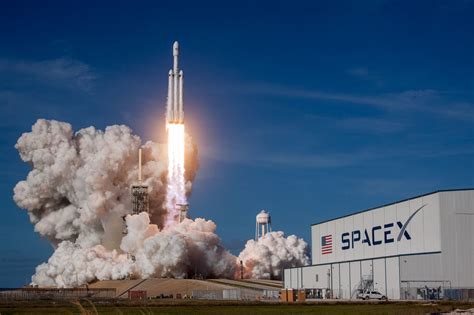
- The Mastermind: The project is developed by SpaceX, which leverages its rocket reusability to launch these satellites frequently and cost-effectively.
- The Grand Vision: The primary goal is to provide high-speed, low-latency internet to every inch of the planet, bridging the gap for the estimated 3 billion people who still lack reliable access.
- The Key Differentiator: Low-Earth Orbit (LEO). Traditional satellite internet from providers like HughesNet uses geostationary satellites that orbit at about 35,786 km (22,236 miles). This vast distance creates high latency, often over 600 milliseconds, making real-time activities like online gaming or video calls nearly impossible. Starlink satellites, by contrast, orbit at a much lower altitude of around 550 km, slashing latency down to a ground-like 20-40 milliseconds.
How Do Starlink Satellites Work? The Magic Behind the Dish
The technology might seem like magic, but it’s a marvel of modern engineering that can be broken down into three simple components.
1. The Satellites Themselves: Smarter Than Your Average Satellite
Each flat-panel Starlink satellite is roughly the size of a table and weighs about 300 kg. But don’t let their small size fool you; they’re packed with advanced tech:
- Ion Thrusters: These use krypton gas to efficiently maneuver the satellite into its correct orbit, maintain its position, and guide it down for a controlled de-orbit at the end of its life.
- Inter-Satellite Lasers (Gen2): The latest satellites feature laser links that allow them to talk to each other directly in space. This means data can be routed between satellites without needing to go to a ground station first, which is crucial for covering oceans and polar regions and speeding up global connectivity.
- Autonomous Collision Avoidance: They use data from the U.S. Department of Defense to automatically maneuver out of the way of other satellites or space debris, a critical feature for managing such a crowded orbit.
- Sunshades (VisorSat): To address brightness concerns, newer satellites are equipped with sunshades to reduce their reflectivity.
2. The User Terminal: Affectionately Known as “Dishy”
This is the part you interact with. The Starlink dish is a sleek, modern-looking piece of hardware that you set up at your home, on your RV, or on your boat. It’s a phased-array antenna, meaning it can electronically steer its signal toward moving satellites without any physical moving parts. This is why it can find a signal so quickly and maintain a stable connection. The setup is famously simple: point it at the sky, plug it in.
3. The Ground Stations: The Earth-Bound Bridges
Formally known as Gateways, these are ground stations positioned around the world. They are the critical link between the Starlink satellite constellation and the traditional, terrestrial internet. They send and receive signals from the satellites and connect them to the global internet backbone.
The User Journey in a Nutshell:
Let’s say you click a link to watch a YouTube video.
- The request travels from your computer to your Starlink dish (“Dishy”).
- Dishy beams the signal up to the nearest Starlink satellite flying overhead.
- That satellite sends the signal down to the nearest ground station.
- The ground station fetches the video from the internet.
- The process reverses, sending the video data back up to a satellite, down to your dish, and onto your screen—all in the blink of an eye.
The Benefits: Why Starlink is a Legitimate Game-Changer
The hype around Starlink is real, and for good reason. It’s solving problems that have plagued users for decades.
- High-Speed Internet Anywhere: This is the headline feature. If you have a clear view of the sky, you can get internet. This is transformative for rural homes, farms, and cabins that were previously stuck with dial-up or expensive, capped cellular plans.
- Low Latency for Real-Time Applications: With ping times rivaling terrestrial broadband, activities once impossible on satellite internet—like competitive online gaming, smooth Zoom calls, and live streaming—are now perfectly viable.
- Remarkably Easy Setup: The “it just works” factor is huge. There are no contracts, and for most residential users, no technician visit is required. The app guides you to find the best spot for your dish, and it does the rest.
- Global and Mobile Connectivity: Beyond fixed homes, Starlink offers specific plans for mobility. The RV plan keeps travelers connected on the road, the Maritime plan serves ships at sea, and the Aviation plan is bringing high-speed Wi-Fi to commercial and private jets.
- Disaster Response and Resilience: When hurricanes, wildfires, or other disasters destroy ground-based infrastructure, Starlink can be deployed rapidly to provide critical communication links for first responders and affected communities.
The Challenges and Controversies: The Other Side of the Coin
No transformative technology arrives without complications, and Starlink has generated significant debate.
The Astronomy Problem: A Clouded View of the Cosmos
This is arguably the most publicized issue.
- Brightness: After launch, satellites are initially very bright as they travel in a “train” to their operational orbit. This can photobomb telescope images and disrupt the work of both professional and amateur astronomers.
- Radio Interference: The radio frequencies Starlink uses can interfere with the sensitive instruments of radio telescopes, which listen for faint signals from the depths of the universe.
- SpaceX’s Mitigation Efforts: SpaceX has been responsive. They’ve developed “DarkSats” with special anti-reflective coatings, “VisorSats” with sunshades to block sunlight from hitting the brightest parts, and are working with astronomical organizations to minimize impact.
Space Debris Concerns: Cluttering the Final Frontier
With plans to launch up to 42,000 satellites, the fear of Kessler Syndrome—a cascade of collisions creating an impassable field of space debris—is real.
- Collision Risk: Every new object in orbit increases the risk of a catastrophic collision.
- Proactive De-orbiting: Starlink satellites are designed to be fully demisable. At the end of their 5-7 year life, they use their thrusters to steer into Earth’s atmosphere, where they safely burn up. Their autonomous collision avoidance system is also a critical safety feature.
The Cost: A Premium for Premium Access
While prices have stabilized, Starlink is more expensive than many urban broadband options. The initial equipment cost of nearly $600 and a monthly fee of around $120 is a significant barrier for some, though the value is undeniable for those with no other options.
Weather Sensitivity: The “Rain Fade” Factor
Like all satellite signals, Starlink can be temporarily disrupted by extreme weather conditions, particularly heavy rain, snow, or thunderstorms. The system is generally robust, but it’s not immune to Mother Nature.
Starlink for You: Plans, Cost, and Getting Set Up
So, you’re interested in getting Starlink? Here’s the practical lowdown.
Available Service Tiers:
- Standard (Residential): The standard plan for homes.
- Starlink Roam (Mobile/RV): For travelers. It’s more flexible but may have lower priority in congested areas.
- Priority (Business): Offers higher speeds and more data for business users at a premium price.
- Maritime & Aviation: Specialized, high-performance plans for vessels and aircraft.
Breaking Down the Cost (as of 2024):
- Equipment Fee: A one-time cost of $599 for the standard kit (dish, router, cables).
- Monthly Service Fee: $120 for Standard residential service. Mobile and Business plans are more expensive.
Understanding the Starlink Coverage Map
Coverage is not yet universal. The service is continuously expanding, but it relies on having enough satellites overhead to handle user capacity. The official Starlink coverage map shows real-time availability. While much of North America, Europe, and Australia are well-covered, it’s crucial to check your specific address on their website before ordering, as some cells may be waitlisted.
The Setup Process is a Breeze:
- Order: Go to Starlink.com, enter your service address, and pay.
- Receive the Kit: Your kit arrives in a box with everything you need.
- Download the App: Use the Starlink app to find an obstruction-free location.
- Place and Plug In: Set up the dish, route the cable, and plug in the router. The dish will automatically orient itself and connect. Within minutes, you’re online.
Starlink vs. The Competition: How Does It Stack Up?
Is Starlink your only option? Here’s a quick comparison.
- vs. Traditional Satellite (HughesNet/Viasat): Starlink wins, hands down. The low latency of LEO makes it incomparable for any real-time activity. Traditional satellite internet feels slow and laggy in comparison.
- vs. 5G Home Internet: It depends on location. If you have robust 5G in your city, it might be cheaper and just as fast. But 5G’s range is limited. Starlink’s advantage is its ability to serve a farm 50 miles from the nearest cell tower with similar performance.
- vs. Fiber-Optic Internet: Fiber is still the gold standard. If you can get a fiber connection, it will typically be faster, more reliable, and cheaper than Starlink. Starlink’s purpose is not to beat fiber in cities, but to provide a “fiber-like” experience where fiber will never be laid.
The Future of Starlink: What’s Next?
The constellation is still in its relative infancy. What can we expect next?
- Massive Scale: Regulatory approvals are in place for up to 12,000 satellites, with requests for another 30,000 on file. The sky will get busier.
- Gen2 Satellites: The next generation will be larger and more powerful, leveraging SpaceX’s Starship rocket for launch. They will have more advanced laser links and greater capacity.
- True Global Mobility: Expect seamless, high-speed internet to become standard in vehicles, from RVs to commercial trucks and even personal cars.
- Regulatory Hurdles: Gaining approval to operate and land ground stations in every country will be a long and complex diplomatic process.
Frequently Asked Questions (FAQ)
Q: How much does Starlink cost per month?
A: The standard residential service is $120 per month, plus a one-time hardware cost of $599.
Q: Can I use Starlink for online gaming?
A: Yes! This is one of Starlink’s biggest advantages over old satellite internet. With latency often between 20 and 40 ms, gaming is a smooth and enjoyable experience.
Q: Is there a data cap on Starlink?
A: For most residential users in the US, there is no hard data cap. However, Starlink employs “Fair Use” policies. During times of network congestion, users who exceed 1 TB of Priority Data in a month may experience slower speeds than other users. Mobile Priority and Business plans have specific data allowances.
Q: How do I order Starlink?
A: Go directly to the official website, Starlink.com. Enter your address to check availability and place your order.
Q: Why do I see Starlink satellites in a “train”?
A: You see this shortly after launch. The satellites are deployed from the rocket in a group and then use their ion thrusters to slowly spread out and climb to their final operational orbits over several weeks.
Q: Is Starlink better than fiber?
A: If you have the option for fiber, it’s generally the more stable and potentially faster choice. Starlink is better than fiber only if fiber is not available at your location.
Q: How fast is Starlink internet?
A: Users typically see download speeds between 50-200 Mbps and upload speeds of 10-20 Mbps. Speeds can vary based on network congestion and your location.
Conclusion: The Final Verdict
Starlink satellites represent a paradigm shift in global connectivity. They are not a perfect solution, but they are a profoundly powerful one. The trade-offs are clear: you gain incredible, life-changing access to high-speed internet in exchange for a higher cost and the ongoing environmental concerns surrounding space and astronomy.
For urban dwellers with multiple broadband options, Starlink might be an interesting curiosity. But for its target audience—the rural homeowner, the adventurous traveler, the developing community—it is nothing short of a revolution. It is closing the digital divide one satellite at a time.
Despite the challenges, the genie is out of the bottle. The future of the internet is becoming multi-layered, with fiber on the ground and constellations in the sky. Starlink is leading that charge, and its journey is just beginning.

Very good study material