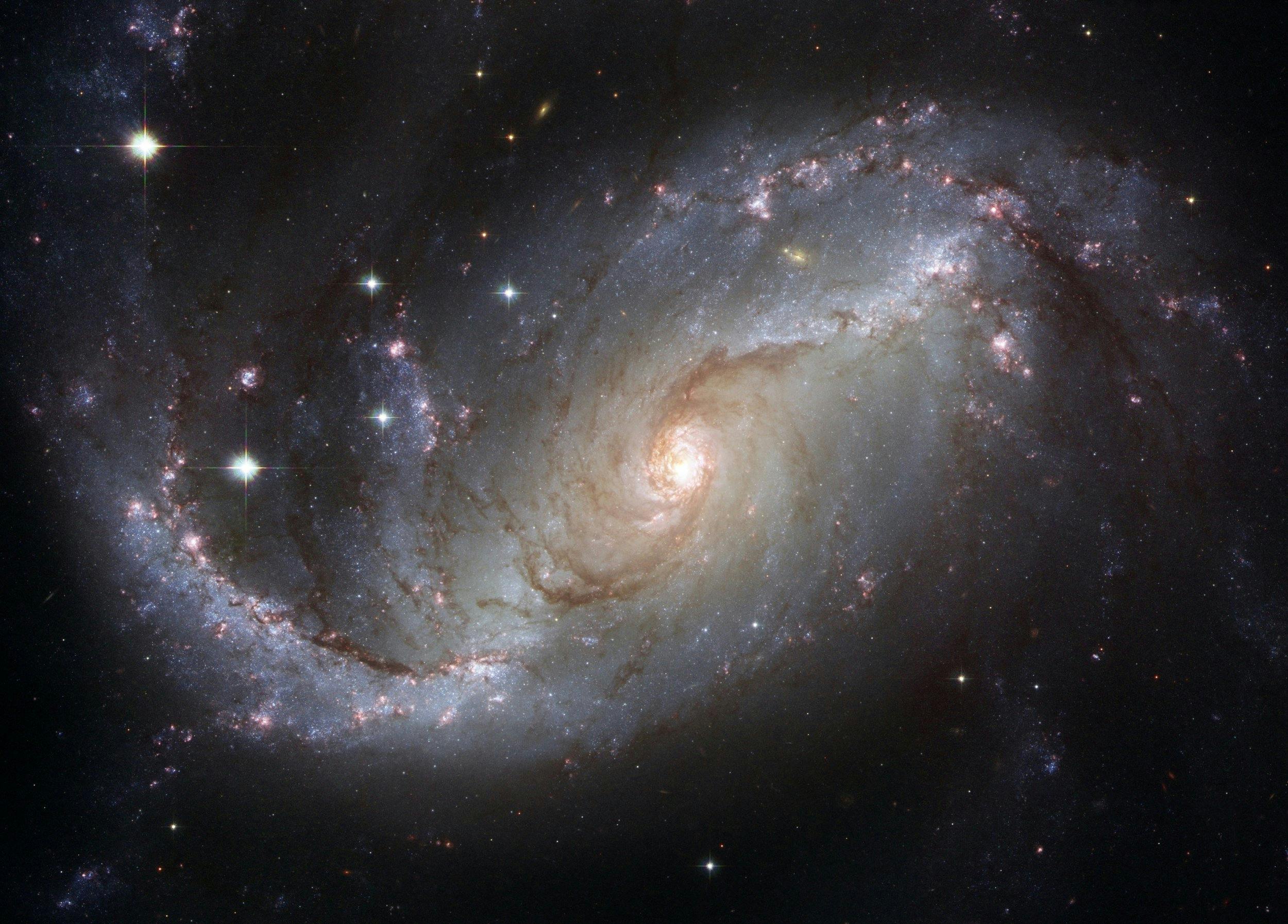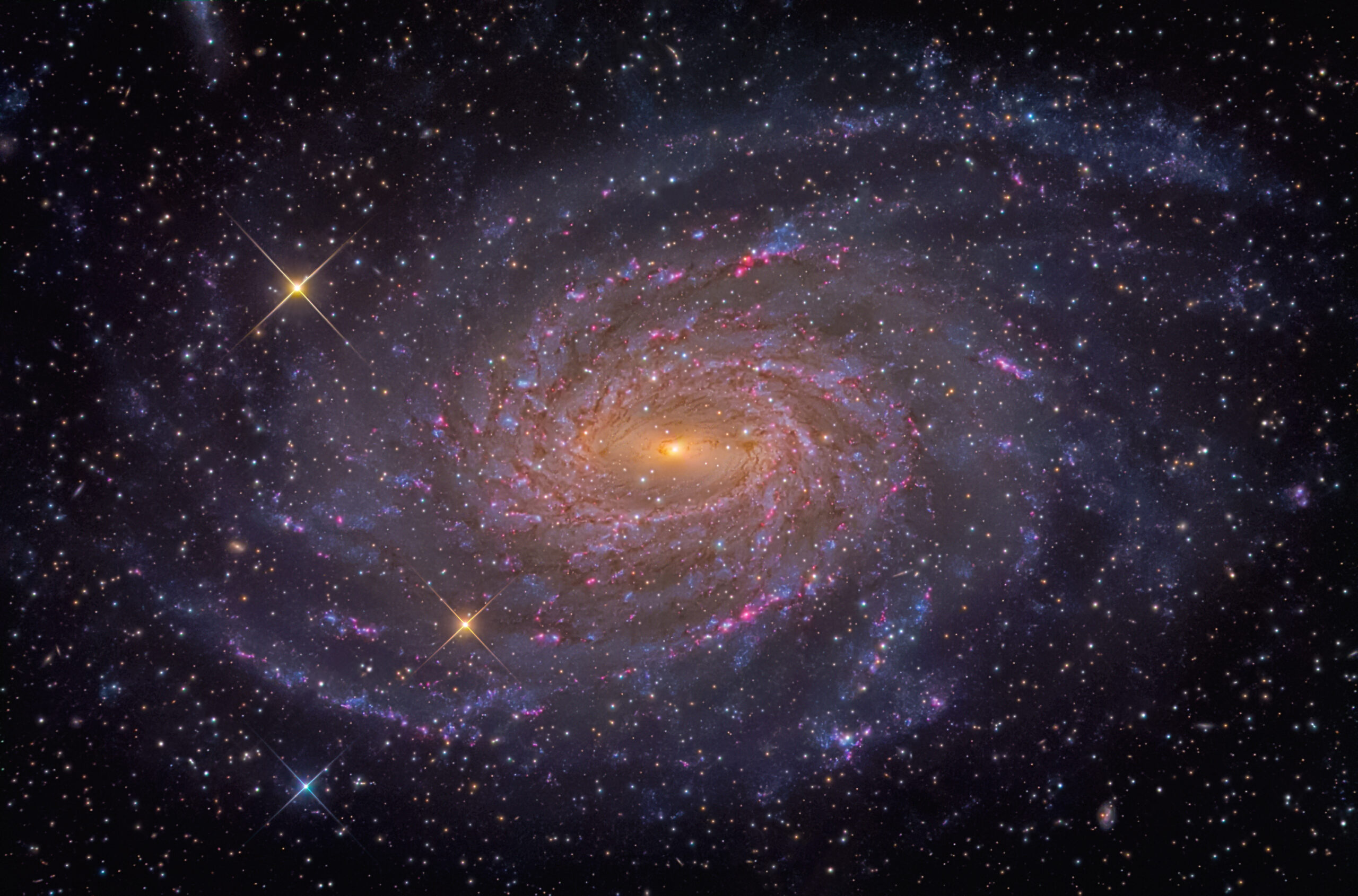
Look up at the night sky. What do you see? A scattering of twinkling, distant lights? A beautiful, but silent, backdrop to our lives? I invite you to see it differently. See it as a grand, dynamic, and ever-changing canvas. Each of those points of light is a sun, a massive nuclear furnace with its own story of fire, struggle, and legacy. The life and death of a star is the most epic story the universe tells, a saga spanning billions of years that is intimately connected to our own existence.
We are made of stardust. The iron in your blood, the calcium in your bones, the oxygen you breathe—all were forged in the heart of a long-dead star. Understanding the stellar life cycle isn’t just astronomy; it’s a quest to understand our own cosmic origins.
So, let’s pull up a chair and witness the ultimate biography: the birth, life, and death of a star.
Part 1: The Cosmic Cradle – A Star is Born
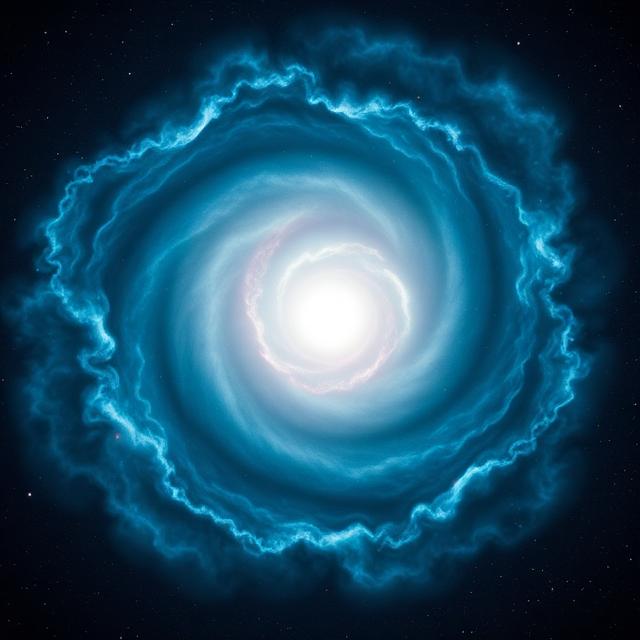
Every great story needs a beginning. For a star, it begins not with a bang, but with a slow, graceful collapse in the darkest, coldest corners of the universe.
The Stellar Nursery: Nebulae
Imagine a vast, swirling cloud of gas and dust, light-years across. This is a nebula (often called a “stellar nursery”), the cradle of stars. These clouds are primarily composed of hydrogen and helium, the universe’s simplest and most abundant elements, left over from the Big Bang. They are ethereal and beautiful, but also incredibly fragile.
For a star to be born, this cloud needs to collapse. This can be triggered by different events:
- The shockwave from a nearby supernova explosion.
- The gravitational pull of a passing star.
- The natural, slow churning and clumping within the cloud itself.
As gravity begins to overpower the gas pressure, a small knot within the nebula starts to contract. It pulls in more and more material, growing denser and hotter. This collapsing cloud fragments into smaller clumps, each destined to become a star.
The Protostar: A Flickering Ember
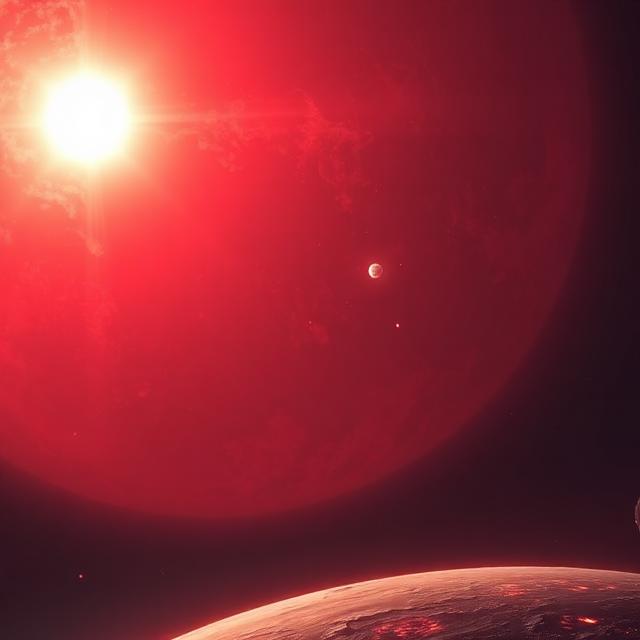
What was once a diffuse cloud is now a spinning, heated ball of gas known as a protostar. It’s not yet a true star—no nuclear fires are burning. It glows from the immense heat generated by the gravitational energy of its own collapse. Material continues to rain down onto it from a surrounding disk of gas and dust, a disk that may one day form planets.
This stage is a cosmic tug-of-war. Gravity is pulling everything inward, while the increasing heat and pressure inside the protostar are pushing outward. For hundreds of thousands of years, this battle rages.
Ignition! The Main Sequence Begins
The core of the protostar is getting hotter and denser. Eventually, it reaches a critical temperature of about 15 million degrees Celsius. At this unimaginable heat, the pressure is so immense that hydrogen atoms, which normally repel each other, are forced to collide and fuse.
This process is called nuclear fusion.
In the star’s core, hydrogen nuclei (single protons) smash together to form helium. This reaction releases a colossal amount of energy in the form of light and heat. This energy radiating outward finally balances the relentless pull of gravity inward.
Hydrostatic Equilibrium is achieved. The star stops contracting. It has officially been born and has taken its place on what astronomers call the Main Sequence.
This is the adult, stable phase of a star’s life. It will spend the vast majority of its existence here, quietly and steadily burning its hydrogen fuel. But just like people, not all stars are created equal. Their mass at birth dictates their entire life story, from their personality to their ultimate demise.
Part 2: The Prime of Life – A Delicate Balance
A star on the Main Sequence is a model of cosmic stability. For millions, billions, or even trillions of years, it performs a perfect balancing act. The energy from fusion pushes out, and gravity pulls in. This stalemate is what gives a star its stable size and luminosity.
But this is where the paths diverge. A star’s mass is its destiny.
Low-Mass Stars: The Long, Slow Burn
Think of our Sun, a yellow dwarf. It’s a very average, medium-small star. It’s been on the Main Sequence for about 4.6 billion years and has enough hydrogen fuel to continue for another 5 billion or so. These stars are the marathon runners of the cosmos—slow, steady, and incredibly long-lived.
Smaller still are red dwarfs. These are the most common stars in the universe, making up about 75% of all stars. They are so small and frugal with their fuel that they can remain on the Main Sequence for trillions of years. The universe isn’t even old enough for a single red dwarf to have died of old age!
High-Mass Stars: Live Fast, Die Young
Now, imagine a star many times more massive than our Sun—a blue giant like Rigel in the constellation Orion. These are the rock stars of the galaxy. They are spectacularly bright, burning through their hydrogen fuel at a prodigious rate.
A star ten times the mass of the Sun might shine millions of times brighter. But this extravagance comes at a cost. While our Sun will live for 10 billion years, a massive star might exhaust its core hydrogen in just 10-20 million years—a cosmic blink of an eye.
Their high mass creates immense pressure and temperature in their cores, accelerating fusion to a furious pace. They live fast, shine bright, and are destined for a spectacular end.
Part 3: The Final Act – The Death of a Star
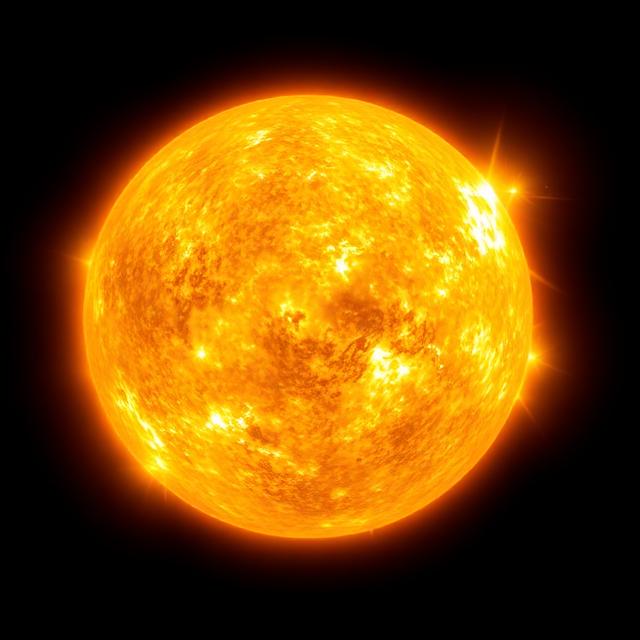
No star can burn hydrogen forever. Eventually, the fuel in the core runs out. This is the beginning of the end, and the star’s final act is entirely determined, once again, by its mass.
The Death of a Sun-Like Star
Let’s follow the fate of a star like our own Sun.
1. The Red Giant Phase:
When the hydrogen in the core is depleted, fusion stops. Without the outward push from fusion, gravity wins again, and the core begins to contract. This contraction heats up the core even more, but not enough to fuse helium yet. However, it gets so hot that a shell of hydrogen around the core ignites and starts fusing.
This new, intense shell fusion releases a massive amount of energy, causing the star’s outer layers to expand dramatically. The star swells to hundreds of times its original size, becoming a Red Giant. If this were our Sun, its outer layers would engulf the orbits of Mercury, Venus, and possibly even Earth. The star cools down at its surface, giving it a distinctive red hue, but its core is hotter than ever.
2. Helium Flash and Planetary Nebula:
The collapsing core of the star eventually reaches a staggering temperature of 100 million degrees Celsius—hot enough to start fusing helium into carbon and oxygen. In Sun-like stars, this ignition happens in a violent, rapid event called the helium flash.
The star finds a new, temporary equilibrium, burning helium in its core. But this, too, is a short-lived phase. The helium runs out, and the core collapses once more. The star becomes unstable, pulsating, and shedding its outer layers into space in a series of gentle puffs. These expelled layers form a beautiful, glowing cloud of gas around the dying star called a planetary nebula (a misnomer, as they have nothing to do with planets).
These nebulae are some of the most stunning objects in the universe—the Ring Nebula and the Helix Nebula are famous examples. They are the final, beautiful funeral shroud of a star.
3. The White Dwarf: A Fading Ember
What remains after the planetary nebula dissipates? The star’s exposed core. This core, now made of carbon and oxygen, is incredibly dense. A teaspoon of its material would weigh tons on Earth. This is a white dwarf.
No longer able to sustain fusion, it has no energy source left. It is a hot, Earth-sized ember of degenerate matter, slowly radiating away its residual heat over billions of years. It will eventually cool and fade into a cold, dark black dwarf—a cosmic cinder. The universe is not yet old enough for any black dwarfs to exist.
The Spectacular Death of a Massive Star
For stars more than about 8 times the mass of the Sun, the end is far more violent and dramatic.
1. The Supergiant and Onion Layers:
Like a low-mass star, a high-mass star will also become a red giant (or rather, a red supergiant, like Betelgeuse). But its greater mass allows it to continue the fusion process far beyond what a star like the Sun can achieve.
As each fuel source is exhausted in the core, the core contracts, heats up, and ignites the next available fuel. The star develops a layered structure, like an onion:
- An outer shell of hydrogen fusing to helium.
- A shell of helium fusing to carbon.
- A shell of carbon fusing to neon and magnesium.
- And so on, all the way down to an inner core of iron.
2. The Iron Catastrophe:
Iron is the end of the fusion line. Fusing iron consumes energy instead of releasing it. It’s a cosmic parasite. So, when the star’s core is finally transformed into iron, fusion stops abruptly.
Without the outward pressure from fusion, nothing can support the core against its own immense gravity. The core collapses catastrophically from a size roughly equal to Earth to a ball of neutrons only about 20 kilometers across—in a fraction of a second.
3. The Supernova!
This core collapse is so rapid and violent that it triggers a shockwave of unimaginable power. The infalling outer material “bounces” off the new, ultra-dense core and is blasted outward in one of the most energetic events in the universe: a supernova explosion.
For a brief period, a single supernova can outshine an entire galaxy. The titanic forces in this explosion are the only environment hot and dense enough to create elements heavier than iron, like gold, silver, platinum, and uranium. The supernova scatters these newly forged elements, along with all the other elements the star created in its lifetime, far and wide into the interstellar medium.
This is the ultimate recycling program. The death of one star seeds the universe with the raw materials for new stars, planets, and life.
The Remnants of a Giant’s Death
What remains after the supernova’s brilliant flash fades? The collapsed core, whose fate is determined by the original star’s mass.
- Neutron Star: If the core is between about 1.4 and 3 times the mass of the Sun, it collapses into a neutron star. This is a city-sized object so dense that a sugar-cube-sized amount of its material would weigh as much as a mountain. Some neutron stars, called pulsars, spin rapidly, emitting beams of radiation that we detect as precise pulses.
- Black Hole: If the collapsed core is greater than about 3 solar masses, not even the neutron degeneracy pressure can hold it up. Gravity wins completely, and the core collapses into a black hole—a region of space where gravity is so intense that not even light can escape. It is the ultimate endpoint for the most massive stars, a one-way door out of our universe.
Part 4: The Legacy – We Are Stardust
The life and death cycle of stars is the great engine of cosmic chemical evolution.
- The Big Bang produced only hydrogen, helium, and trace amounts of lithium.
- Low-mass stars like our Sun created the carbon, nitrogen, and oxygen that are the bedrock of life as we know it. They gently enriched the galaxy through their planetary nebulae.
- Massive stars and their supernova explosions forged all the heavier elements, from the silicon in rocks to the iodine in our bodies.
- Colliding neutron stars are now thought to be the primary cosmic factories for gold and other precious heavy elements.
Every time you breathe in oxygen, every time you feel the calcium in your bones, or see the color in a rose (which requires carbon), you are interacting with atoms that were created in the heart of a star that died long before our Sun was born.
We are not just living in the universe; the universe is living in us. We are a way for the cosmos to know itself. The iron in your blood was likely forged in a supernova that lit up the Milky Way billions of years ago. The carbon in your DNA was likely sorted and sent on its way by a long-vanished red giant.
The next time you gaze up at the night sky, remember this epic story. See the red giants, the elderly stars puffing out their last breaths. See the bright, blue stars, the short-lived giants destined for a glorious doom. And in the dark patches, imagine the stellar nurseries where the next generation of suns—and perhaps planets, and life—are just beginning to form.
FAQ – The Life and Death of a Star
After a journey through the epic life and death of stars, you might still have some burning questions. Let’s tackle some of the most common ones.
1. If the Sun becomes a Red Giant and engulfs Earth, will humanity survive?
This is a classic and terrifying question, but the answer is a definitive no—at least not on Earth. The scenario for our planet is bleak. In about 5 billion years, as the Sun expands into a Red Giant, its outer layers will reach Earth’s orbit. The intense heat will first boil away our oceans and strip away our atmosphere, rendering the planet a scorched, molten wasteland long before the Sun’s physical surface reaches us. Ultimately, Earth will likely be completely vaporized.
For humanity to survive this fate, our distant descendants would need to have become a multi-planetary species, having long since left Earth for a new home around a younger, stable star. The death of our Sun is the ultimate motivation for us to eventually journey beyond our solar system.
2. Why is iron called the “cosmic poison” that kills massive stars?
Iron is the element that signals the end of the line for a star because it’s the point where nuclear fusion stops being a source of energy. For all elements lighter than iron, fusing them together releases energy, which creates the outward pressure that holds the star up against gravity.
Fusing elements heavier than iron, however, requires an input of energy. So, when a massive star’s core finally fuses into iron, the fusion process suddenly shuts down. No more energy is being generated to counteract the immense gravitational pull. Without that supporting pressure, the core collapses catastrophically in a fraction of a second, leading directly to the supernova explosion. So, iron isn’t poisonous in a traditional sense, but its formation triggers the star’s inevitable and violent death.
3. What’s the difference between a white dwarf, a neutron star, and a black hole?
These are the three possible “corpses” left behind after a star dies, and they are defined by the mass of the original star’s core:
- White Dwarf: The remnant of a Sun-like star (up to ~8 solar masses). It’s an Earth-sized ball of degenerate carbon and oxygen. It’s supported by electron degeneracy pressure and has no energy source, slowly cooling over billions of years.
- Neutron Star: The remnant of a massive star (core mass between ~1.4 and 3 solar masses). It’s a city-sized ball of almost pure neutrons, even denser than a white dwarf. It’s supported by neutron degeneracy pressure and often spins rapidly, sometimes becoming a pulsar.
- Black Hole: The remnant of the most massive stars (core mass greater than ~3 solar masses). Gravity is so overwhelming that no known force can stop the collapse. It forms a point of infinite density (a singularity) surrounded by an event horizon, a boundary from which nothing, not even light, can escape.
4. How can a star “recycle” material, and why is it important?
Stellar recycling is the universe’s ultimate sustainability program! When stars die, they don’t just vanish. They eject most of their material back into space:
- Low-mass stars do this gently through planetary nebulae.
- High-mass stars do it violently through supernova explosions.
This ejected material is now “enriched” with new elements forged inside the star—oxygen, carbon, iron, gold, and more. This enriched gas mixes with the primordial hydrogen and helium in interstellar space. When a new generation of stars and planets forms from these clouds, they are built from this richer mix of elements. This is how our Solar System, our Earth, and our very bodies came to be made of these heavier elements. Without the death of previous stars, rocky planets and life as we know it could not exist.
5. Are new stars still being born today?
Absolutely! Star formation is an ongoing process across the universe. Right now, in our own galaxy, there are vibrant stellar nurseries like the Orion Nebula (visible to the naked eye as the middle “star” in Orion’s sword) where hundreds of new stars are currently forming from collapsing clouds of gas and dust. The universe is far from finished making stars. In fact, given that the most common type of star is the long-lived red dwarf, the total number of stars in the universe is still increasing, and the best days for stargazing may be trillions of years in the future