
If you’ve ever spoken to a cybersecurity analyst after a long shift, you’ve seen the look. It’s a particular blend of exhaustion, hyper-vigilance, and caffeine-fueled focus. Their world is one of endless alerts, a deluge of data, and the silent, persistent pressure of knowing a single missed signal could lead to a catastrophic breach. For years, the industry’s answer was to throw more humans at the problem—hire more analysts, create larger Security Operations Centers (SOCs). But the volume and sophistication of threats have scaled faster than any human team ever could.
Enter a new ally, not as a replacement, but as a force multiplier: the AI Security Co-pilot.
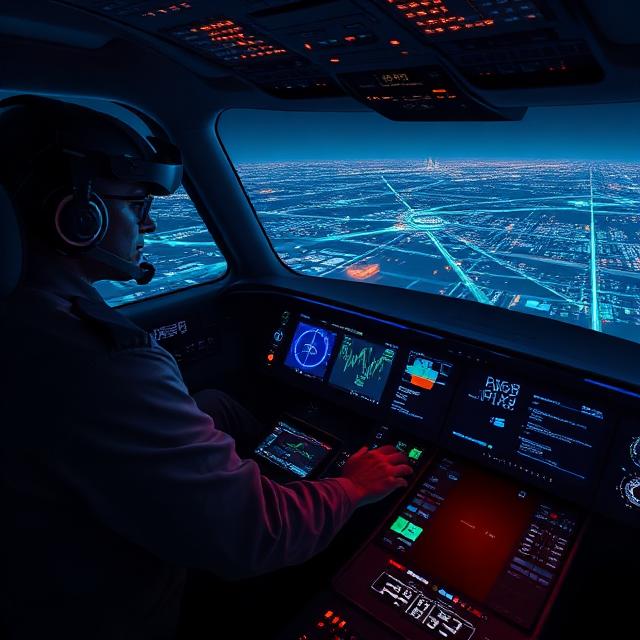
This isn’t about rogue AIs taking autonomous action or cold, calculating machines making life-or-death decisions for your network. The co-pilot metaphor is intentionally chosen. Think of a seasoned airline pilot. They possess irreplaceable expertise, judgment, and responsibility for the aircraft. The co-pilot—and the array of advanced avionics—handles navigation, monitors countless systems, highlights potential risks, and manages routine tasks. This partnership doesn’t diminish the pilot’s role; it elevates it, allowing them to focus on high-level strategy, nuanced decisions, and handling true emergencies.
That’s exactly what’s happening in cybersecurity today. We’re witnessing the rise of intelligent assistants that sit alongside human analysts, sifting through the noise, connecting invisible dots, and providing context at machine speed. This blog post dives deep into this transformative shift, exploring how AI co-pilots are augmenting human defenders, the tangible benefits they bring, the challenges we must navigate, and what the future of this human-machine team holds.
Part 1: The Burning Platform – Why We Desperately Need a Co-pilot
To understand the value of the solution, we must first feel the weight of the problem.
1. Alert Fatigue: The “Needle in a Haystack” Problem on Steroids
The average SOC receives between 10,000 and 150,000 alerts per day. The vast majority—often over 70%—are false positives. An analyst spending minutes triaging each alert is mathematically doomed. Critical alerts get buried in the noise, leading to delayed response and burnout. It’s a demoralizing game of whack-a-mole where the moles are invisible and multiply by the second.
2. The Skills Gap & Talent Shortage
There’s an estimated global shortage of 3.4 million cybersecurity professionals. Even well-staffed teams struggle to find and retain experts in threat hunting, reverse engineering, and cloud security. This means existing analysts are stretched thinner, often expected to be generalists covering an ever-widening attack surface.
3. The Expanding Attack Surface: Cloud, IoT, and OT
It’s no longer just about protecting the corporate network. Organizations now have assets in multiple public clouds, a proliferation of Internet of Things (IoT) devices, and often interconnected Operational Technology (OT). This complexity creates blind spots that human teams alone cannot continuously monitor.
4. The Speed of Modern Attacks
Ransomware gangs can encrypt an entire network in hours. Zero-day exploits are weaponized before patches are even available. Advanced Persistent Threats (APTs) dwell undetected for months. Human-led manual investigation and correlation simply cannot keep pace with these timelines.
5. The Data Deluge
Logs, network flows, endpoint telemetry, threat intelligence feeds—the volume of data a security tool must process is staggering. Humans are brilliant at pattern recognition, but we are not built to process terabytes of structured and unstructured data in real-time.
This perfect storm created the burning platform. The old ways weren’t just inefficient; they were becoming untenable. The industry needed a paradigm shift, and AI has emerged as the catalyst.
Part 2: Meet Your Co-pilot – What It Actually Does

So, what is this AI co-pilot? It’s not a single product but a class of capabilities embedded within modern Security Information and Event Management (SIEM), Extended Detection and Response (XDR), and other security platforms. Here’s what your co-pilot brings to the cockpit:
1. Triage and Prioritization: Cutting Through the Noise
This is the most immediate and impactful function. Using machine learning (ML) models trained on historical alert data, context, and outcomes, the co-pilot assesses every incoming alert. It answers: What is the true severity? What assets are involved? Has this been a false positive before? Is this part of a broader campaign?
Instead of a raw list of 10,000 alerts, the analyst sees a curated dashboard of 20 truly high-priority incidents, each ranked with a clear confidence score and reasoning. The haystack is reduced to a handful of likely needles.
2. Investigation Autopsy & Playbook Guidance
When an analyst clicks on an incident, the co-pilot doesn’t just show a log. It acts like a brilliant assistant who has already done the preliminary research. It automatically:
- Correlates related events across endpoint, network, identity, and cloud data.
- Visualizes the attack chain, creating a timeline or graph showing the “kill chain” from initial access to potential impact.
- Retrieves relevant threat intelligence, linking indicators (IPs, hashes, domains) to known threat actors or campaigns.
- Suggests the next investigative steps based on playbooks. “To contain this, you may want to isolate host X-123. To investigate further, check for unusual logins from this user account.”
3. Proactive Threat Hunting & Anomaly Detection
Beyond reacting to alerts, co-pilots empower proactive hunting. They establish a behavioral baseline for users, devices, and network traffic. Using statistical analysis and ML, they flag subtle anomalies a human would never spot: “This server normally transfers 2GB of data nightly; it just initiated a 500GB transfer to an unfamiliar external IP.” or “This user account is accessing files at 3 a.m. in a pattern inconsistent with their role.” The co-pilot surfaces these hypotheses for the hunter to investigate.
4. Natural Language Interaction: The Conversational Partner
The latest evolution is the natural language interface. An analyst can simply ask:
- “Show me all activity for the user
jdoein the last 48 hours.” - “Is there any connection between this malware alert and the failed logins from last week?”
- “Summarize the impact of incident INC-2025 for my CISO report.”
The co-pilot interprets the query, runs the necessary searches across petabytes of data, and returns a concise, actionable answer in seconds, eliminating the need for complex query languages.
5. Automated Response (with Human Oversight)
For clear-cut, repetitive threats, the co-pilot can execute pre-approved containment actions under a human-in-the-loop model. For example, it might recommend: “Block malicious IP Y.Y.Y.Y and quarantine the affected host. Click to approve.” This “safety-on” approach allows for rapid response to common threats while ensuring a human retains ultimate control over significant actions.
Part 3: The Human in the Loop – Why This Partnership Works
The greatest misconception about AI in security is that it aims to replace analysts. Nothing could be further from the truth. The goal is augmentation. Here’s what the human brings to this partnership—the irreplaceable elements:
- Strategic Context & Business Understanding: An AI knows a server is critical. A human knows it’s the server running the revenue-generating application for the company’s biggest client. That business context guides response priority and communication.
- Creativity and Intuition: Cyber adversaries are creative humans. Defeating them requires equally creative thinking. A human can make an intuitive leap—connecting a seemingly innocuous event to a news headline or a past incident—that an AI, bound by its training data, might miss.
- Ethical Judgment and Accountability: Decisions with legal, reputational, or ethical ramifications must be made by accountable humans. Should we shut down a production system? How do we engage with law enforcement? These are human decisions.
- Handling the Novel and Bizarre: AI is excellent at identifying known-bads and statistical anomalies. A truly novel, never-before-seen attack (an “unknown-unknown”) requires human curiosity, reasoning, and adaptability to unravel.
- Empathy and Communication: Explaining a technical incident to a non-technical board, coordinating with an external legal team, or reassuring a panicked employee—these require emotional intelligence that AI does not possess.
The magic happens in the feedback loop. The human analyst reviews the co-pilot’s recommendations, confirms or dismisses alerts, and guides investigations. This continuous feedback trains and improves the AI models, making the co-pilot smarter over time. It’s a virtuous cycle of human expertise and machine scalability.
Part 4: Tangible Benefits – Measuring the Impact
Deploying an AI co-pilot isn’t just a tech upgrade; it’s an operational transformation with clear ROI:
- Dramatically Faster Mean Time to Detect (MTTD) & Respond (MTTR): Incidents are found and contained in minutes or hours, not days or weeks, limiting potential damage.
- Reduced Burnout & Improved Job Satisfaction: By eliminating alert fatigue and tedious data gathering, analysts can focus on interesting, high-value investigative work. This aids retention and attracts talent.
- Scaling Expertise: A junior analyst, guided by a co-pilot’s playbooks and context, can perform at a level closer to a senior analyst. This helps bridge the skills gap.
- Consistent and Documented Processes: Every investigation is automatically documented by the co-pilot, ensuring consistency, aiding in compliance audits, and preserving institutional knowledge.
- Proactive Posture Shift: Teams move from a purely reactive, fire-fighting mode to a more proactive, threat-hunting posture, staying ahead of adversaries.
Part 5: Navigating the Turbulence – Challenges and Considerations
This journey isn’t without its headwinds. Wise organizations are mindful of these challenges:
- The “Black Box” Problem: Some advanced AI models can be opaque. Why did it flag this particular event? Security teams need explainable AI (XAI)—co-pilots that can articulate their reasoning in understandable terms to build trust.
- Data Quality and Bias: An AI is only as good as the data it’s trained on. Incomplete, biased, or poor-quality log data will lead to poor recommendations. The foundational principle of “garbage in, garbage out” still applies.
- Adversarial AI: Attackers will inevitably try to poison training data or craft inputs to trick the AI (evasion attacks). The co-pilot itself must be secured and its resilience tested.
- Over-reliance and Skill Erosion: There’s a risk that analysts might become overly dependent, losing their fundamental investigative skills. Training must emphasize the co-pilot as a tool to enhance, not replace, core competencies.
- Integration and Cost: Success requires deep integration with existing security tools (SIEM, EDR, etc.) to access data. Organizations must evaluate the total cost and ensure they have the infrastructure to support these advanced systems.
Part 6: The Future Cockpit – What’s Next for AI and Analysts?
The co-pilot of today is just the beginning. We’re heading toward an even more integrated future:
- Predictive & Prescriptive AI: Moving beyond detection to prediction. The co-pilot will not just say, “You are under attack,” but “Based on current TTPs targeting our industry, here are the three most likely attack vectors we should harden next week.”
- Cross-Organizational Learning (Privacy-Preserving): Co-pilots will securely learn from anonymized attack patterns across thousands of companies, creating a collective immune system that benefits all participants without sharing sensitive data.
- Specialized Co-pilots: We’ll see bespoke co-pilots for cloud security, identity governance, or software supply chain security, providing deep domain expertise.
- The Evolving Role of the Analyst: The human role will shift further up the value chain. Tomorrow’s elite “Security Conductor” will spend less time searching and more time on threat modeling, security architecture, adversary simulation, and strategic oversight of their AI counterparts.
FAQ: Your Questions on the AI Security Co-pilot, Answered
You’ve read about the rise of the AI Security Co-pilot, but you likely have some practical questions. Here are answers to the most common queries we hear from security leaders, analysts, and the just-plain-curious.
Q1: Is an AI Co-pilot just a fancy term for automated threat detection we already have?
A: It’s a significant evolution. Traditional rules-based automation (like “if X, then Y”) is rigid and can’t handle nuance. An AI Co-pilot uses machine learning to understand context, learn from past decisions, and make probabilistic recommendations. It’s less like a simple alarm bell and more like an experienced partner who says, “Here’s what’s happening, here’s why I think it’s serious, and here’s what we should do next based on similar situations.”
Q2: Will this eventually replace human security analysts?
A: The core philosophy of the co-pilot model is augmentation, not replacement. The goal is to eliminate the tedious, repetitive parts of the job (sifting through false positives, manual data correlation) so analysts can focus on high-value tasks like strategic threat hunting, complex investigation, and making critical judgment calls. The future is about elevating the human role, not eliminating it.
Q3: How can I trust the AI’s decisions if it’s a “black box”?
A: This is a critical concern. Leading co-pilot solutions now prioritize Explainable AI (XAI). This means they don’t just give an alert; they provide a “reasoning audit trail”: *”I flagged this because it matches a known MITRE TTP (T1059.003), involves a high-value asset, and follows an anomaly pattern seen in the last 30 days.”* Trust is built through transparency and by allowing analysts to consistently validate and provide feedback on the AI’s recommendations.
Q4: What’s the difference between an AI Co-pilot and a fully autonomous SOAR (Security Orchestration, Automation, and Response) platform?
A: SOAR platforms are great for executing standardized, pre-defined playbooks (e.g., “When a malware hash is confirmed, quarantine the host”). An AI Co-pilot informs and enhances SOAR. It decides which playbook is relevant, enriches it with context, and often handles the complex analysis before an automated response is triggered. Think of SOAR as the muscles and the co-pilot as the central nervous system, making smart decisions.
Q5: How much does it cost, and is it only for large enterprises?
A: While initially more common in large organizations due to complexity and cost, the technology is rapidly becoming more accessible. Many vendors now offer co-pilot capabilities as part of cloud-based subscription services (SaaS), which can scale for mid-sized businesses. The cost is shifting from a massive upfront investment to an operational one. The real question is ROI: the cost of a breach often far outweighs the investment in technology that can prevent it.
Q6: What kind of skills does my team need to manage and work with an AI Co-pilot?
A: You don’t need a team of data scientists. The key skills shift:
- Analytical & Critical Thinking: Your team needs to be great at interrogating the AI’s findings, not just writing complex queries.
- Security Fundamentals are Paramount: A deep understanding of networking, systems, and attack methodologies is more crucial than ever to validate the AI’s work.
- Curiosity and Adaptability: The role becomes more about strategic investigation and less about repetitive tasks.
Vendors also provide extensive training on their specific platforms.
Q7: Can the AI itself be hacked or misled by attackers?
A: Yes, this is a real field of study called Adversarial Machine Learning. Attackers could attempt to “poison” training data or craft inputs to create false negatives (evading detection) or false positives (causing chaos). Defending the co-pilot requires security best practices: securing its training pipelines, monitoring its outputs for drift, and maintaining human oversight. It’s a new attack surface that must be defended.
Q8: How long does it take to implement and see real value?
A: This isn’t a “flip a switch” solution. There’s a ramp-up period for:
- Integration: Connecting the co-pilot to your existing data sources (SIEM, EDR, cloud logs).
- Learning & Tuning: The AI needs time to learn your unique environment and normal behavior. Analysts will need to provide feedback to tune its recommendations.
Tangible value in alert reduction is often seen within weeks, while full maturity and trust building can take several months.
Q9: What are the biggest pitfalls to avoid when adopting this technology?
A:
- Expecting a Silver Bullet: The co-pilot is a powerful tool, not a magic solution. It requires skilled people and good processes.
- Neglecting Data Quality: If you feed it incomplete or messy logs, its recommendations will be flawed.
- Skipping the Human Feedback Loop: Not investing time for analysts to correct and guide the AI will stunt its growth and accuracy.
- Failing to Define Processes: You must decide: what actions can the AI take autonomously? When is human approval required?
Q10: How do I get started or convince my leadership to invest?
A: Start with a focused pilot project.
- Identify a Pain Point: Choose a high-volume, low-signal area like phishing alert triage or endpoint false-positive reduction.
- Measure the “Before”: Document current metrics (MTTD, MTTR, analyst hours spent on alerts).
- Run a Controlled Pilot: Use the co-pilot on that specific stream for a set period.
- Measure the “After”: Quantify the improvement in efficiency and accuracy. A compelling business case is built on demonstrable time savings, reduced risk, and improved analyst job satisfaction.
Have more questions? The conversation about AI in cybersecurity is just beginning. Reach out to our community or explore the resources listed above to dive deeper.
Conclusion: A Partnership for a Safer Digital World
The rise of the AI Security Co-pilot represents a profound and necessary evolution in our fight against cyber threats. It is not a story of human versus machine, b
ut of human with machine. By automating the tedious, scaling the analytical, and highlighting the critical, AI frees the human analyst to do what they do best: apply judgment, creativity, and deep understanding to protect what matters most.
For security leaders feeling overwhelmed, the message is one of hope. For analysts burning out in alert queues, it’s a promise of a more engaging career. The future of cybersecurity is a collaborative cockpit, where human intuition and machine intelligence fly in formation—and that’s a future where we all stand a much better chance of landing safely.