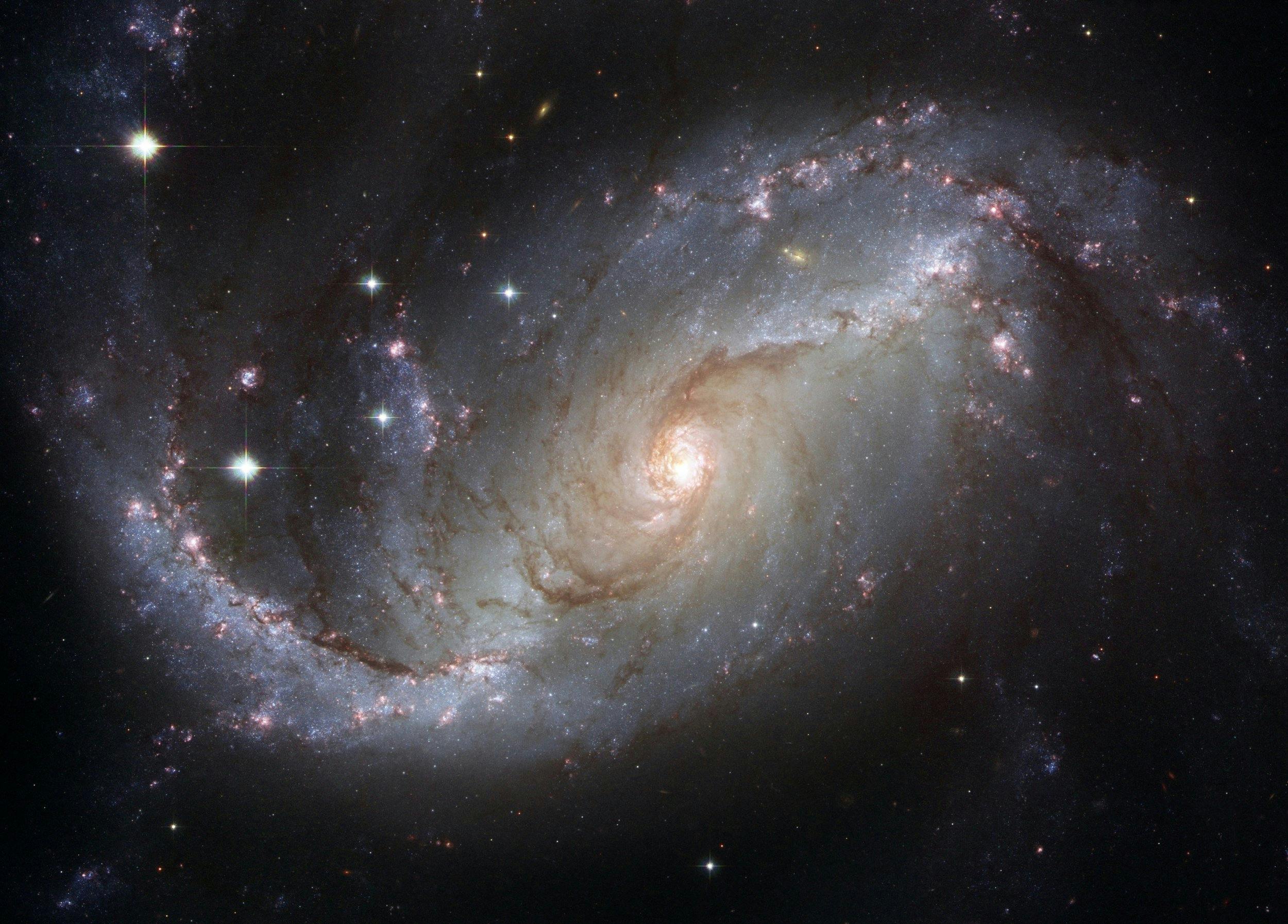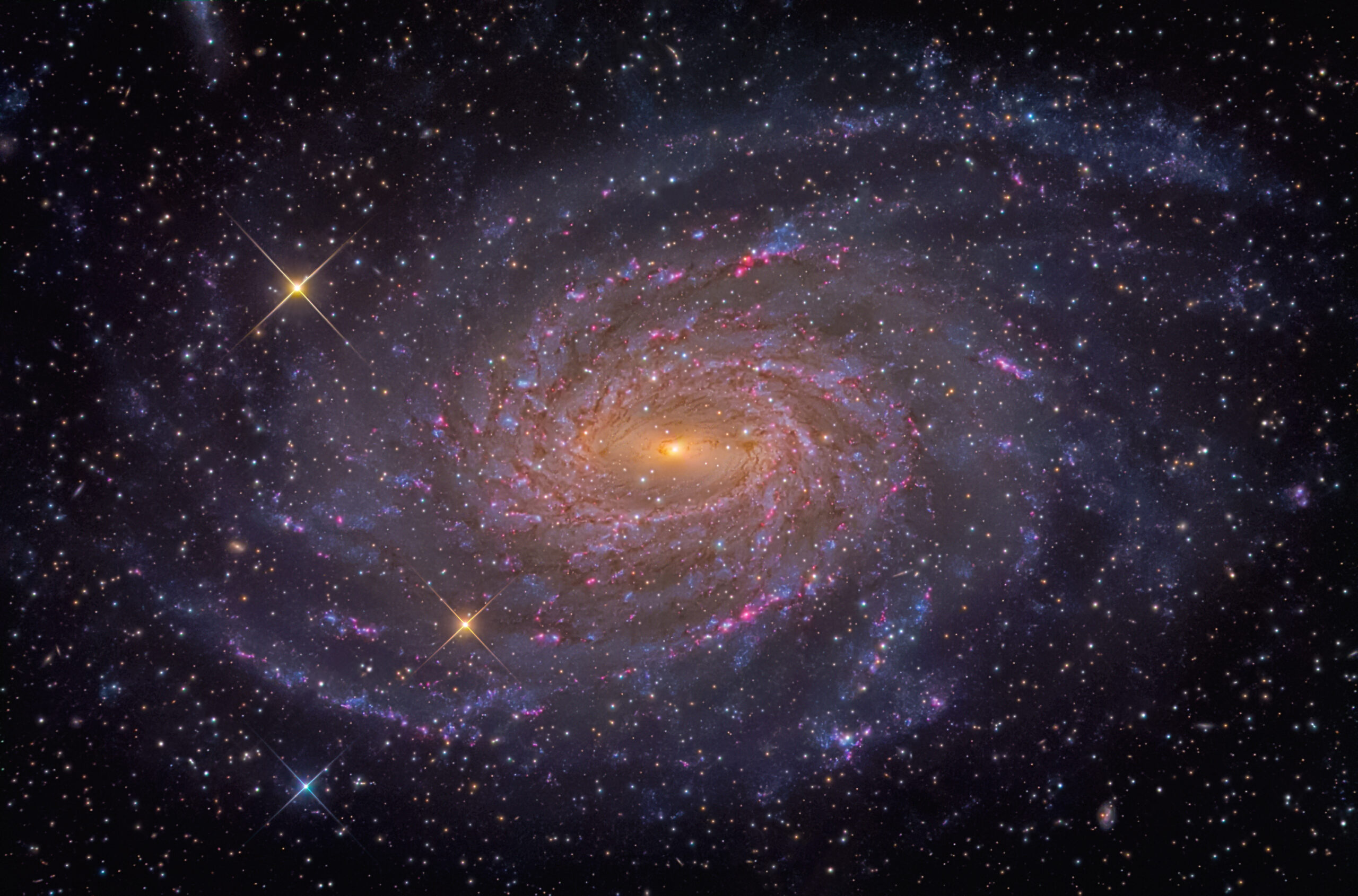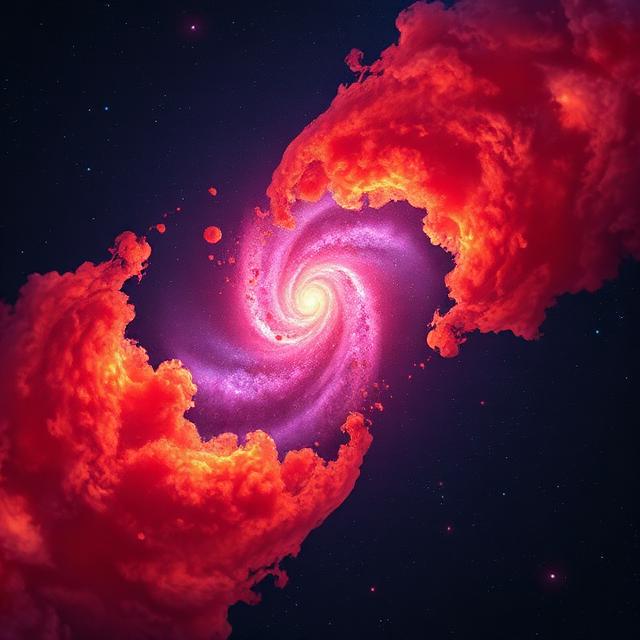
We’ve all witnessed a toddler in the throes of a full-blown tantrum. The flailing limbs, the chaotic energy, the sheer, unfiltered expression of raw existence. Now, thanks to the mind-bending vision of the James Webb Space Telescope (JWST), astronomers have witnessed the cosmic equivalent: a baby galaxy, not even a billion years old, in the midst of a spectacular, gas-spewing fit.
This isn’t just a charming analogy. A recent discovery, published in The Astrophysical Journal Letters, details the observation of a galaxy known as AzTECC71, a faint, dusty object from just 900 million years after the Big Bang. And this infant cosmic entity is not quietly assembling its first stars. It’s undergoing dramatic, violent growing pains, expelling its own gaseous building materials out into the void at a furious rate. In short, the universe’s nursery is a lot rowdier than we thought.
Let’s unpack this celestial drama and understand why astronomers are equal parts delighted and astonished by this gassy galactic toddler.
Setting the Scene: The Universe’s “Dark Ages” and First Light
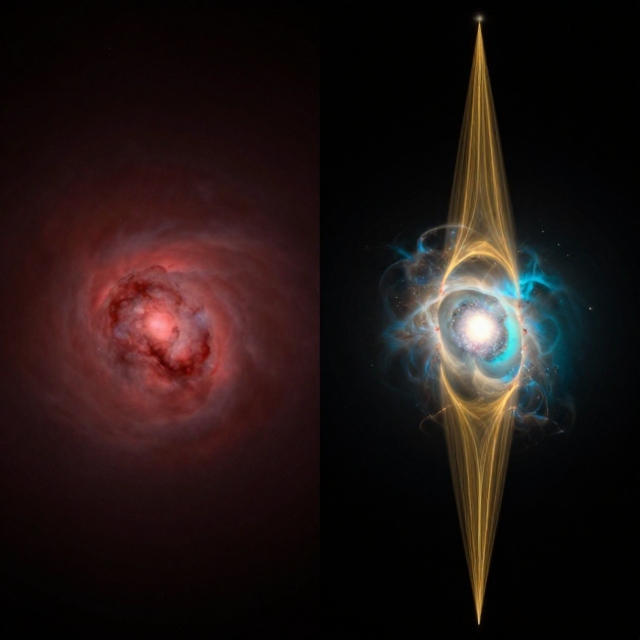
First, we need a cosmic timeline. Imagine the universe at its very beginning: a hot, dense soup of energy and particles. After the Big Bang, it expanded and cooled, eventually becoming a dark, foggy expanse filled with neutral gas—mostly hydrogen. This period is poetically referred to as the Cosmic Dark Ages. No stars, no galaxies, just darkness.
Gravity, however, was already at work. Slowly, it pulled clumps of that primordial gas together. As these clumps collapsed, they heated up, eventually sparking nuclear fusion and igniting the first stars. These stars, often monstrous in size, burned bright and fast, and their intense radiation began to “reionize” the foggy hydrogen, clearing the cosmic fog and making the universe transparent to light. This is the Epoch of Reionization, one of JWST’s primary missions to investigate.
It’s into this chaotic, formative era that we find our subject, AzTECC71. A galaxy born in the dawn of time.
Meet the Tantrum-Thrower: AzTECC71
Before JWST, galaxies like AzTECC71 were almost phantoms. They were detected as faint, dusty blobs by instruments like the ALMA telescope, which excels at seeing cold dust and gas. But their visible light was completely obscured by their own thick, dusty cocoons. It was like seeing the shadow of a screaming child behind a thick, woolen blanket.
Enter the James Webb Space Telescope, with its revolutionary infrared eyes. Infrared light has longer wavelengths than visible light, allowing it to pierce through cosmic dust like night-vision goggles seeing through smoke. When researchers pointed Webb’s NIRCam (Near-Infrared Camera) instrument at AzTECC71’s coordinates, the blanket was pulled back.
What they saw wasn’t a serene, placid infant. The data revealed a galaxy in a state of extreme turmoil. It’s forming stars ferociously, but it’s also powering massive, galactic-scale outflows. Think of it not as a gentle cradle, but as a messy, high-pressure nursery where the baby is simultaneously eating and, well, spitting up with incredible force.
The Tantrum Itself: Galactic Outflows Explained
So, what exactly is this “tantrum”?
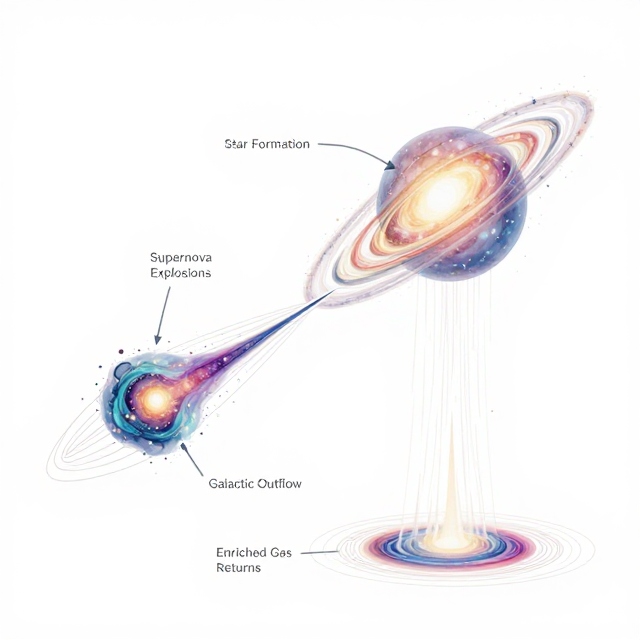
In a galaxy, the cycle of life and death is intense. Massive stars live fast, die young, and explode as supernovae. These explosions, along with powerful winds from the stars themselves and activity around supermassive black holes (called Active Galactic Nuclei), inject colossal amounts of energy into the surrounding gas.
This energy can heat the gas and propel it outward, far beyond the galaxy’s main disk, at speeds of thousands of kilometers per second. These are galactic outflows or winds.
In the case of baby AzTECC71, the JWST data suggest it is doing exactly this. It’s expelling its own raw materials—the very gas that could have collapsed to form the next generation of stars. This is a crucial self-regulating mechanism, often called “feedback.”
- Why It’s a Tantrum: The galaxy is essentially throwing its toys out of the pram. It’s so energetically active that it’s disrupting its own growth. This feedback can slow or even halt star formation by ejecting the fuel. It’s a galactic self-control mechanism, albeit a violent one.
- Why It’s “Gassy”: The primary material being ejected isn’t stars or solid matter—it’s vast reservoirs of primordial gas and heavy elements forged in stellar furnaces, a dusty, gaseous soup.
This discovery is pivotal because it shows that this feedback process, which shapes massive galaxies like our Milky Way today, was already in full swing when the universe was only 6% of its current age. These toddlers weren’t just passively growing; they were already shaping their own destinies with violent outbursts.
Why JWST Is the Ultimate Cosmic Babysitter
This observation would have been impossible before December 2021. Previous flagship telescopes, like the venerable Hubble Space Telescope, largely saw in visible and ultraviolet light—wavelengths that this thick dust completely blocks.
JWST’s infrared superpowers change everything:
- Dust-Piercing Vision: Its infrared instruments see the heat glow from the dust itself and the stars shining within it.
- Unprecedented Sensitivity: It can detect incredibly faint objects from staggering distances, making the early universe crisp and clear.
- Spectroscopic Capabilities: With instruments like NIRSpec, Webb doesn’t just take pictures; it splits light into rainbows (spectra) that act as cosmic barcodes, revealing the composition, temperature, density, and velocity of gas. This is how we know the gas is moving away from the galaxy at high speed.
As Dr. Jed McKinney, a co-author of the study from the University of Texas at Austin, put it: “JWST has effectively lifted the veil on this hidden population of galaxies… We’re seeing that the early universe was a far more active and dynamic construction zone than we imagined.”
The Bigger Picture: What This Tantrum Tells Us
The fussy behavior of AzTECC71 isn’t just a quirky, isolated event. It has profound implications for our understanding of cosmic evolution.
- Solving the “Missing Galaxies” Problem: Astronomers have long suspected that many early, dusty galaxies were missing from our census. AzTECC71 is a prime example of this once-hidden population. Finding more of them helps us build an accurate family photo of the infant universe.
- The Cycle of Cosmic Matter: These outflows don’t just vanish. The gas, enriched with heavy elements, is blasted into the vast spaces between galaxies—the circumgalactic medium. There, it may cool, fall back in, or seed future generations of stars and planets. The carbon in your cells, the oxygen in your lungs, was once forged in a star and possibly ejected in an ancient galactic tantrum like this one. You are, in part, made from recycled cosmic stardust tantrums.
- Shaping Galaxies: This feedback is a key theory in explaining why we have the diversity of galaxies we see today. Violent early outflows might explain the size and structure of modern elliptical galaxies, for instance.
A Glimpse Into the Chaotic Nursery
The image of a serene, steadily growing early universe is officially outdated. JWST is revealing it to be a place of intense, chaotic, and dynamic activity. Galaxies like AzTECC71 weren’t just blinking on quietly. They were erupting onto the scene, screaming for attention with bursts of light and gassy ejections, fiercely regulating their own births.
This “tantrum” is, in fact, a vital sign of a healthy, evolving cosmos. It’s the mechanism by which these baby galaxies learn to balance their growth, influence their surroundings, and ultimately pave the way for more mature, structured galaxies like our own Milky Way to form billions of years later.
Every new JWST image is a postcard from the past, and this one comes with the unmistakable sounds of a cosmic nursery in a very loud, very gassy, and utterly fascinating uproar. The toddler stage of the universe, it turns out, was every bit as dramatic and essential as our own.
Further Reading & Sources to Nerd Out On:
- NASA’s JWST Official Site: The ultimate source for all Webb discoveries and stunning imagery. https://webb.nasa.gov/
- The Published Study on AzTECC71: For the brave and technically inclined, the original research paper. [Link to Astrophysical Journal Letters – search for AzTECC71].
FAQ: Your Questions About the Universe’s Toddler Tantrum, Answered
Q: Why do astronomers keep comparing this galaxy to a “toddler throwing a tantrum”?
A: It’s a vivid analogy to explain complex astrophysics! A toddler’s tantrum is a chaotic, energetic, and self-disruptive phase of early development. Similarly, baby galaxy AzTECC71 isn’t growing quietly. It’s so energetically active—forming stars at a furious pace and hosting supernovae—that it’s violently expelling its own star-forming gas. This “feedback” process disrupts its own growth, much like a toddler might frustrate their own attempts to build a block tower mid-fit. It’s a powerful, messy, and essential part of cosmic growth.
Q: What exactly is “gassy” about it? Is it not making stars?
A: Great question! “Gassy” refers to its primary composition and what it’s ejecting. The early universe was primarily filled with primordial gases like hydrogen and helium. This galaxy is absolutely forming stars from that gas, but it’s doing it so intensely that the resulting explosions and radiation are heating and pushing the remaining gas outward. So, it’s a gas-rich galaxy that is both using up and spewing out its gaseous fuel. The outflows aren’t solid objects; they’re colossal winds of this raw, gaseous material.
Q: How come we couldn’t see this galaxy properly before JWST?
A: AzTECC71 was shrouded in a thick blanket of cosmic dust. Dust is brilliant at absorbing visible light (the kind our eyes and the Hubble Space Telescope see). However, infrared light, which JWST is designed to detect, has longer wavelengths that can slip through the dust like sunlight through a fog. Before JWST, instruments like ALMA could sense the galaxy’s dust and gas but couldn’t reveal the details of the galaxy itself. JWST pulled back the dusty curtain for the first time.
Q: Why is this discovery so important?
A: It’s a crucial piece of the cosmic evolution puzzle. It proves that the violent “feedback” process, which theorists believed was essential for shaping galaxies, was already in full swing when the universe was incredibly young. This helps explain:
- How galaxies regulate their own star formation.
- How heavy elements were dispersed into intergalactic space to seed future generations of stars and planets.
- That many early, dusty galaxies were missing from our previous censuses, correcting our picture of the early universe.
Q: What’s with the weird name, AzTECC71?
A: Astronomical names are often catalog codes! “AzTECC” likely signifies it was first identified in a survey conducted by the AzTEC instrument on the James Clerk Maxwell Telescope in Hawaii. The number 71 is its identifier in that catalog. As objects get studied more, they often earn more poetic names, but for now, scientists use these precise, if clunky, labels to keep track of them.
Q: Could our Milky Way have gone through a phase like this?
A: Almost certainly! While we can’t rewind time to watch our own galaxy’s infancy, astrophysical models strongly suggest that most large galaxies, including the Milky Way, experienced these violent, outflow-driven phases in their youth. These early tantrums helped determine their final size, shape, and chemical composition. So, in a very real sense, we are living in the mature, settled-down result of our galaxy’s own ancient gassy tantrums.
Q: What’s next for studying galaxies like this?
A: JWST is just getting started. The next steps involve:
- Finding More: Using JWST to conduct larger surveys to uncover entire populations of these once-hidden, dusty infant galaxies.
- Detailed Spectroscopy: Using Webb’s NIRSpec instrument to take the “fingerprint” of the galaxy’s light. This will reveal the precise composition, temperature, and velocity of its outflows, telling us exactly what’s being ejected and how fast.
- Connecting the Timeline: Figuring out how common this behavior is and how it evolves over the universe’s first few billion years to shape the galaxies we see today.
Have more questions about our chaotic cosmic origins? Drop them in the comments below!