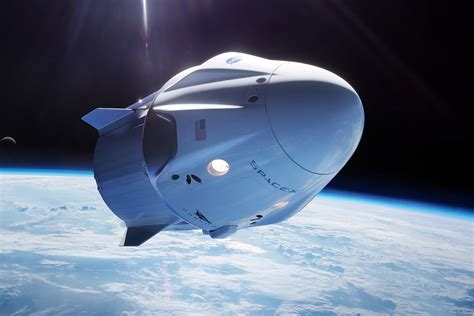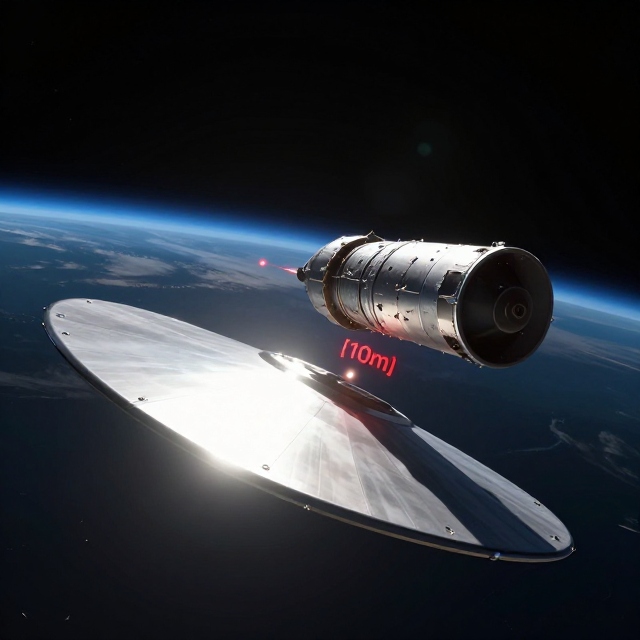
It’s easy to imagine space as an infinite, empty expanse—a silent ocean where satellites glide effortlessly in their predetermined lanes, forever alone. The reality, as we’re increasingly discovering, is more like a cosmic version of a congested highway at rush hour, complete with unpredictable drivers and no traffic cops. This metaphor was thrown into stark relief recently when SpaceX reported a terrifyingly close call: a spacecraft from a Chinese launch nearly slammed into one of its Starlink satellites.
Let’s pull up a chair, look past the headlines, and untangle what really happened, why it matters to us down here, and what it says about the precarious state of affairs in our orbital backyard.
The Incident: A Brush with Catastrophe
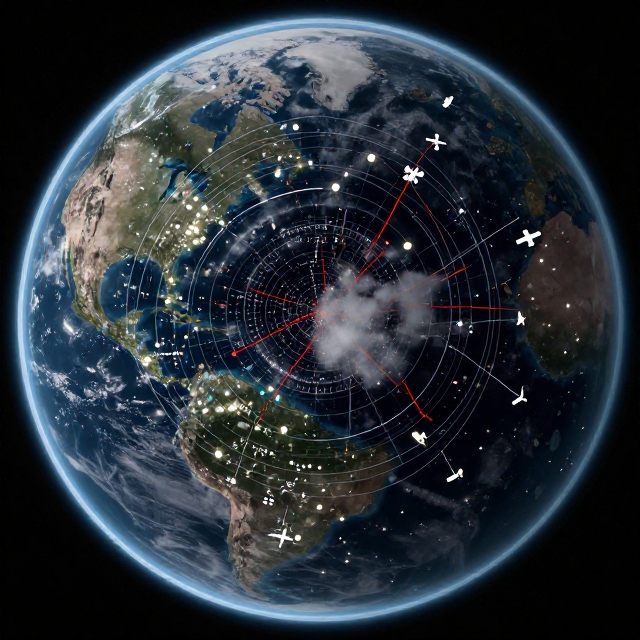
In early December 2023, the U.S. Space Force’s 18th Space Defense Squadron, the primary trackers of human-made objects in Earth orbit, issued a standard conjunction alert. Two objects were predicted to pass uncomfortably close. One was a SpaceX Starlink satellite, part of the mega-constellation beaming internet to remote corners of the globe. The other wasn’t a rogue piece of decades-old debris; it was the payload from a Chinese launch.
Specifically, it was an object associated with the China National Space Administration’s (CNSA) launch of the Shijian-21 satellite in October 2021. Shijian-21, described as a “space debris mitigation technology” test satellite, had been observed performing unusual maneuvers. The object involved in the near-miss was widely reported and tracked by space monitors as an apogee kick motor—a part of the rocket’s upper stage used to place the satellite into its final orbit.
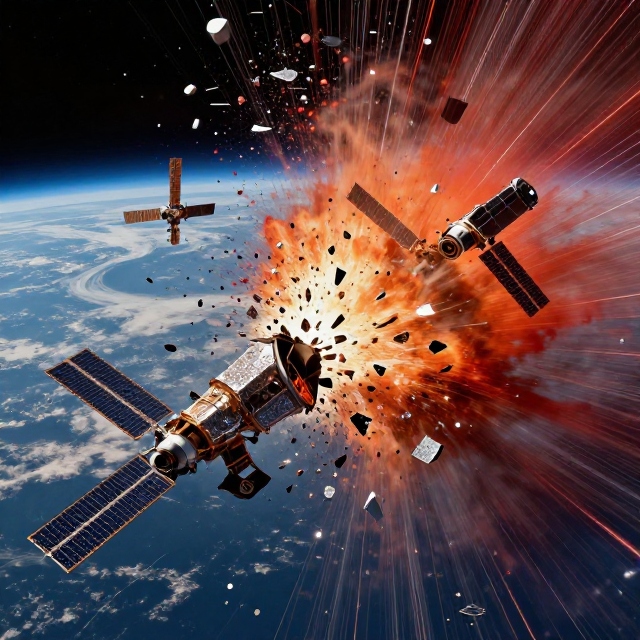
The numbers are what make your blood run cold. The two objects were predicted to pass within less than 10 meters of each other. For scale, that’s closer than the wingspan of a commercial airliner. In the orbital realm, where both objects are traveling at approximately 17,500 miles per hour (28,000 km/h), a 10-meter margin is functionally zero. A collision at those speeds wouldn’t be a fender-bender; it would be a catastrophic explosion, instantly creating thousands of new pieces of shrapnel, each capable of destroying another satellite.
SpaceX’s Starlink satellites are equipped with autonomous collision avoidance systems, powered by data from the U.S. Space Force. According to SpaceX, when this alert came in, their team manually reviewed the data and, after determining the risk was high enough, commanded the Starlink satellite to fire its krypton-ion thrusters to move out of the way. It was a successful, if nerve-wracking, evasion.
But the question on everyone’s mind was: Why was the Chinese object—a piece of a mission dedicated to “debris mitigation”—on such a risky path?
The Murky World of On-Orbit Maneuvers
This is where the story gets technically fascinating and diplomatically thorny. The object in question wasn’t just drifting aimlessly. Analysis by space-tracking organizations like ExoAnalytic Solutions and discussions within the Secure World Foundation community suggested this apogee kick motor had been involved in unusual proximity operations near other satellites before.
In simpler terms, the Chinese spacecraft had been practicing moving very close to other objects in space. This is a dual-use technology. Its benevolent application is exactly what the mission name implies: debris mitigation. A satellite could rendezvous with a piece of dangerous junk and safely de-orbit it—a vital future service. The other application is less peaceful: it’s the foundational skill for on-orbit inspection, servicing, or even anti-satellite (ASAT) warfare.
The concerning part of this near-miss was the apparent lack of coordination. Under ideal norms of Space Situational Awareness (SSA) and responsible space behavior, a country conducting complex maneuvers with an object would share its trajectory data to ensure the safety of all. The U.S., through the Space Surveillance Network (SSN), provides a great deal of conjunction data publicly via Space-Track.org. However, precise maneuver plans are rarely shared in advance.
China did not notify SpaceX or U.S. authorities of any planned maneuver that would bring its object into the Starlink satellite’s path. Was it an unplanned drift? A maneuver that didn’t go as intended? Or a test of capabilities that simply didn’t account for the now-crowded low-Earth orbit (LEO) environment? We don’t know, and that ambiguity is a core part of the problem.
The Bigger Picture: A Crowded Sky and a Tense Earth
To understand why this single event sent ripples through the space community, we need to zoom out.
1. The Starlink Constellation is Changing the Game.
SpaceX has permission to launch over 12,000 Starlink satellites, with plans for up to 42,000. They have already launched nearly 6,000. This single project has more than doubled the number of active satellites in orbit in just five years. While they operate in specific shells and have advanced automation, their sheer number statistically increases the likelihood of conjunction events. For many in the space community, particularly competitors and geopolitical rivals, Starlink is seen as a massive, disruptive presence that is unilaterally changing the rules of the road. You can explore the real-time scale of the constellation on sites like Celestrak.
2. Space is a Mirror of Terrestrial Tensions.
U.S.-China relations are at a low point, with space being a key arena of competition. Both nations have demonstrated anti-satellite (ASAT) capabilities, creating dangerous debris fields. The U.S. has repeatedly accused China of irresponsible behavior in space, including not sharing data. China, in turn, has accused U.S. satellite constellations like Starlink of being a threat to safety and even of potential military application (which isn’t entirely unfounded, as Starlink has provided crucial communications in conflict zones like Ukraine). This incident isn’t just about traffic management; it’s a proxy in a larger strategic rivalry. Reports from the Congressional Research Service (CRS) detail these growing tensions.
3. The “Kessler Syndrome” Specter.
Proposed by NASA scientist Donald Kessler in 1978, the Kessler Syndrome is a catastrophic chain reaction where one collision creates debris that causes more collisions, eventually rendering entire orbital regions unusable for generations. A hyper-velocity impact between a spent motor and an operational satellite could be the kind of trigger event scientists fear. A single collision in Low Earth Orbit could threaten everything from the International Space Station (ISS) to vital weather and climate monitoring satellites. The European Space Agency (ESA) has an excellent explainer on space debris and the Kessler Syndrome.
The Way Forward: From Cosmic Anarchy to Traffic Rules
So, are we doomed to a future of constant near-misses and eventual orbital gridlock? Not necessarily, but solving this requires a shift in mindset.
1. Embracing “Space Traffic Management” (STM).
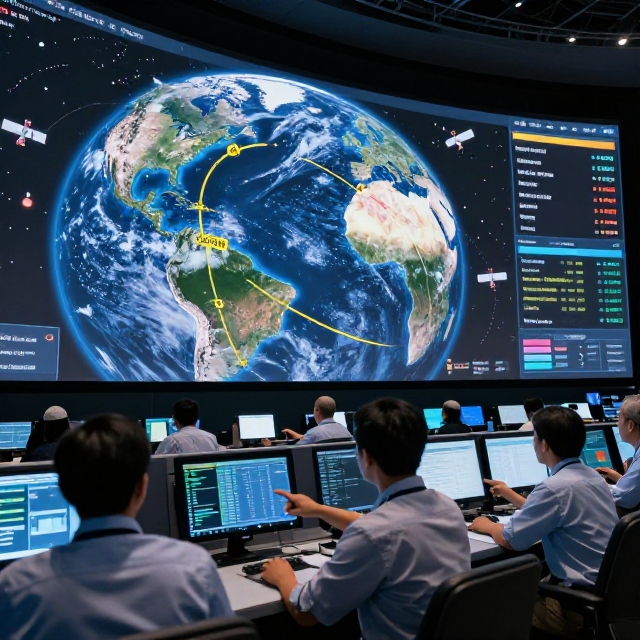
We need a functional, international STM system. This goes beyond the current model of the U.S. military providing tracking data. It means:
- Universal Data Sharing: All spacefaring nations and companies contributing precise tracking and maneuver data to a common, trusted system.
- Clear “Right-of-Way” Rules: Like maritime or aviation laws. Who moves if two satellites are on a collision course? The more maneuverable? The one that changed its path last?
- International Oversight: A civilian, international body—perhaps under the United Nations Office for Outer Space Affairs (UNOOSA)—to coordinate and enforce standards, moving beyond a military-led model.
2. Technological Solutions.
- Automated Collision Avoidance: Widespread adoption of systems like SpaceX’s, but with shared intent data so satellites don’t maneuver into each other while trying to avoid the same object.
- Active Debris Removal (ADR): Missions like the ESA’s upcoming ClearSpace-1 are pioneering the technology to capture and remove large debris. This needs to become a routine, funded service.
- Design for Demise: Mandating that all new satellites and rocket stages can reliably de-orbit themselves at end-of-life.
3. The Diplomatic Path.
The 1967 Outer Space Treaty is showing its age. New norms are being written through initiatives like the U.K.-led Combined Space Operations Initiative (CSpO) and the U.S. Artemis Accords, which include principles for safe and sustainable space operations. Getting major players like China and Russia to buy into a common framework is the monumental diplomatic challenge of our time in space.
Conclusion: A Wake-Up Call, Not a Doomsday Prophecy
The near-miss between the Chinese spacecraft and the Starlink satellite is not an isolated event. It’s a symptom. It’s a bright, flashing warning light on the dashboard of our orbital environment.
It reminds us that the peaceful, infinite space we imagine is now a finite, shared, and incredibly valuable ecosystem. Every malfunctioning satellite, every irresponsible test, every uncoordinated maneuver adds risk. That risk ultimately threatens the services we rely on daily—GPS, weather forecasting, global communications, and banking systems.
The solution isn’t to stop exploring or utilizing space. It’s to grow up as a spacefaring civilization. It requires moving from a frontier mentality of every operator for themselves to a community mentality, with shared rules, transparency, and a collective commitment to keeping the orbital lanes clear for future generations.
The evasion maneuver worked this time. But we can’t rely on last-minute dodges forever. The time to build a better, safer system for managing our cosmic neighborhood is now, before the statistics of probability catch up with us. The next close call might not have such a graceful ending.
FAQ Section for the Blog Post
Q1: What exactly happened between the Chinese spacecraft and the Starlink satellite?
In late 2023, the U.S. Space Force issued a conjunction alert. An object associated with a 2021 Chinese launch (the Shijian-21 mission) was on a path to pass alarmingly close—within less than 10 meters—of an active SpaceX Starlink satellite. Both were traveling at roughly 17,500 mph. SpaceX commanded its satellite to perform an evasion maneuver to avoid a catastrophic collision that could have created thousands of pieces of space debris.
Q2: Why is a “near-miss” in space such a big deal?
At orbital velocities, even a small piece of debris can impact with the force of a grenade. A direct collision between two large objects like a satellite and a rocket body, would be catastrophic. It would instantly create a massive cloud of shrapnel, each piece becoming a new projectile. This could trigger a chain reaction known as the Kessler Syndrome, potentially rendering entire orbital regions unusable for decades and threatening everything from the International Space Station to critical weather satellites. (Link to the Kessler Syndrome section in your post).
Q3: Was this object just space junk, or was it something else?
It wasn’t random junk. The object was an apogee kick motor from a Chinese satellite launch. More intriguingly, space monitoring analysts had observed this specific object performing unusual proximity operations near other satellites before. This suggests it was likely involved in testing rendezvous or debris mitigation technology, though its exact maneuvers before the near-miss were not publicly coordinated.
Q4: Is China responsible for the near-miss?
The incident highlights a lack of transparency and coordination, which is a shared problem in space governance. While the object was of Chinese origin, the core issue is the absence of robust, international Space Traffic Management (STM) rules. Major spacefaring nations, including the U.S. and China, do not consistently share advanced maneuver plans. Establishing norms for communication is a global imperative to prevent accidents, regardless of whose satellite is involved. (Link to the Space Traffic Management section).
Q5: What did SpaceX do to prevent the collision?
Starlink satellites are equipped with an autonomous collision avoidance system powered by U.S. military tracking data. Upon reviewing the high-risk alert, SpaceX engineers manually commanded the threatened satellite to fire its small krypton-ion thrusters, moving it to a safer orbit. This successful evasion demonstrates the importance of satellite maneuverability, but it also shows we’re relying on last-minute dodges rather than proactive coordination.
Q6: Does this mean Starlink is making space more dangerous?
Starlink’s mega-constellation (thousands of satellites) undeniably increases the number of objects in orbit, which statistically raises the probability of close approaches. However, SpaceX has invested heavily in automation and de-orbiting protocols. Many experts argue that the larger danger comes from older, defunct satellites and rocket bodies from all nations that cannot maneuver at all. The solution isn’t blaming one operator, but creating systems to manage the traffic from all operators safely.
Q7: How can we prevent this from happening again?
Prevention requires a multi-pronged approach:
- International Data Sharing: Moving beyond the current U.S.-led warning system to a truly shared, transparent repository for tracking and maneuver data.
- Establishing “Rules of the Road”: Creating international norms, through bodies like the UN Office for Outer Space Affairs (UNOOSA), for right-of-way and coordination.
- Active Debris Removal: Funding and deploying missions to clear the most dangerous defunct objects from key orbital pathways.
- Global Adoption of Best Practices: All new missions must be designed to de-orbit reliably and maneuver predictably.
Q8: Where can I track objects in space myself?
You can explore real-time satellite tracking on public sites like Celestrak or use simulation software like Orbitron. For official U.S. government data on space objects, you can visit Space-Track.org (requires free registration).